Approaching a Scientific Consensus on the Association between Allergies and Glioma Risk: A Report from the Glioma International Case-Control Study
- PMID: 26908595
- PMCID: PMC4874516
- DOI: 10.1158/1055-9965.EPI-15-0847
Approaching a Scientific Consensus on the Association between Allergies and Glioma Risk: A Report from the Glioma International Case-Control Study
Abstract
Background: Several previous studies have found inverse associations between glioma susceptibility and a history of allergies or other atopic conditions. Some evidence indicates that respiratory allergies are likely to be particularly relevant with regard to glioma risk. Using data from the Glioma International Case-Control Study (GICC), we examined the effects of respiratory allergies and other atopic conditions on glioma risk.
Methods: The GICC contains detailed information on history of atopic conditions for 4,533 cases and 4,171 controls, recruited from 14 study sites across five countries. Using two-stage random-effects restricted maximum likelihood modeling to calculate meta-analysis ORs, we examined the associations between glioma and allergy status, respiratory allergy status, asthma, and eczema.
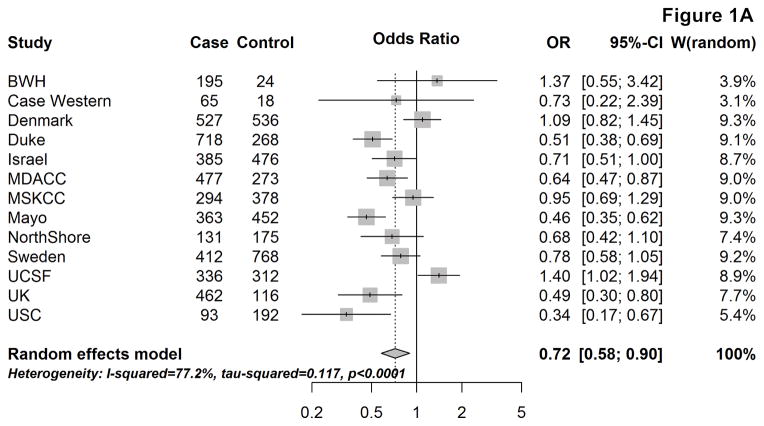
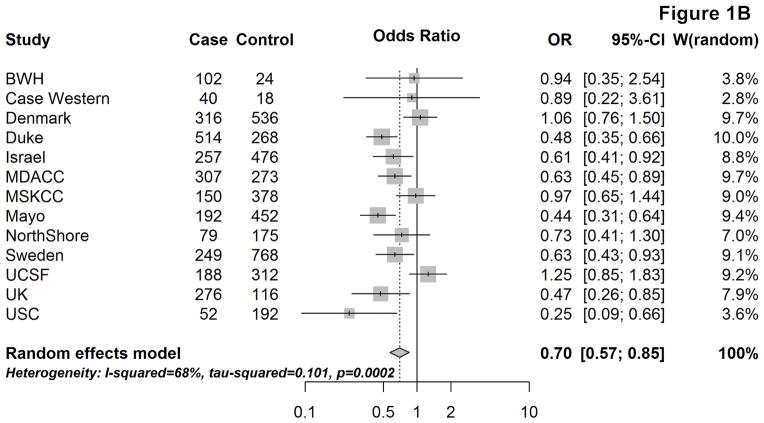
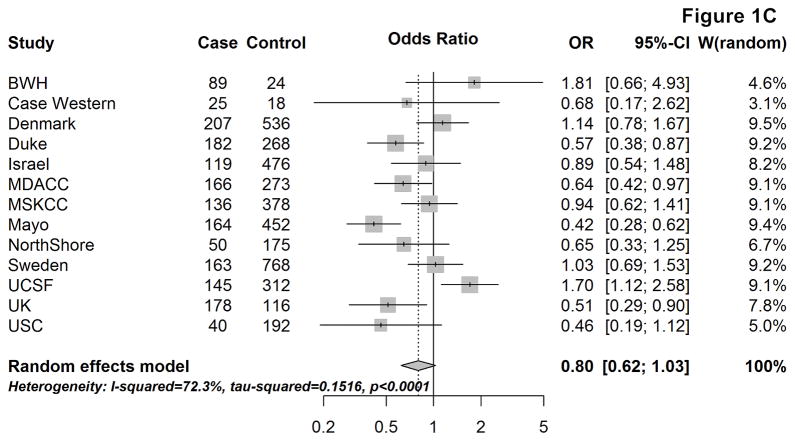
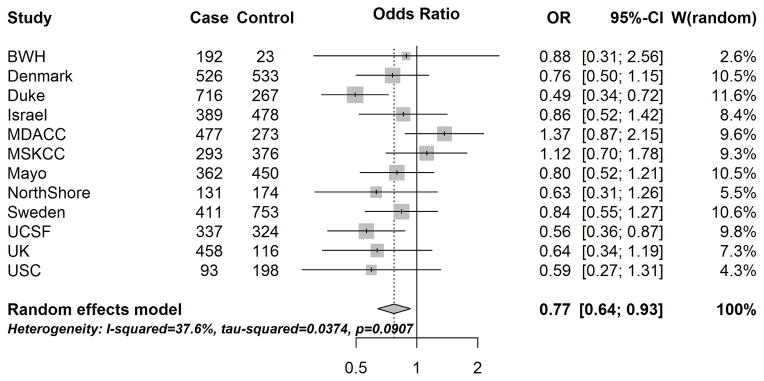
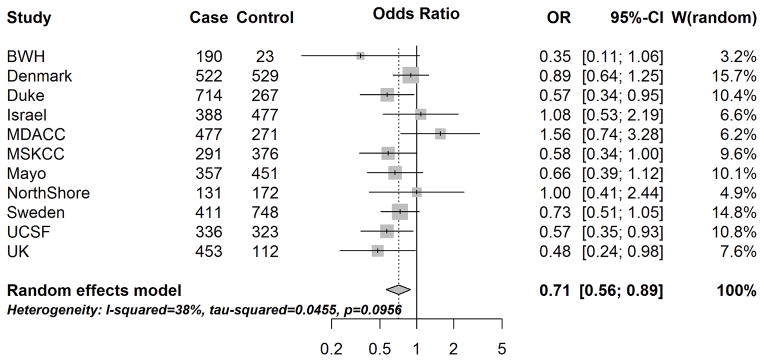
Results: Having a history of respiratory allergies was associated with an approximately 30% lower glioma risk, compared with not having respiratory allergies (mOR, 0.72; 95% confidence interval, 0.58-0.90). This association was similar when restricting to high-grade glioma cases. Asthma and eczema were also significantly protective against glioma.
Conclusion: A substantial amount of data on the inverse association between atopic conditions and glioma has accumulated, and findings from the GICC study further strengthen the existing evidence that the relationship between atopy and glioma is unlikely to be coincidental.
Impact: As the literature approaches a consensus on the impact of allergies in glioma risk, future research can begin to shift focus to what the underlying biologic mechanism behind this association may be, which could, in turn, yield new opportunities for immunotherapy or cancer prevention.
©2016 American Association for Cancer Research.
Conflict of interest statement
Figures
References
-
- Chen C, Xu T, Chen J, Zhou J, Yan Y, Lu Y, et al. Allergy and risk of glioma: a meta-analysis. European journal of neurology : the official journal of the European Federation of Neurological Societies. 2011;18:387–95. - PubMed
-
- Linos E, Raine T, Alonso A, Michaud D. Atopy and risk of brain tumors: a meta-analysis. Journal of the National Cancer Institute. 2007;99:1544–50. - PubMed
-
- Schwartzbaum J, Jonsson F, Ahlbom A, Preston-Martin S, Lonn S, Soderberg KC, et al. Cohort studies of association between self-reported allergic conditions, immune-related diagnoses and glioma and meningioma risk. International journal of cancer Journal international du cancer. 2003;106:423–8. - PubMed
-
- Turner MC, Chen Y, Krewski D, Ghadirian P. An overview of the association between allergy and cancer. International journal of cancer Journal international du cancer. 2006;118:3124–32. - PubMed
Publication types
MeSH terms
Grants and funding
LinkOut - more resources
Full Text Sources
Other Literature Sources
Medical
Research Materials