


The anti-tumour effects of zoledronic acid
- PMID: 26909294
- PMCID: PMC4723416
- DOI: 10.1016/j.jbo.2013.12.001
The anti-tumour effects of zoledronic acid
Abstract
Bone is the most common site for metastasis in patients with solid tumours. Bisphosphonates are an effective treatment for preventing skeletal related events and preserving quality of life in these patients. Zoledronic acid (ZA) is the most potent osteoclast inhibitor and is licensed for the treatment of bone metastases. Clodronate and pamidronate are also licensed for this indication. In addition, ZA has been demonstrated to exhibit antitumour effect. Direct and indirect mechanisms of anti-tumour effect have been postulated and at many times proven. Evidence exists that ZA antitumour effect is mediated through inhibition of tumour cells proliferation, induction of apoptosis, synergistic/additive to inhibitory effect of cytotoxic agents, inhibition of angiogenesis, decrease tumour cells adhesion to bone, decrease tumour cells invasion and migration, disorganization of cell cytoskeleton and activation of specific cellular antitumour immune response. There is also clinical evidence from clinical trials that ZA improved long term survival outcome in cancer patients with and without bone metastases. In this review we highlight the preclinical and clinical studies investigating the antitumour effect of bisphosphonates with particular reference to ZA.
Keywords: Angiogenesis; Antitumour; Apoptosis; Bisphosphonates; T-cells; Zoledronic acid.
Figures
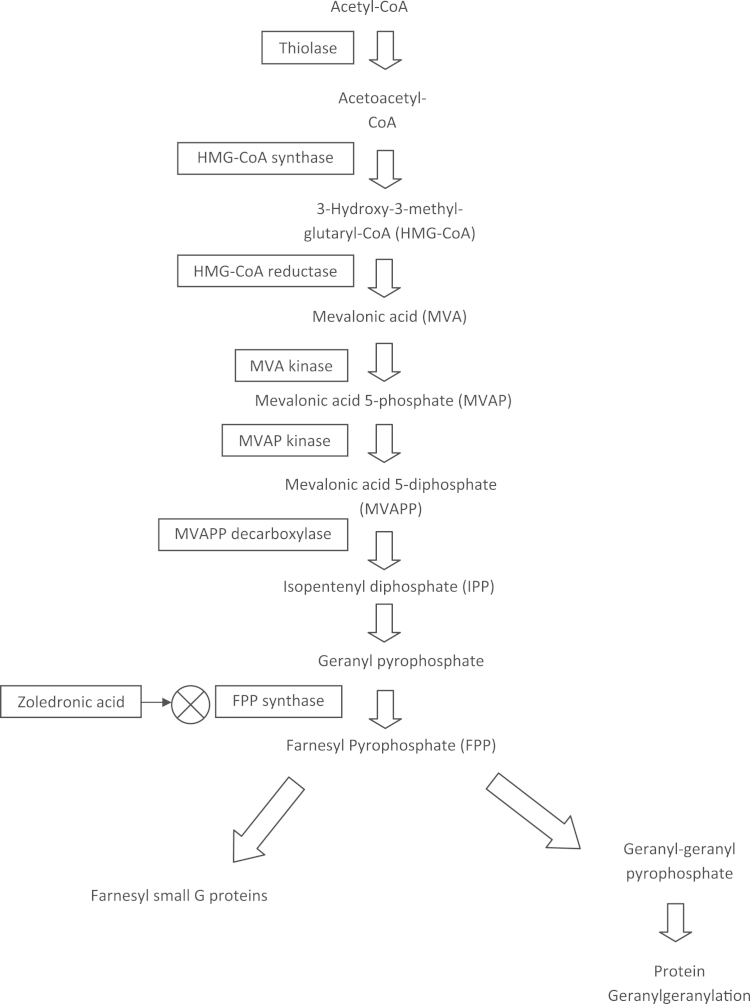
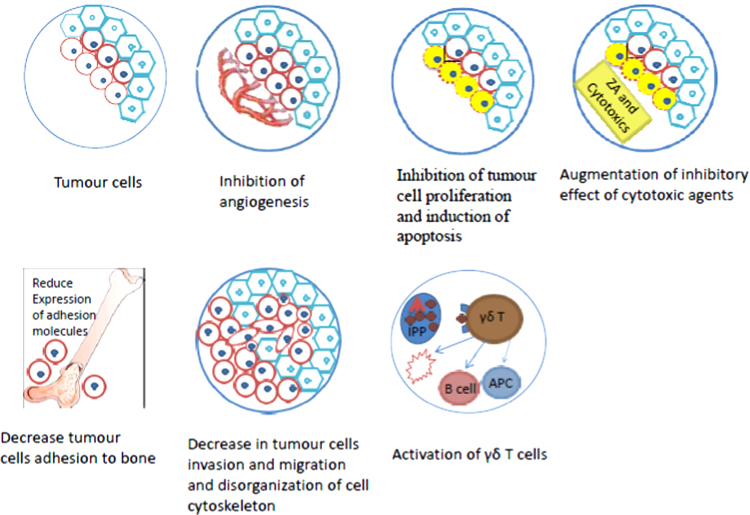
References
-
- Hosfield D.J., Zhang Y., Dougan D.R., Broun A., Tari L.W., Swanson R.V. Structural basis for bisphosphonate-mediated inhibition of isoprenoid biosynthesis. J Biol Chem. 2004;279(10):8526–8529. - PubMed
-
- Rogers M.J. From molds and macrophages to mevalonate: a decade of progress in understanding the molecular mode of action of bisphosphonates. Calcif Tissue Int. 2004;75(6):451–461. - PubMed
-
- Reinholz G.G., Getz B., Sanders E.S., Karpeisky M.Y., Padyukova N., Mikhailov S.N. Distinct mechanisms of bisphosphonate action between osteoblasts and breast cancer cells: identity of a potent new bisphosphonate analogue. Breast Cancer Res Treat. 2002;71(3):257–268. - PubMed
-
- Dunford J.E., Thompson K., Coxon F.P., Luckman S.P., Hahn F.M., Poulter C.D. Structure-activity relationships for inhibition of farnesyl diphosphate synthase in vitro and inhibition of bone resorption in vivo by nitrogen-containing bisphosphonates. J Pharmacol Exp Ther. 2001;296(2):235–242. - PubMed
-
- Luckman S.P., Hughes D.E., Coxon F.P., Graham R., Russell G., Rogers M.J. Nitrogen-containing bisphosphonates inhibit the mevalonate pathway and prevent post-translational prenylation of GTP-binding proteins, including Ras. J Bone Miner Res. 1998;13(4):581–589. - PubMed
Publication types
LinkOut - more resources
Full Text Sources
Other Literature Sources
