


Sex speeds adaptation by altering the dynamics of molecular evolution
- PMID: 26909573
- PMCID: PMC4855304
- DOI: 10.1038/nature17143
Sex speeds adaptation by altering the dynamics of molecular evolution
Abstract
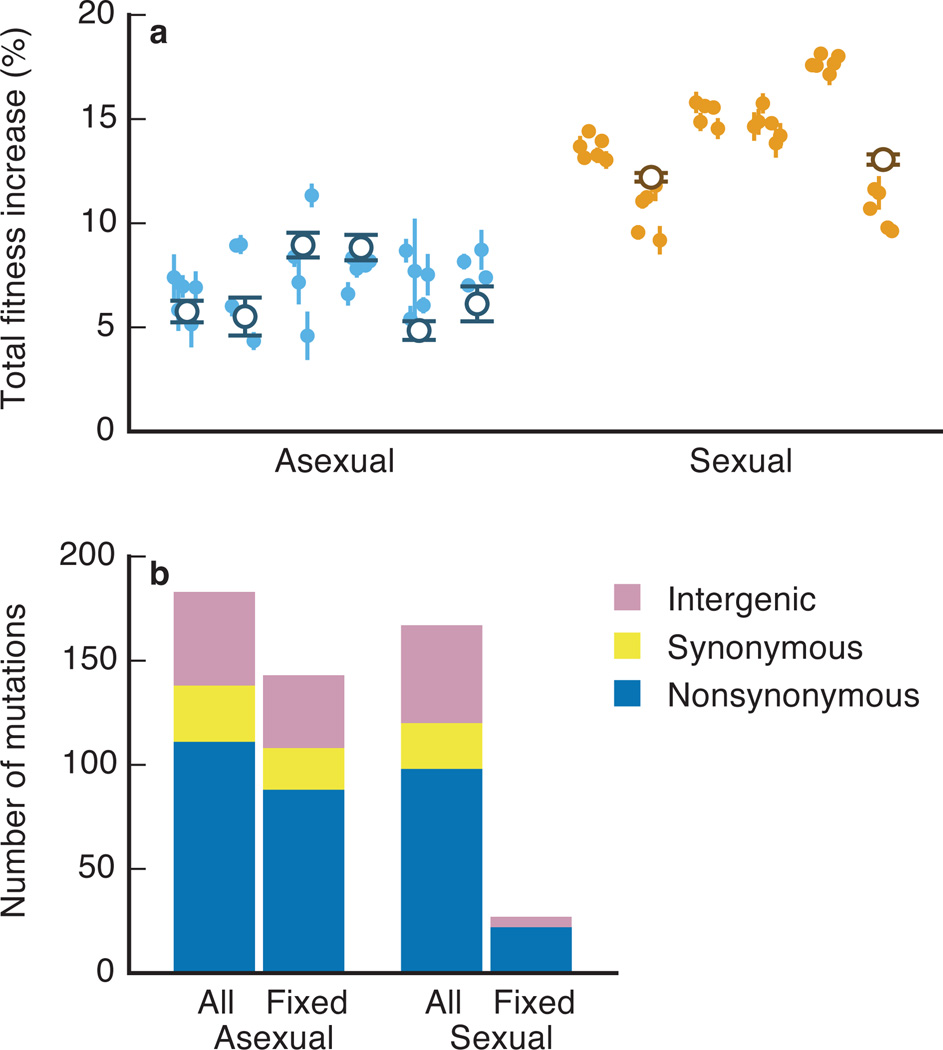
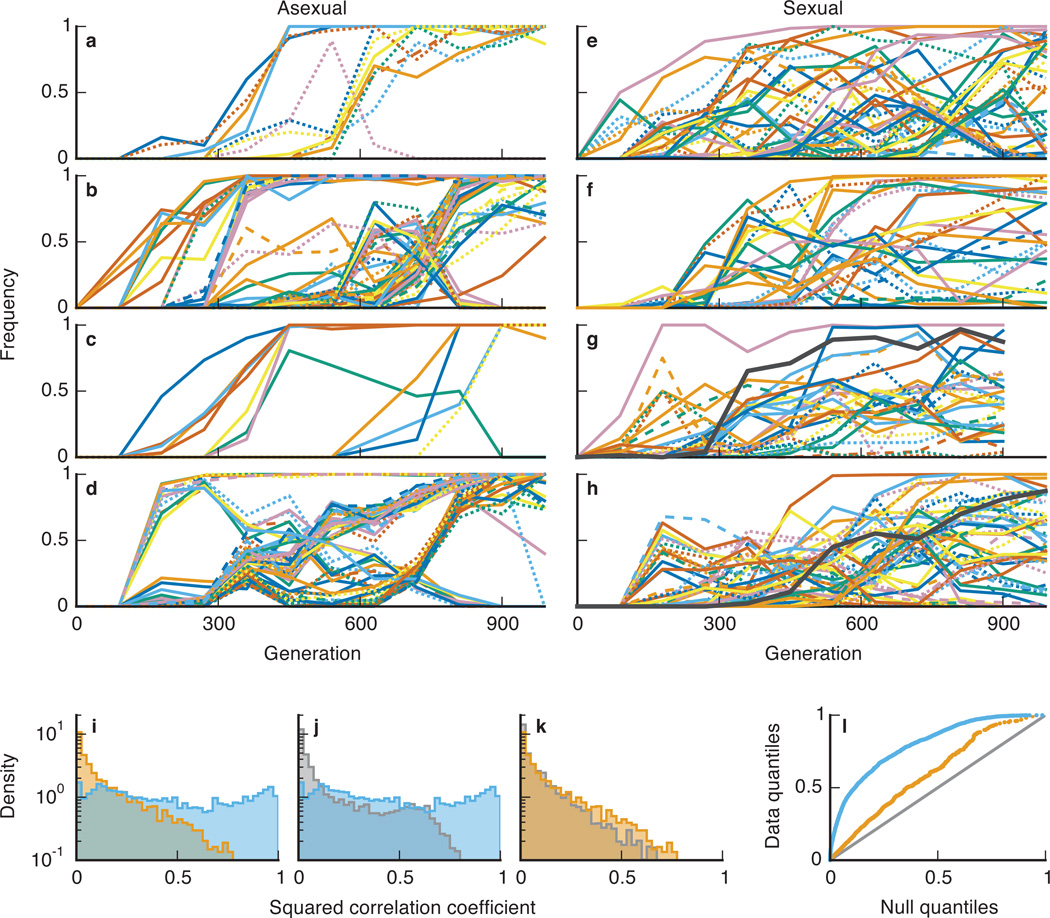
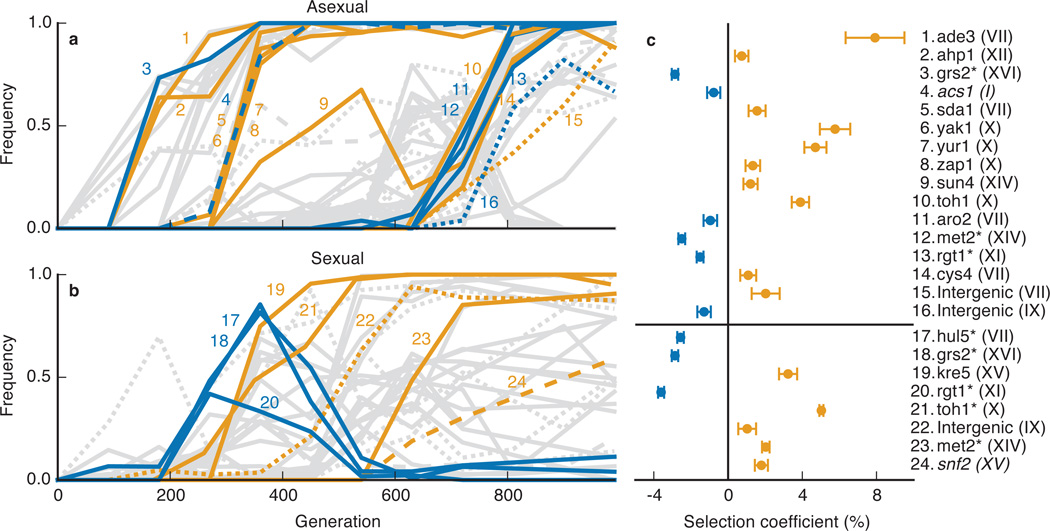
Sex and recombination are pervasive throughout nature despite their substantial costs. Understanding the evolutionary forces that maintain these phenomena is a central challenge in biology. One longstanding hypothesis argues that sex is beneficial because recombination speeds adaptation. Theory has proposed several distinct population genetic mechanisms that could underlie this advantage. For example, sex can promote the fixation of beneficial mutations either by alleviating interference competition (the Fisher-Muller effect) or by separating them from deleterious load (the ruby in the rubbish effect). Previous experiments confirm that sex can increase the rate of adaptation, but these studies did not observe the evolutionary dynamics that drive this effect at the genomic level. Here we present the first, to our knowledge, comparison between the sequence-level dynamics of adaptation in experimental sexual and asexual Saccharomyces cerevisiae populations, which allows us to identify the specific mechanisms by which sex speeds adaptation. We find that sex alters the molecular signatures of evolution by changing the spectrum of mutations that fix, and confirm theoretical predictions that it does so by alleviating clonal interference. We also show that substantially deleterious mutations hitchhike to fixation in adapting asexual populations. In contrast, recombination prevents such mutations from fixing. Our results demonstrate that sex both speeds adaptation and alters its molecular signature by allowing natural selection to more efficiently sort beneficial from deleterious mutations.
Figures
Comment in
-
Molecular evolution: Sex accelerates adaptation.Nature. 2016 Mar 10;531(7593):176-7. doi: 10.1038/nature17304. Epub 2016 Feb 24. Nature. 2016. PMID: 26909572 No abstract available.
-
Molecular evolution: Friends with benefits--sex speeds up adaptation.Nat Rev Genet. 2016 May;17(5):254-5. doi: 10.1038/nrg.2016.32. Epub 2016 Mar 14. Nat Rev Genet. 2016. PMID: 26972589 No abstract available.
References
REFERENCES CITED
-
- Bell G. The Masterpiece of Nature: The Evolution and Genetics of Sexuality. University of California Press; 1982.
-
- Otto SP, Lenormand T. Resolving the paradox of sex and recombination. Nature Reviews Genetics. 2002;3:252–261. - PubMed
-
- Kondrashov A. Classification of hypotheses on the advantage of amphimixis. J Heredity. 1993;84:372–387. - PubMed
-
- Weismann A. In: Essays upon heredity and kindred biological problems. Poulton EB, Schonland S, Shipley AE, editors. Clarendon; 1889. pp. 251–332.
-
- Fisher RA. The Genetical Theory of Natural Selection. Oxford University Press; 1930.
Publication types
MeSH terms
Associated data
Grants and funding
LinkOut - more resources
Full Text Sources
Other Literature Sources
Molecular Biology Databases
