ERICA: prevalence of metabolic syndrome in Brazilian adolescents
- PMID: 26910546
- PMCID: PMC4767042
- DOI: 10.1590/S01518-8787.2016050006701
ERICA: prevalence of metabolic syndrome in Brazilian adolescents
Erratum in
-
ERRATUM: ERICA: prevalence of metabolic syndrome in Brazilian adolescents.Rev Saude Publica. 2016 Dec 22;50:11serr. doi: 10.1590/S01518-8787.2016050006701err. Rev Saude Publica. 2016. PMID: 28099648 Free PMC article.
Abstract
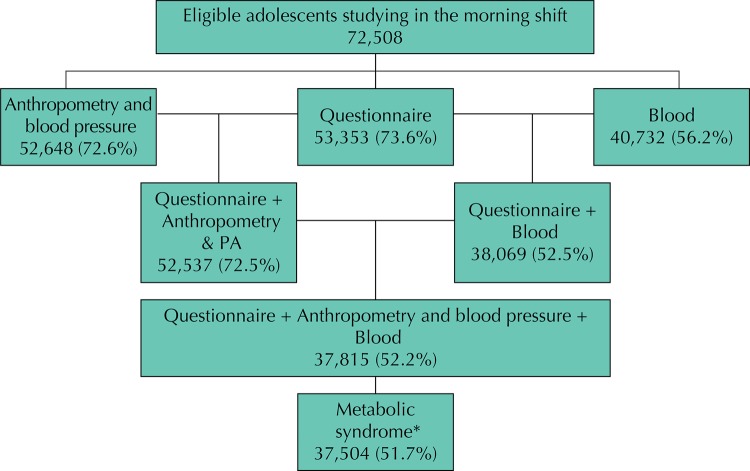
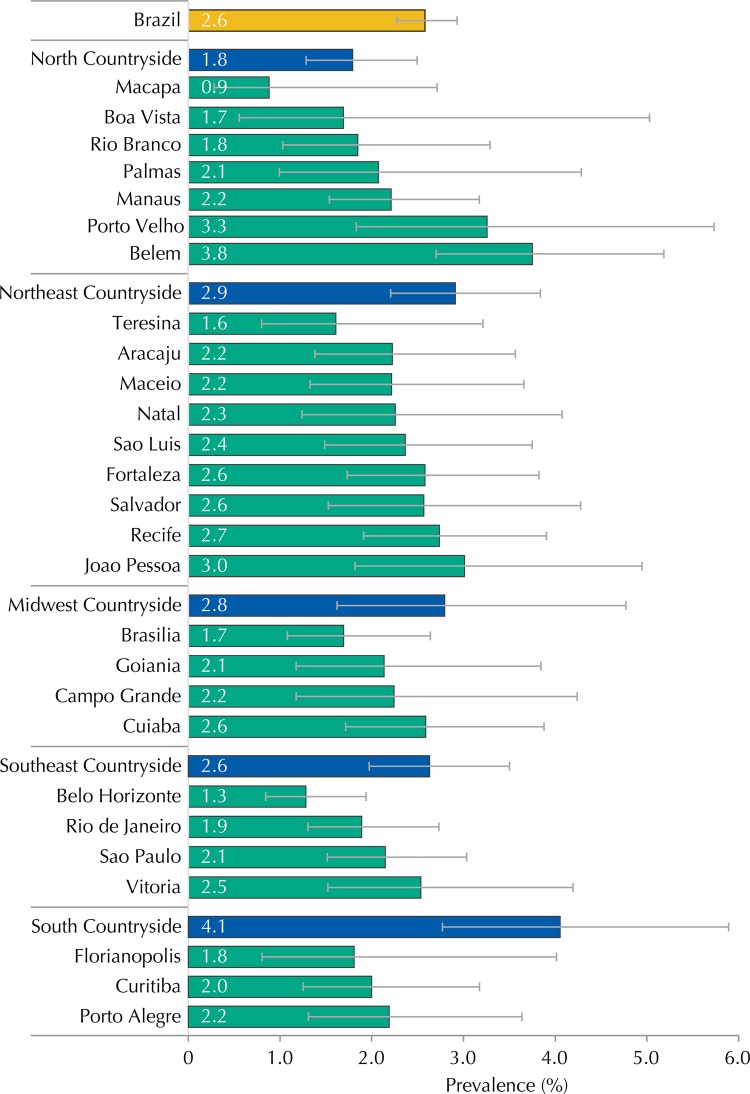
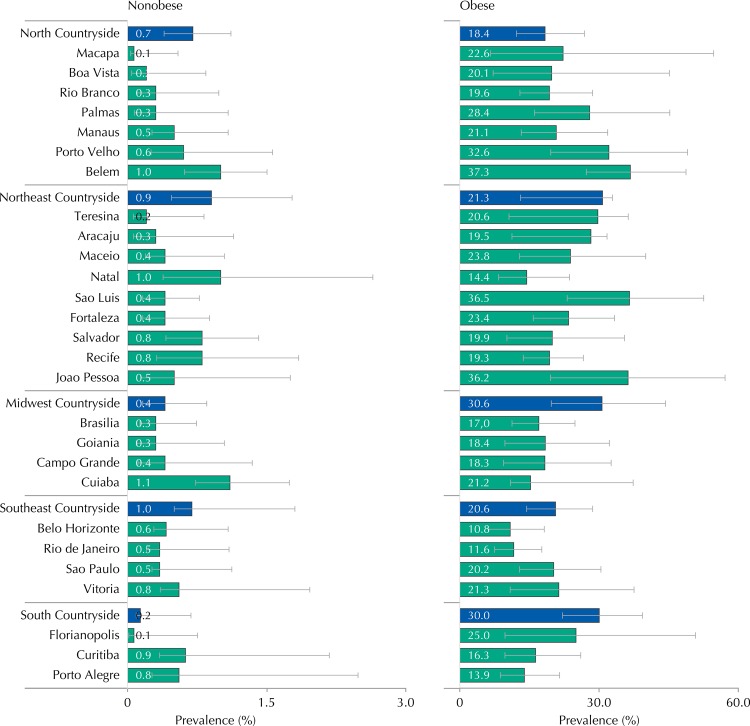
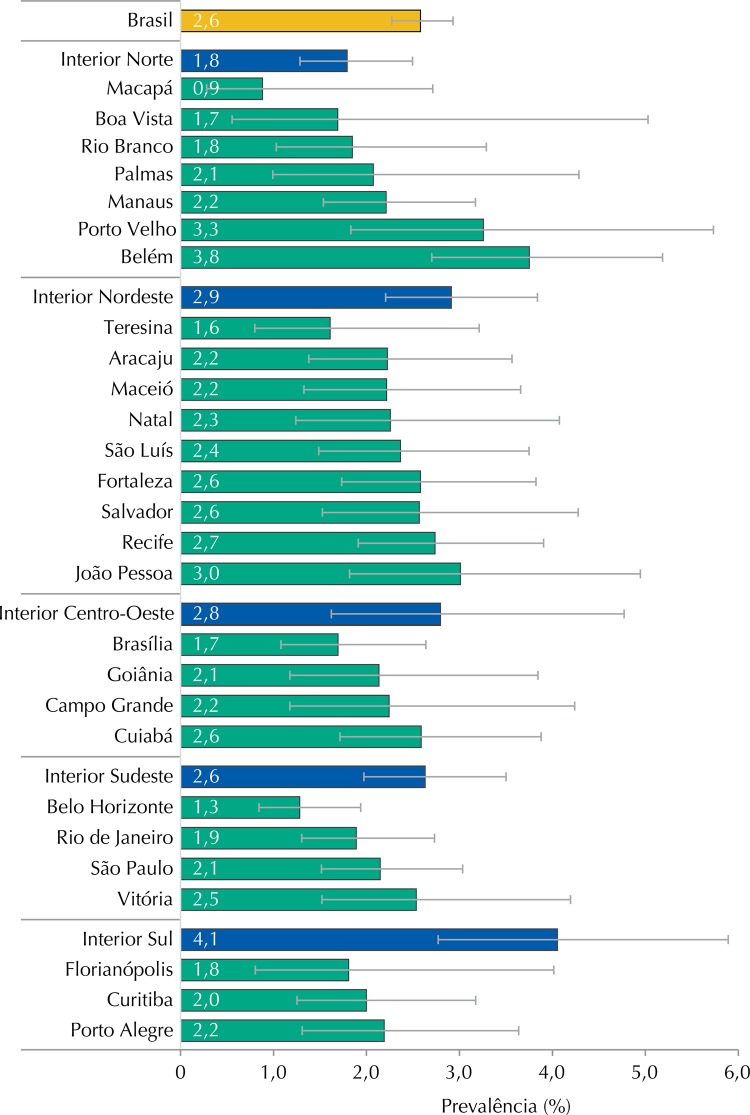
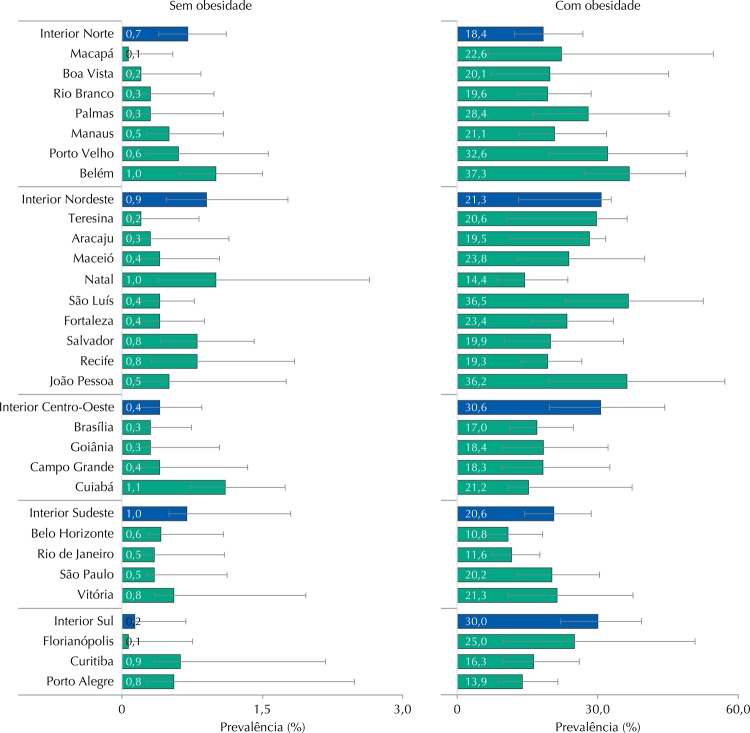
OBJECTIVE To determine the prevalence of metabolic syndrome and its components in Brazilian adolescents. METHODS We evaluated 37,504 adolescents who were participants in the Study of Cardiovascular Risks in Adolescents (ERICA), a cross-sectional, school-based, national study. The adolescents, aged from 12 to 17 years, lived in cities with populations greater than 100,000 inhabitants. The sample was stratified and clustered into schools and classes. The criteria set out by the International Diabetes Federation were used to define metabolic syndrome. Prevalences of metabolic syndrome were estimated according to sex, age group, school type and nutritional status. RESULTS Of the 37,504 adolescents who were evaluated: 50.2% were female; 54.3% were aged from 15 to 17 years, and 73.3% were from public schools. The prevalence of metabolic syndrome was 2.6% (95%CI 2.3-2.9), slightly higher in males and in those aged from 15 to 17 years in most macro-regions. The prevalence was the highest in residents from the South macro-region, in the younger female adolescents and in the older male adolescents. The prevalence was higher in public schools (2.8% [95%CI 2.4-3.2]), when compared with private schools (1.9% [95%CI 1.4-2.4]) and higher in obese adolescents when compared with nonobese ones. The most common combinations of components, referring to 3/4 of combinations, were: enlarged waist circumference (WC), low HDL-cholesterol (HDL-c) and high blood pressure; followed by enlarged WC, low HDL-c and high triglycerides; and enlarged WC, low HDL-c, high triglycerides and blood pressure. Low HDL was the second most frequent component, but the highest prevalence of metabolic syndrome (26.8%) was observed in the presence of high triglycerides. CONCLUSIONS ERICA is the first Brazilian nation-wide study to present the prevalence of metabolic syndrome and describe the role of its components. Despite the prevalence of Metabolic Syndrome being low, the high prevalences of some components and participation of others in the syndrome composition shows the importance of early diagnosis of this changes, even if not grouped within the metabolic syndrome.
OBJETIVO: Determinar a prevalência de síndrome metabólica e de seus componentes em adolescentes brasileiros.
MÉTODOS: Foram avaliados 37.504 adolescentes, participantes do Estudo de Riscos Cardiovasculares em Adolescentes (ERICA), estudo transversal de âmbito nacional e de base escolar. Os adolescentes, de 12 a 17 anos de idade, residiam em municípios com mais de 100 mil habitantes. A amostra foi estratificada e conglomerada em escolas e turmas. Os critérios da International Diabetes Federation foram utilizados para definir síndrome metabólica. Prevalências de síndrome metabólica foram estimadas segundo sexo, faixa etária, tipo de escola e estado nutricional.
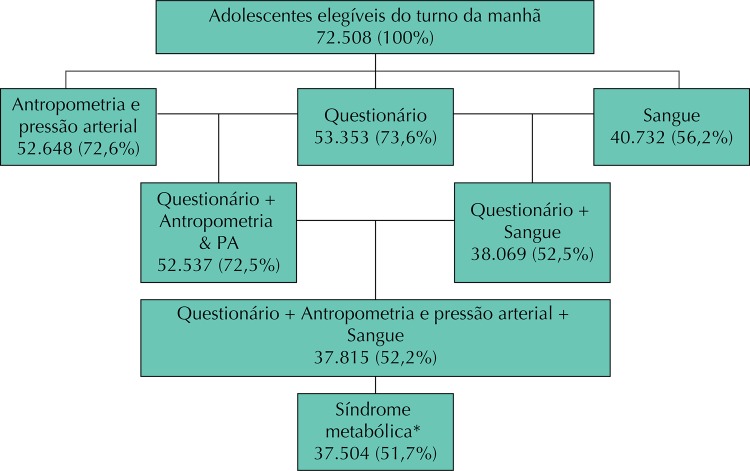
RESULTADOS: Dos 37.504 adolescentes, 50,2% eram do sexo feminino; 54,3% tinham de 15 a 17 anos e 73,3% estudavam em escolas públicas. A prevalência nacional de síndrome metabólica foi 2,6% (IC95% 2,3-2,9), discretamente maior no sexo masculino e naqueles de 15 a 17 anos na maioria das macrorregiões. A prevalência foi a maior nos residentes na macrorregião Sul, nas adolescentes mais jovens e nos adolescentes mais velhos. A prevalência foi maior nas escolas públicas (2,8% [IC95% 2,4-3,2]) que nas escolas privadas (1,9% [IC95% 1,4-2,4]) e nos adolescentes obesos em comparação aos não obesos. As combinações de componentes mais frequentes, respondendo por 3/4 das combinações, foram: circunferência de cintura elevada, HDL-colesterol baixo e pressão arterial elevada, seguida de circunferência da cintura elevada, lipoproteína de alta densidade (HDL-c) baixo e triglicerídeos elevados, e wpor circunferência da cintura elevada, HDL baixa e triacilgliceróis e pressão arterial elevados. A HDL baixa foi o segundo componente mais frequente, mas a maior prevalência de síndrome metabólica (26,8%) foi observada na presença de triglicerídeos elevado.
CONCLUSÕES: O ERICA é o primeiro estudo nacional a apresentar prevalências de síndrome metabólica e descrever a participação dos seus componentes. Apesar de a prevalência da síndrome metabólica ter sido baixa, as altas prevalências de alguns componentes e de participação de outros na composição da síndrome torna importante o diagnóstico precoce de tais alterações, mesmo que não agrupadas na síndrome metabólica.
Conflict of interest statement
Figures
References
-
- Alvarez MM, Vieira ACR, Sichieri R, Veiga GV. Prevalence of metabolic syndrome and of its specific components among adolescents from Niterói City, Rio de Janeiro State, Brazil. 10.1590/S0004-27302011000200009Arq Bras Endocrinol Metab. 2011;55(2):164–170. - PubMed
-
- Barter P. HDL-C: role as a risk modifier. 10.1016/S1567-5688(11)70885-6Atheroscler Suppl. 2011;12(3):267–270. - PubMed
-
- Bloch KV, Szklo M, Kuschnir MCC, Abreu GA, Barufaldi LA, Klein CH, et al. The Study of Cardiovascular Risk in Adolescents - ERICA: rationale, design and sample characteristics of a national survey examining cardiovascular risk factor profile in Brazilian adolescents. 10.1186/s12889-015-1442-xBMC Public Health. 2015;15:94–103. - PMC - PubMed
-
- Buff CG, Ramos E, Souza FIS, Sarni ROS. Frequência de síndrome metabólica em crianças e adolescentes com sobrepeso e obesidade. 10.1590/S0103-05822007000300005Rev Paul Pediatr. 2007;25(3):221–226.
MeSH terms
Substances
LinkOut - more resources
Full Text Sources
Other Literature Sources
Medical