


Biophysical Aspects of T Lymphocyte Activation at the Immune Synapse
- PMID: 26913033
- PMCID: PMC4753286
- DOI: 10.3389/fimmu.2016.00046
Biophysical Aspects of T Lymphocyte Activation at the Immune Synapse
Abstract
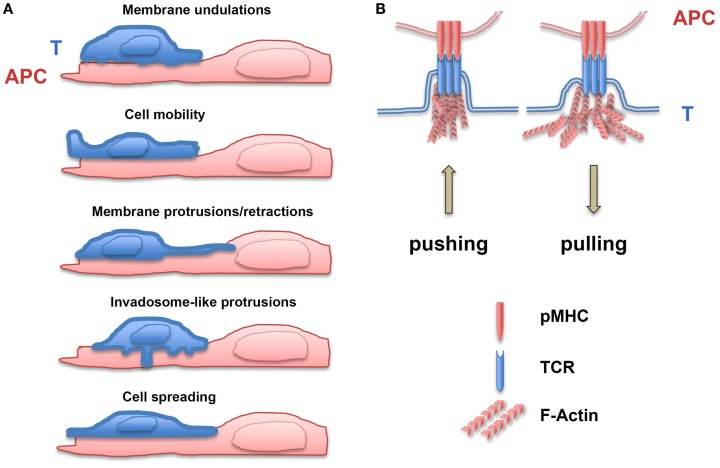
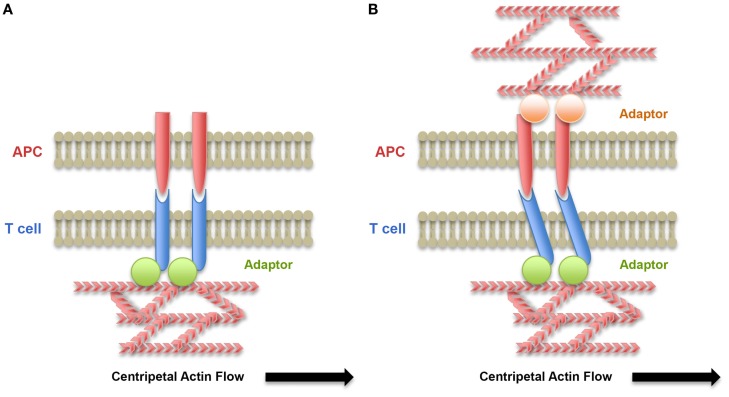
T lymphocyte activation is a pivotal step of the adaptive immune response. It requires the recognition by T-cell receptors (TCR) of peptides presented in the context of major histocompatibility complex molecules (pMHC) present at the surface of antigen-presenting cells (APCs). T lymphocyte activation also involves engagement of costimulatory receptors and adhesion molecules recognizing ligands on the APC. Integration of these different signals requires the formation of a specialized dynamic structure: the immune synapse. While the biochemical and molecular aspects of this cell-cell communication have been extensively studied, its mechanical features have only recently been addressed. Yet, the immune synapse is also the place of exchange of mechanical signals. Receptors engaged on the T lymphocyte surface are submitted to many tensile and traction forces. These forces are generated by various phenomena: membrane undulation/protrusion/retraction, cell mobility or spreading, and dynamic remodeling of the actomyosin cytoskeleton inside the T lymphocyte. Moreover, the TCR can both induce force development, following triggering, and sense and convert forces into biochemical signals, as a bona fide mechanotransducer. Other costimulatory molecules, such as LFA-1, engaged during immune synapse formation, also display these features. Moreover, T lymphocytes themselves are mechanosensitive, since substrate stiffness can modulate their response. In this review, we will summarize recent studies from a biophysical perspective to explain how mechanical cues can affect T lymphocyte activation. We will particularly discuss how forces are generated during immune synapse formation; how these forces affect various aspects of T lymphocyte biology; and what are the key features of T lymphocyte response to stiffness.
Keywords: LFA-1; T lymphocytes; TCR; biomechanics; force control; immune synapse; stiffness.
Figures
References
Publication types
LinkOut - more resources
Full Text Sources
Other Literature Sources
Miscellaneous
