Molecular and Cellular Mechanisms of Muscle Aging and Sarcopenia and Effects of Electrical Stimulation in Seniors
- PMID: 26913161
- PMCID: PMC4748976
- DOI: 10.4081/ejtm.2015.5227
Molecular and Cellular Mechanisms of Muscle Aging and Sarcopenia and Effects of Electrical Stimulation in Seniors
Abstract
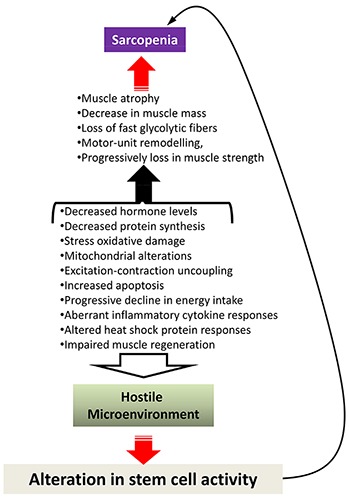
The prolongation of skeletal muscle strength in aging and neuromuscular disease has been the objective of numerous studies employing a variety of approaches. It is generally accepted that cumulative failure to repair damage related to an overall decrease in anabolic processes is a primary cause of functional impairment in muscle. The functional performance of skeletal muscle tissues declines during post- natal life and it is compromised in different diseases, due to an alteration in muscle fiber composition and an overall decrease in muscle integrity as fibrotic invasions replace functional contractile tissue. Characteristics of skeletal muscle aging and diseases include a conspicuous reduction in myofiber plasticity (due to the progressive loss of muscle mass and in particular of the most powerful fast fibers), alteration in muscle-specific transcriptional mechanisms, and muscle atrophy. An early decrease in protein synthetic rates is followed by a later increase in protein degradation, to affect biochemical, physiological, and morphological parameters of muscle fibers during the aging process. Alterations in regenerative pathways also compromise the functionality of muscle tissues. In this review we will give an overview of the work on molecular and cellular mechanisms of aging and sarcopenia and the effects of electrical stimulation in seniors..
Keywords: IGF-1; Sarcopenia; electrical stimulation; miRNA; muscle atrophy; satellite cells.
Figures
References
-
- Vinciguerra M, Musaro A, Rosenthal N. Regulation of muscle atrophy in aging and disease. Adv Exp Med Biol. 2010; 694:211–33. - PubMed
-
- Musarò A. The Basis of Muscle Regeneration. Advances in Biology. 2014, 2014: 1–16.
-
- Carosio S, Berardinelli MG, Aucello M, Musarò A. Impact of ageing on muscle cell regeneration. Ageing Res. Rev. 2011; 10:35–42. - PubMed
Publication types
LinkOut - more resources
Full Text Sources
Other Literature Sources