


Association Study of a Functional Variant on ABCG2 Gene with Sunitinib-Induced Severe Adverse Drug Reaction
- PMID: 26914831
- PMCID: PMC4767438
- DOI: 10.1371/journal.pone.0148177
Association Study of a Functional Variant on ABCG2 Gene with Sunitinib-Induced Severe Adverse Drug Reaction
Abstract
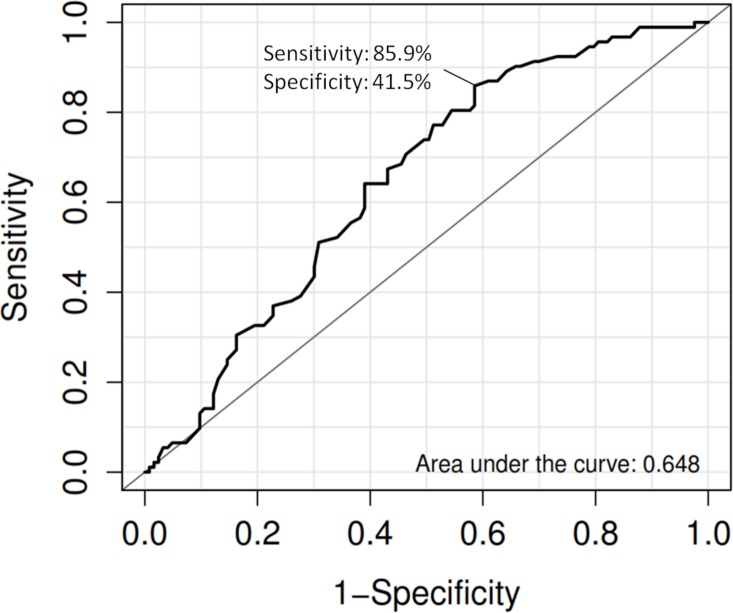
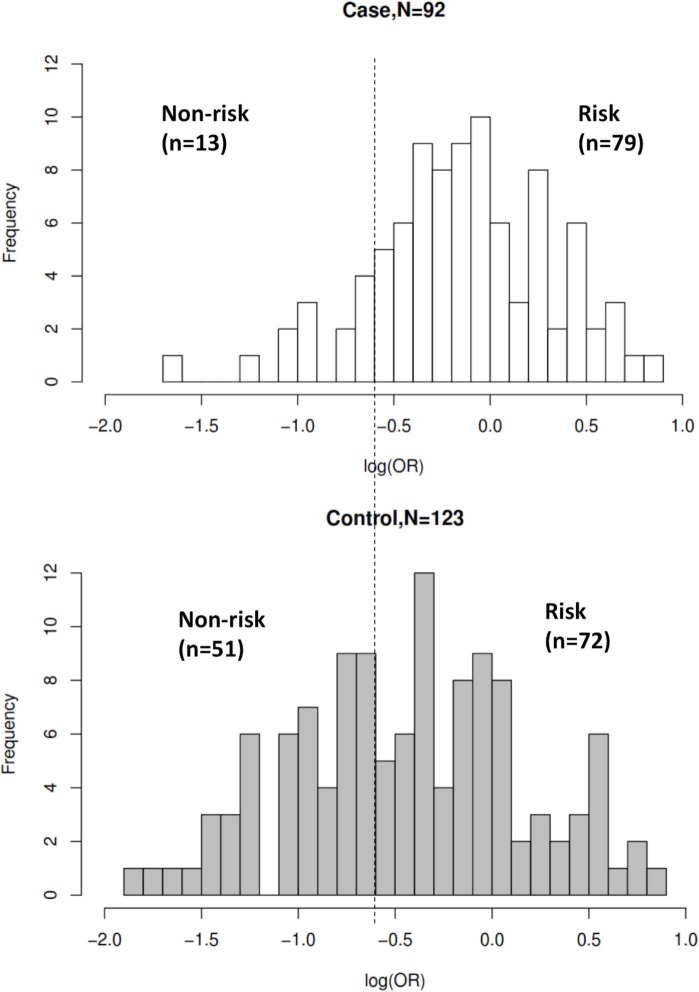
Sunitinib is a tyrosine kinase inhibitor and used as the first-line treatment for advanced renal cell carcinoma (RCC). Nevertheless, inter-individual variability of drug's toxicity was often observed among patients who received sunitinib treatment. This study is to investigate the association of a functional germline variant on ABCG2 that affects the pharmacokinetics of sunitinib with sunitinib-induced toxicity of RCC patients in the Japanese population. A total of 219 RCC patients were recruited to this pharmacogenetic study. ABCG2 421C>A (Q141K) was genotyped by using PCR-Invader assay. The associations of both clinical and genetic variables were evaluated with logistic regression analysis and subsequently receiver operating characteristic (ROC) curve was plotted. About 43% (92/216) of RCC patients that received sunitinib treatment developed severe grade 3 or grade 4 thrombocytopenia according to the National Cancer Institute-Common Terminology Criteria for Adverse Events version 3.0, the most common sunitinib-induced adverse reaction in this study. In the univariate analysis, both age (P = 7.77x10(-3), odds ratio (OR) = 1.04, 95%CI = 1.01-1.07) and ABCG2 421C>A (P = 1.87x10(-2), OR = 1.71, 95%CI = 1.09-2.68) showed association with sunitinib-induced severe thrombocytopenia. Multivariate analysis indicated that the variant ABCG2 421C>A is suggestively associated with severe thrombocytopenia (P = 8.41x10(-3), OR = 1.86, 95% CI = 1.17-2.94) after adjustment of age as a confounding factor. The area under curve (AUC) of the risk prediction model that utilized age and ABCG2 421C>A was 0.648 with sensitivity of 0.859 and specificity of 0.415. Severe thrombocytopenia is the most common adverse reaction of sunitinib treatment in Japanese RCC patients. ABCG2 421C>A could explain part of the inter-individual variability of sunitinib-induced severe thrombocytopenia.
Conflict of interest statement
Figures
References
-
- Lynch TJ, Bell DW, Sordella R, Gurubhagavatula S, Okimoto RA, Brannigan BW, et al. Activating mutations in the epidermal growth factor receptor underlying responsiveness of non-small-cell lung cancer to gefitinib. The New England journal of medicine. 2004;350(21):2129–39. Epub 2004/05/01. 10.1056/NEJMoa040938 . - DOI - PubMed
-
- Pao W, Miller V, Zakowski M, Doherty J, Politi K, Sarkaria I, et al. EGF receptor gene mutations are common in lung cancers from "never smokers" and are associated with sensitivity of tumors to gefitinib and erlotinib. Proceedings of the National Academy of Sciences of the United States of America. 2004;101(36):13306–11. Epub 2004/08/27. 10.1073/pnas.0405220101 - DOI - PMC - PubMed
-
- Mendel DB, Laird AD, Xin X, Louie SG, Christensen JG, Li G, et al. In vivo antitumor activity of SU11248, a novel tyrosine kinase inhibitor targeting vascular endothelial growth factor and platelet-derived growth factor receptors: determination of a pharmacokinetic/pharmacodynamic relationship. Clinical cancer research: an official journal of the American Association for Cancer Research. 2003;9(1):327–37. Epub 2003/01/23. . - PubMed
Publication types
MeSH terms
Substances
LinkOut - more resources
Full Text Sources
Other Literature Sources
Medical
Molecular Biology Databases
