


Strengths, weaknesses, opportunities and challenges for long acting injectable therapies: Insights for applications in HIV therapy
- PMID: 26916628
- PMCID: PMC4935562
- DOI: 10.1016/j.addr.2016.02.003
Strengths, weaknesses, opportunities and challenges for long acting injectable therapies: Insights for applications in HIV therapy
Abstract
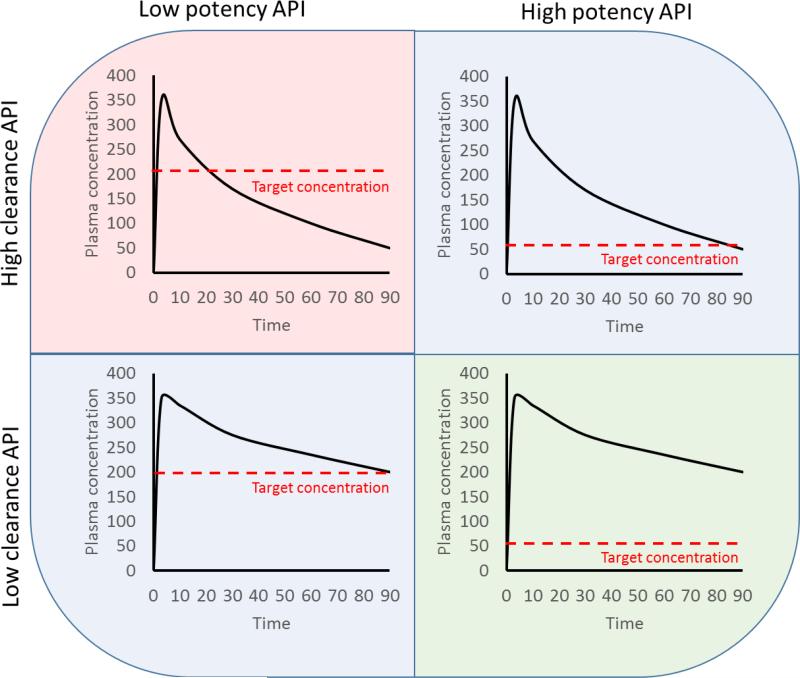
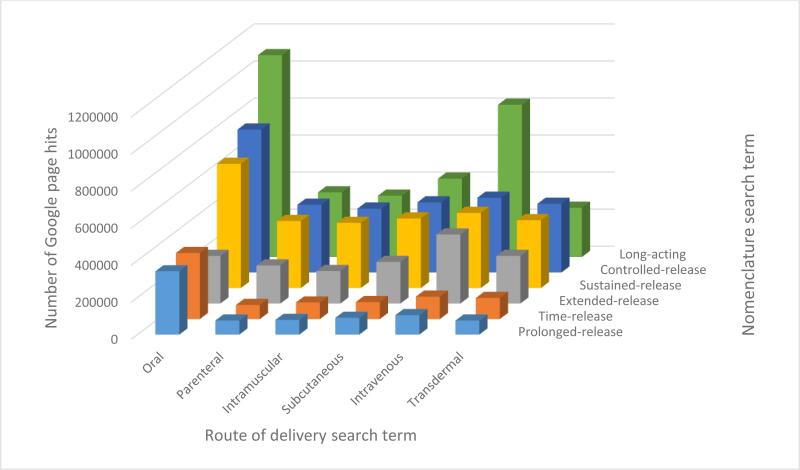
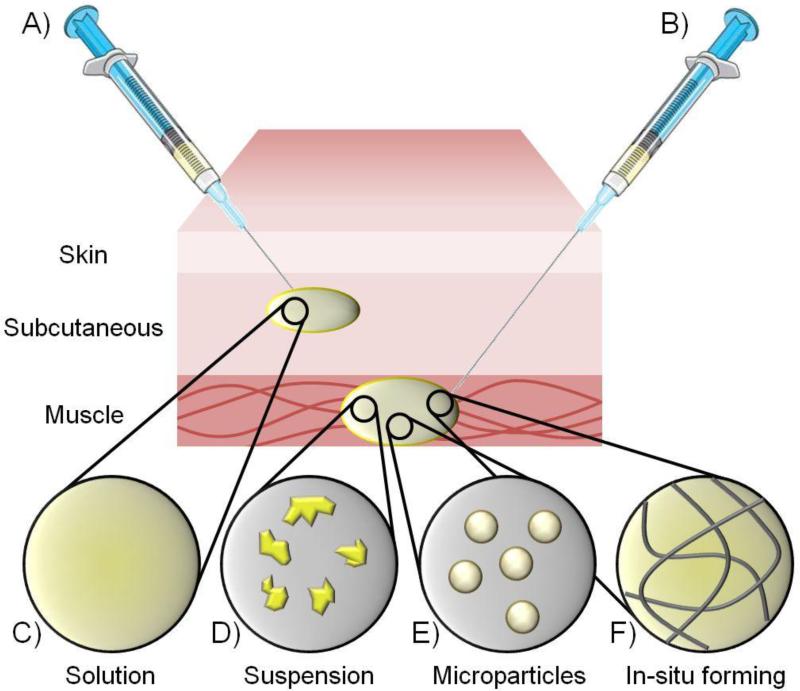
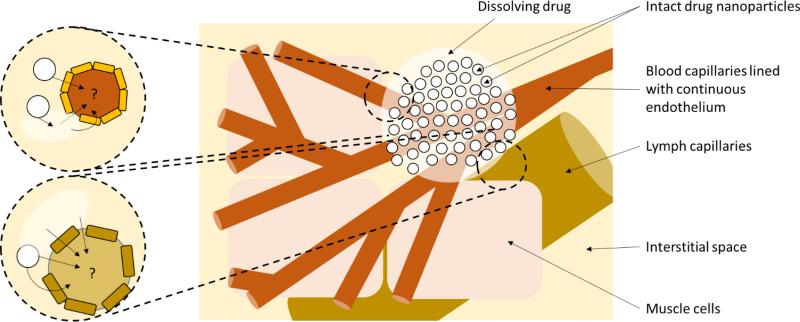
Advances in solid drug nanoparticle technologies have resulted in a number of long-acting (LA) formulations with the potential for once monthly or longer administration. Such formulations offer great utility for chronic diseases, particularly when a lack of medication compliance may be detrimental to treatment response. Two such formulations are in clinical development for HIV but the concept of LA delivery has its origins in indications such as schizophrenia and contraception. Many terms have been utilised to describe the LA approach and standardisation would be beneficial. Ultimately, definitions will depend upon specific indications and routes of delivery, but for HIV we propose benchmarks that reflect perceived clinical benefits and available data on patient attitudes. Specifically, we propose dosing intervals of ≥1week, ≥1month or ≥6months, for oral, injectable or implantable strategies, respectively. This review focuses upon the critical importance of potency in achieving the LA outcome for injectable formulations and explores established and emerging technologies that have been employed across indications. Key technological challenges such as the need for consistency and ease of administration for drug combinations, are also discussed. Finally, the review explores the gaps in knowledge regarding the pharmacology of drug release from particulate-based LA injectable suspensions. A number of hypotheses are discussed based upon available data relating to local drug metabolism, active transport systems, the lymphatics, macrophages and patient-specific factors. Greater knowledge of the mechanisms that underpin drug release and protracted exposure will help facilitate further development of this strategy to achieve the promising clinical benefits.
Keywords: Controlled-release; Drug delivery; Extended-release; Formulation; Nanomedicine; Pharmacokinetics; Sustained-release; Time-release.
Copyright © 2016 Elsevier B.V. All rights reserved.
Figures
References
-
- UNAIDS FACT SHEET 2015. 2015
-
- Palella FJ, Jr., Baker RK, Moorman AC, Chmiel JS, Wood KC, Brooks JT, Holmberg SD. Mortality in the highly active antiretroviral therapy era: changing causes of death and disease in the HIV outpatient study. J Acquir Immune Defic Syndr. 2006;43:27–34. - PubMed
-
- DHHS . Guidelines for the use of antiretroviral agents in HIV-infected adults and adolescents. Department of Health and Human Services; 2010. Panel on Antiretroviral Guidelines for Adult and Adolescents. pp. 1–166.
-
- Baert L, van 't Klooster G, Dries W, Francois M, Wouters A, Basstanie E, Iterbeke K, Stappers F, Stevens P, Schueller L, Van Remoortere P, Kraus G, Wigerinck P, Rosier J. Development of a long-acting injectable formulation with nanoparticles of rilpivirine (TMC278) for HIV treatment. Eur J Pharm Biopharm. 2009;72:502–508. - PubMed
Publication types
MeSH terms
Substances
Grants and funding
LinkOut - more resources
Full Text Sources
Other Literature Sources
Medical
