Review
. 2016 Aug;26(8):797-803.
doi: 10.1093/glycob/cww022. Epub 2016 Feb 24.

Nanoscale materials for probing the biological functions of the glycocalyx

Affiliations
Review

Nanoscale materials for probing the biological functions of the glycocalyx

Mia L Huang et al. Glycobiology. 2016 Aug.

Abstract

Glycans are among the most intriguing carriers of biological information in living systems. The structures of glycans not only convey the cells' physiological state, but also regulate cellular communication and responses by engaging receptors on neighboring cells and in the extracellular matrix. The assembly of simple monosaccharide building blocks into linear or branched oligo- and polysaccharides gives rise to a large repertoire of diverse glycan structures. Despite their structural complexity, individual glycans rarely engage their protein partners with high affinity. Yet, glycans modulate biological processes with exquisite selectivity and specificity. To correctly evaluate glycan interactions and their biological consequences, one needs to look beyond individual glycan structures and consider the entirety of the cell-surface landscape. There, glycans are presented on protein scaffolds, or are linked directly to membrane lipids, forming a complex, hierarchically organized network with specialized functions, called the glycocalyx. Nanoscale glycomaterials, which can mimic the various components of the glycocalyx, have been instrumental in revealing how the presentation of glycans can influence their biological functions. In this review, we wish to highlight some recent developments in this area, while placing emphasis on the applications of glycomaterials providing new insights into the mechanisms through which glycans mediate cellular functions.

Keywords: glycocalyx; glycomaterials; nanomaterials; signal transduction.


Figures

Fig. 1.
Fig. 1.
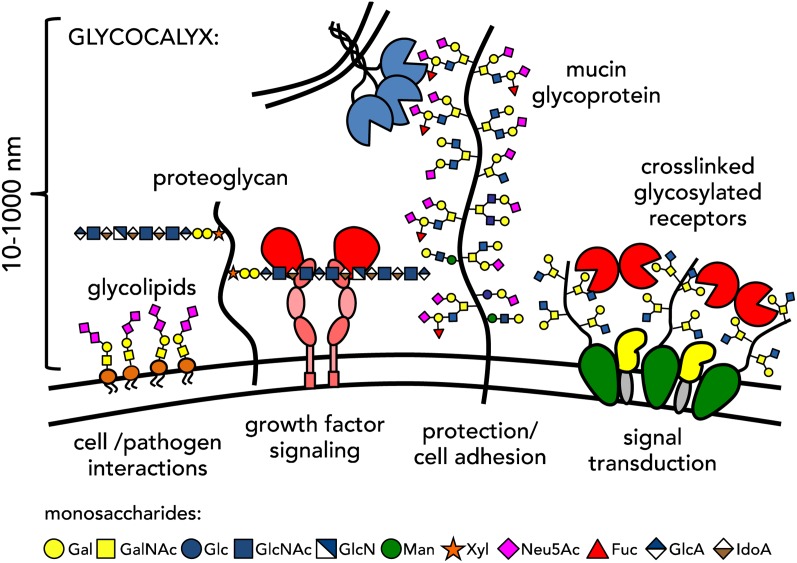
The cell surface is decorated with a complex mesh of glycoconjugates, which engage their protein receptors over distances spanning tens to hundreds of nanometers and mediate cellular interactions and signaling. This figure is available in black and white in print and in color at Glycobiology online.
Fig. 2.
Fig. 2.
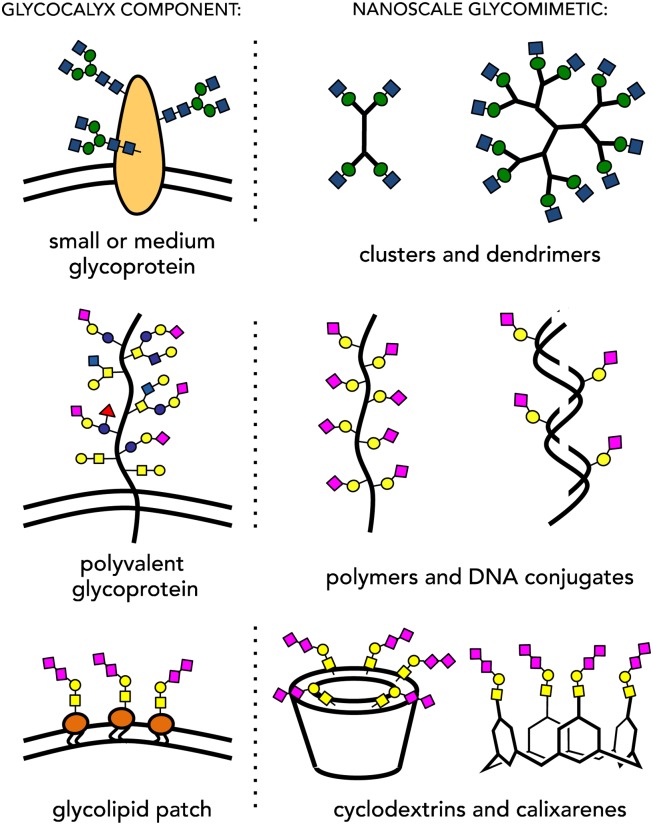
Synthetic nanoscale glycomaterials can mimic the various components of the glycocalyx. This figure is available in black and white in print and in color at Glycobiology online.
Fig. 3.
Fig. 3.
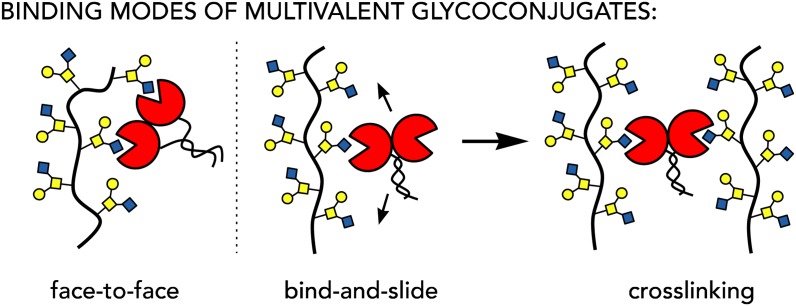
Multivalent binding is required for glycoconjugates to engage their protein partners with high avidity. The “face-to-face” and “bind-and-slide” models have been proposed, with the latter providing a mechanism for crosslinking of membrane-bound glycoproteins. This figure is available in black and white in print and in color at Glycobiology online.
Fig. 4.
Fig. 4.
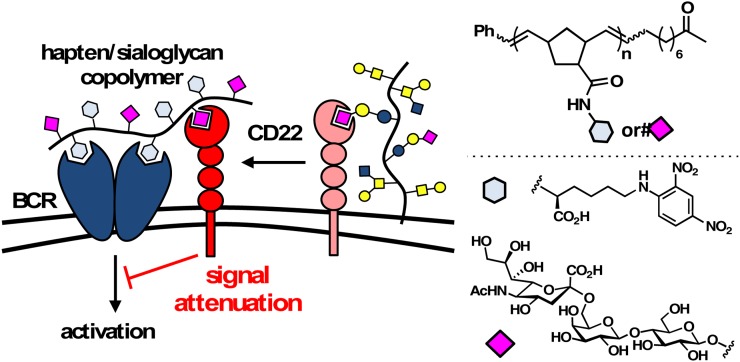
Synthetic multivalent glycopolymers were designed to elucidate the role of receptor clustering in the modulation of B-cell responses. The displayed dinitrophenyl hapten induced BCR complex formation to activate signaling, whereas the sialoglycan ligands recruited the CD22 co-receptor to suppress B-cell responses (adapted from Courtney et al. 2009). This figure is available in black and white in print and in color at Glycobiology online.
Fig. 5.
Fig. 5.
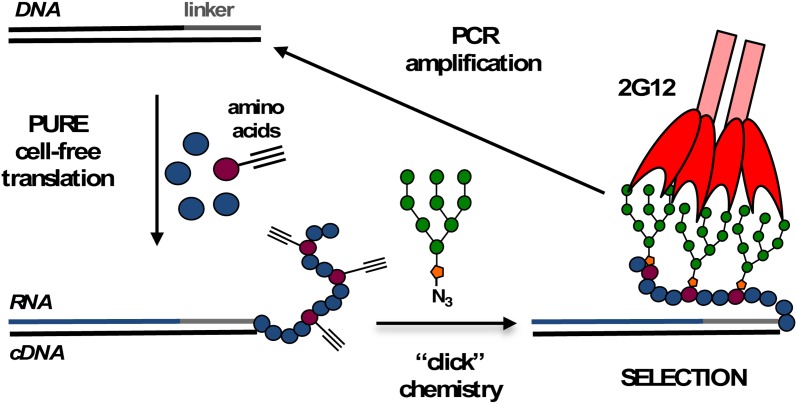
Directed evolution generated multivalent ligands for the HIV antibody, 2G12. A selection among ∼1013 neo-glycopeptides, prepared through cell-free ribosomal translation and chemical glycosylation, yielded high-avidity glycopeptides with 3–4 oligomannose residues, matching the number of binding sites in the dimeric 2G12 (adapted from Horiya et al. 2014). This figure is available in black and white in print and in color at Glycobiology online.
Fig. 6.
Fig. 6.
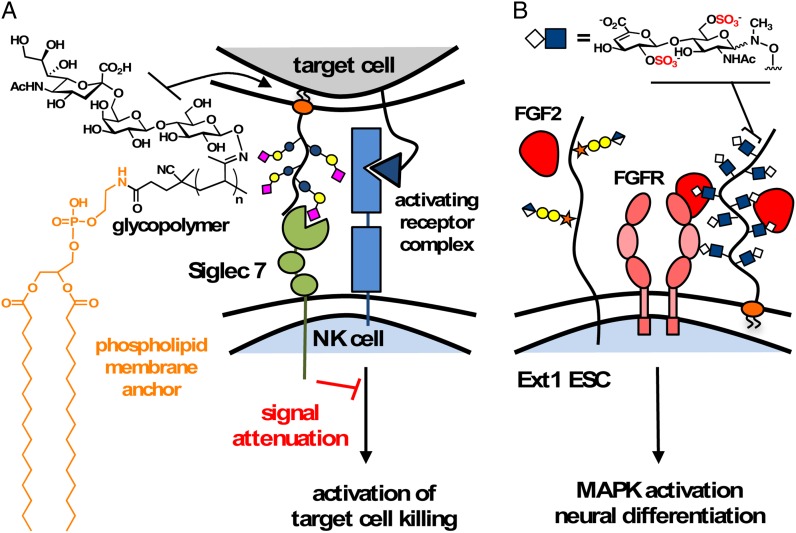
Nanoscale glycomaterials armed with lipid anchors can be introduced directly into the cellular glycocalyx via insertion into the extracellular leaflet of the plasma membrane. (A) Surface engineering with polymers carrying sialoglycans to mimic the hypersialylation state of cancer cells revealed the role of sialylation in evading surveillance by NK cells. Trans-interactions between cancer cell sialoglycans and the NK cell-surface receptor, Siglec 7, attenuated NK cell cytotoxicity. (B) Glycopolymers with affinity for the FGF2 restored FGF-mediated signaling in Ext1−/− ESCs lacking functional proteoglycan co-receptors and enabled neural differentiation. This figure is available in black and white in print and in color at Glycobiology online.

References

    1. Amin MN, McLellan JS, Huang W, Orwenyo J, Burton DR, Koff WC, Kwong PD, Wang L-X. 2013. Synthetic glycopeptides reveal the glycan specificity of HIV-neutralizing antibodies. Nat Chem Biol. 9(8):521–526. - PMC - PubMed
    1. Becer CR, Gibson MI, Geng J, Ilyas R, Wallis R, Mitchell DA, Haddleton DM. 2010. High-affinity glycopolymer binding to human DC-SIGN and disruption of DC-SIGN interactions with HIV envelope glycoprotein. J Am Chem Soc. 132(43):15130–15132. - PMC - PubMed
    1. Bishop JR, Schuksz M, Esko JD. 2007. Heparan sulphate proteoglycans fine-tune mammalian physiology. Nature. 446(7139):1030–1037. - PubMed
    1. Bovin N, Tuzikov AB, Chinarev AA, Gambaryan AS. 2004. Multimeric glycotherapeutics: New paradigm. Glycoconj J. 21(8):471–478. - PubMed
    1. Courtney AH, Puffer EB, Pontrello JK, Yang ZQ, Kiessling LL. 2009. Sialylated multivalent antigens engage CD22 in trans and inhibit B cell activation. Proc Natl Acad Sci USA. 106(8):2500–2505. - PMC - PubMed

Publication types

MeSH terms