. 2016 Jun:105:618-629.
doi: 10.1016/j.neuropharm.2016.02.028. Epub 2016 Feb 24.

Integration of inhibitory and excitatory effects of α7 nicotinic acetylcholine receptor activation in the prelimbic cortex regulates network activity and plasticity

Affiliations

Integration of inhibitory and excitatory effects of α7 nicotinic acetylcholine receptor activation in the prelimbic cortex regulates network activity and plasticity

Matthew Udakis et al. Neuropharmacology. 2016 Jun.

Abstract

Cognitive and attentional processes governed by the prefrontal cortex (PFC) are influenced by cholinergic innervation. Here we have explored the role of α7 nicotinic acetylcholine receptors (nAChRs) as mediators of cholinergic signalling in the dorsomedial (prelimbic) PFC, using mouse brain slice electrophysiology. Activation of α7 nAChRs located on glutamatergic terminals and cell soma of GABAergic interneurons increased excitation and inhibition, respectively, in layer V of the prelimbic cortex. These actions were distinguished by their differential dependence on local acetylcholine (ACh): potentiation of endogenous cholinergic signalling with the positive allosteric modulator, PNU-120596, enhanced spontaneous excitatory events, an effect that was further increased by inhibition of acetylcholinesterase. In contrast, α7 nicotinic modulation of inhibitory signalling required addition of exogenous agonist (PNU-282987) as well as PNU-120596, and was unaffected by acetylcholinesterase inhibition. Thus α7 nAChRs can bi-directionally regulate network activity in the prelimbic cortex, depending on the magnitude and localisation of cholinergic signalling. This bidirectional influence is manifest in dual effects of α7 nAChRs on theta-burst-induced long-term potentiation (LTP) in layer V of the prelimbic cortex. Antagonism of α7 nAChRs significantly decreased LTP implicating a contribution from endogenous ACh, consistent with the ability of local ACh to enhance glutamatergic signalling. Exogenous agonist plus potentiator also decreased LTP, indicative of the influence of this drug combination on inhibitory signalling. Thus α7 nAChRs make a complex contribution to network activity and synaptic plasticity in the prelimbic cortex.

Keywords: GABA; Glutamate; LTP; Nicotinic receptors; Prefrontal cortex; Prelimbic cortex.


Figures

None
Graphical abstract
Fig. 1
Fig. 1
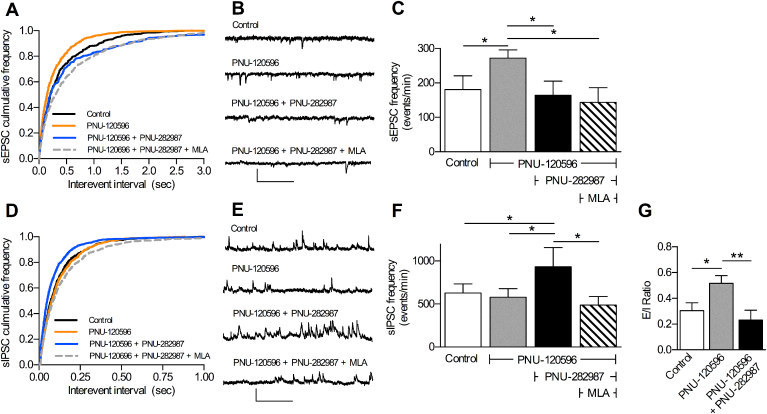
α7 nAChR activation differentially regulates excitatory and inhibitory signalling in the prelimbic cortex. Spontaneous EPSCs (sEPSCs) and IPSCs (sIPSCs) were recorded from the same layer V pyramidal neurons of the prelimbic cortex by switching the holding voltage between −60 mV and 0 mV respectively (see Methods). The α7 nAChR-selective PAM PNU-120596 (10 μM) alone, followed by PAM plus α7 nAChR-selective agonist PNU-282987 (300 nM) were bath applied, before addition of 100 nM MLA. A,D. Cumulative inter-event interval distribution of sEPSCs (A) and sIPSCs (D) in the presence and absence of different drug combinations. B,E. example traces of spontaneous events. C,F. summary of sEPSC (C) and sIPSC (F) frequencies * significantly different, p ≤ 0.001, K–S test based on corresponding cumulative frequency plots n = 7 (4). G. Excitatory/inhibitory (E/I) transmission ratio * significantly different, p ≤ 0.05, ** significantly different, p ≤ 0.01: one-way repeated measures ANOVA with Dunnett's post hoc test, n = 7 (4). Scale bars: 30 pA and 0.5 s.
Fig. 2
Fig. 2
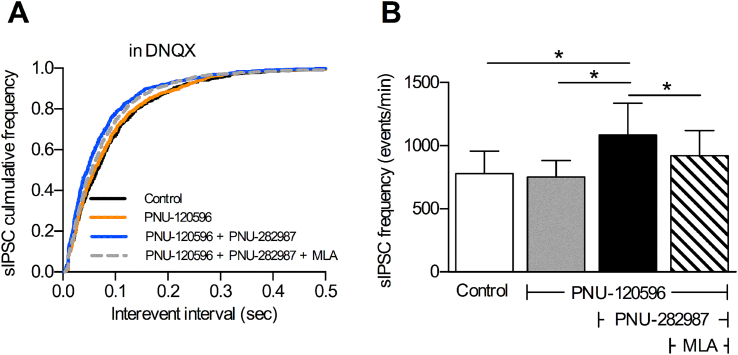
α7 nAChR-induced increase in spontaneous IPSC frequency is independent of glutamate signalling. Spontaneous IPSCs (sIPSCs) were recorded in the presence of the AMPA receptor antagonist DNQX. A. Cumulative inter-event interval distributions, showing the change in sIPSC frequency in the presence of DNQX (10 μM) after bath application of α7 nAChR PAM (PNU-120596; 10 μM) alone and with α7 nAChR agonist (PNU-282987; 300 nM), in the absence then presence of 100 nM MLA. B. Summary histogram of sIPSC frequencies.* Significantly different, p ≤ 0.001, K–S test based on cumulative frequency plots shown in A; n = 6 (4).
Fig. 3
Fig. 3
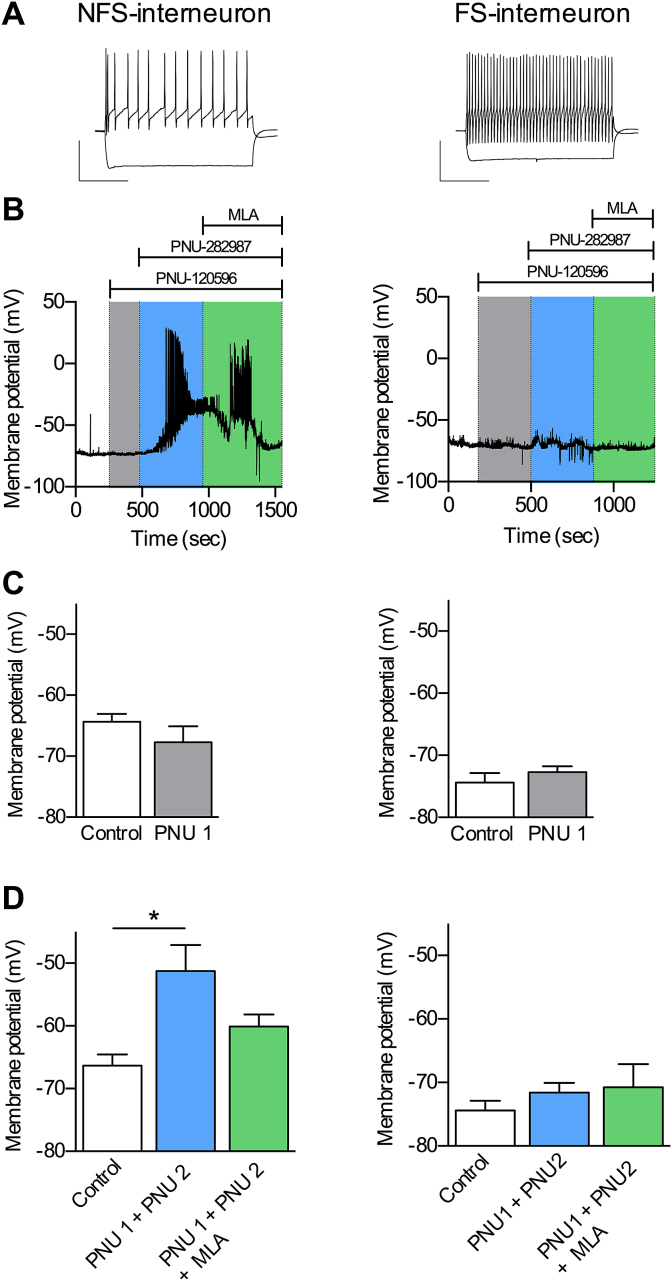
α7 nAChR activation but not positive allosteric modulation directly depolarises layer V inhibitory interneurons. Changes in the membrane potential of layer V non-fast spiking (NFS) and fast spiking (FS) inhibitory interneurons were recorded in response to α7 nAChR modulation activation and inhibition. A. Spiking profile of layer V NFS (left) and FS (right) interneurons in response to a 300 ms current injection of +150 pA or −150 pA. Scale bars 50 mV and 100 ms. B. Representative current clamp recording from NFS (left) and FS (right) showing the changes in membrane potential in response to 10 μM PNU-120596 (‘PNU 1’), co-application of PNU-120596 and 300 nMPNU-282987 (‘PNU1 + PNU 2’), and addition of 100 nM MLA. C. Averaged membrane potential in response to 10 μM PNU-120596 in NFS (left; n = 3) and FS (right; n = 5) interneurons; recordings from 3 animals (C), and in response to co-application of PNU-120596 and 300 nM PNU-282987 followed by addition of 100 nM MLA in NFS (left; n = 5) and FS (right; n = 5); recordings from 3 animals (D). * significantly different from control, p ≤ 0.05, one-way repeated measures ANOVA with Dunnett's post hoc test.
Fig. 4
Fig. 4
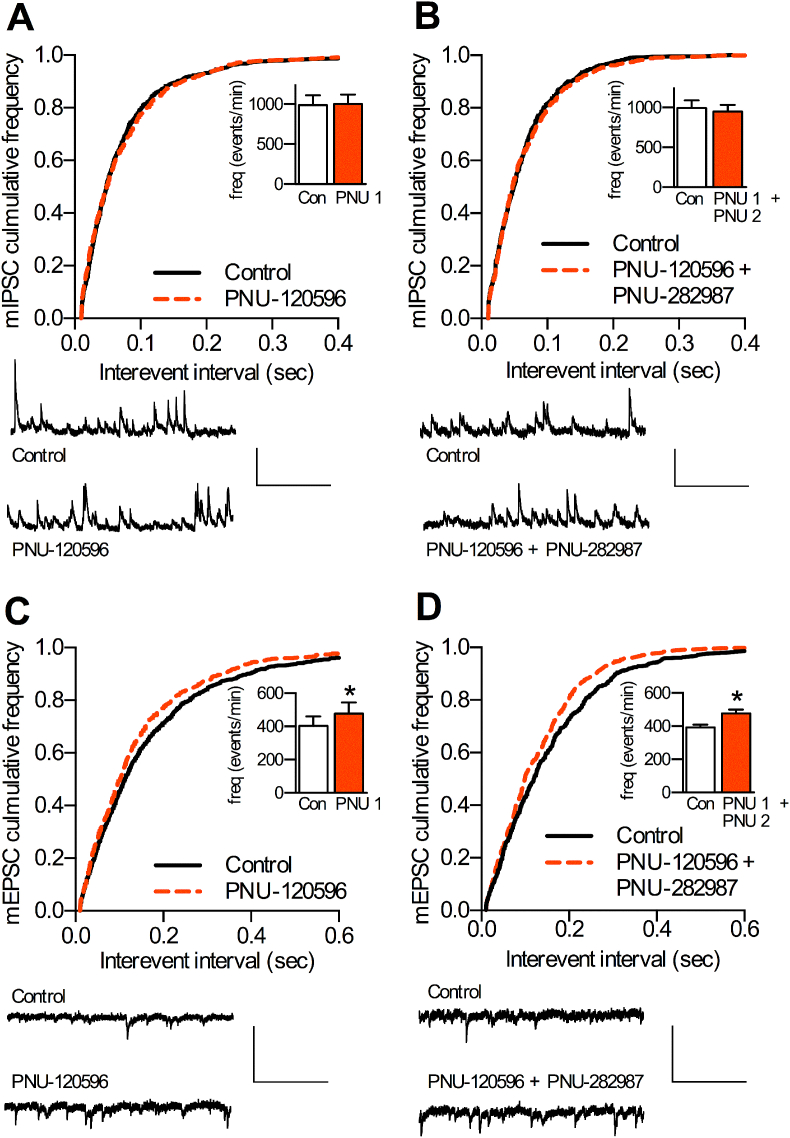
Effect of α7 nAChR activation on miniature EPSCs and IPSCs. Miniature IPSC (mIPSC) and EPSC (mEPSC) frequencies were measured in layer V pyramidal neurons of the prelimbic cortex in the presence of tetrodotoxin (1 μM) to block axonal conduction. Cumulative distribution and summary histograms (inserts) of mIPSC (A,B) and mEPSC (C,D) frequencies in the presence or absence of PNU-120596 (10 μM) alone (‘PNU 1’; n = 11 (9)) (A,C) or PNU-120596 (10 μM) co-applied with PNU-282987 (300 nM) (‘PNU 1 + PNU 2’; n = 5 (4)) (B), or PNU-282987 (30 nM) (‘PNU 1 + PNU 2’; n = 3 (3)) (D). Representative traces are shown beneath each panel. * significantly different from control, p ≤ 0.001, K–S test based on corresponding cumulative frequency plot. Scale bars: 30 pA and 0.5 s.
Fig. 5
Fig. 5
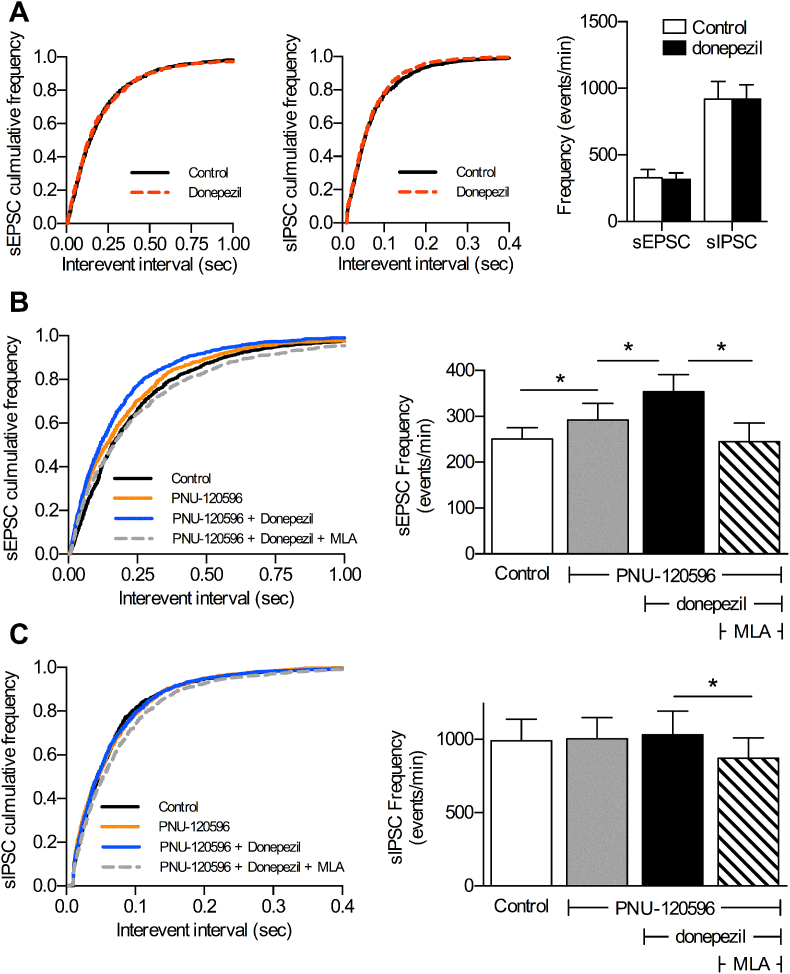
Enhancing endogenous acetylcholine selectively potentiates excitatory signalling. Spontaneous EPSCs (sEPSCs) and IPSCs (sIPSCs) were recorded from layer V pyramidal neurons in the presence and absence of donepezil (10 μM) to block acetylcholinesterase activity. A. Cumulative inter-event interval distributions and summary histogram of sEPSC and sIPSC frequencies confirm that donepezil had no effect on either sEPSC or sIPSC frequency; n = 8 (5). B,C Cumulative inter-event interval distributions and summary histogram of sEPSCs (B) and sIPSCs (C) in the presence and absence of PNU-120596 (10 μM), donepezil (10 μM), and MLA (100 nM), n = 6 (6). * significantly different, p ≤ 0.001, K–S test based on corresponding cumulative frequency plot.
Fig. 6
Fig. 6
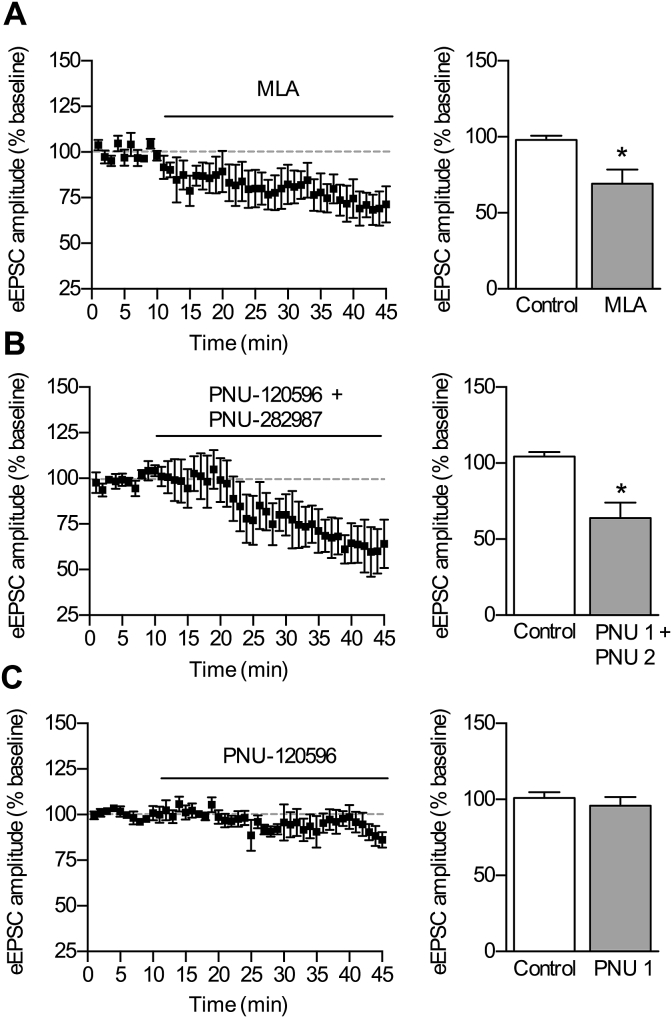
Both antagonism and activation of α7 nAChRs decreases evoked EPSC amplitudes. EPSCs were evoked in layer V pyramidal neurons by stimulation of distal dendrites in layers II/III of the prelimbic cortex. The amplitude of these EPSCs was measured before and after bath application of (A) MLA (100 nM), n = 4 (4), (B) co-application of the α7 nAChR PAM PNU-120596; (10 μM) and α7 nAChR agonist PNU-282987 (300 nM), n = 5 (5), and (C) α7 nAChR 10 μM PAM alone, n = 4 (4). Time-courses show amplitude of evoked potentials as a % of mean control potentials that were collected for 20 min in the absence of drugs; histograms show averaged data at time points 10 min (control) and 40 min (drug). * significantly different from control, p ≤ 0.05, paired t-test.
Fig. 7
Fig. 7
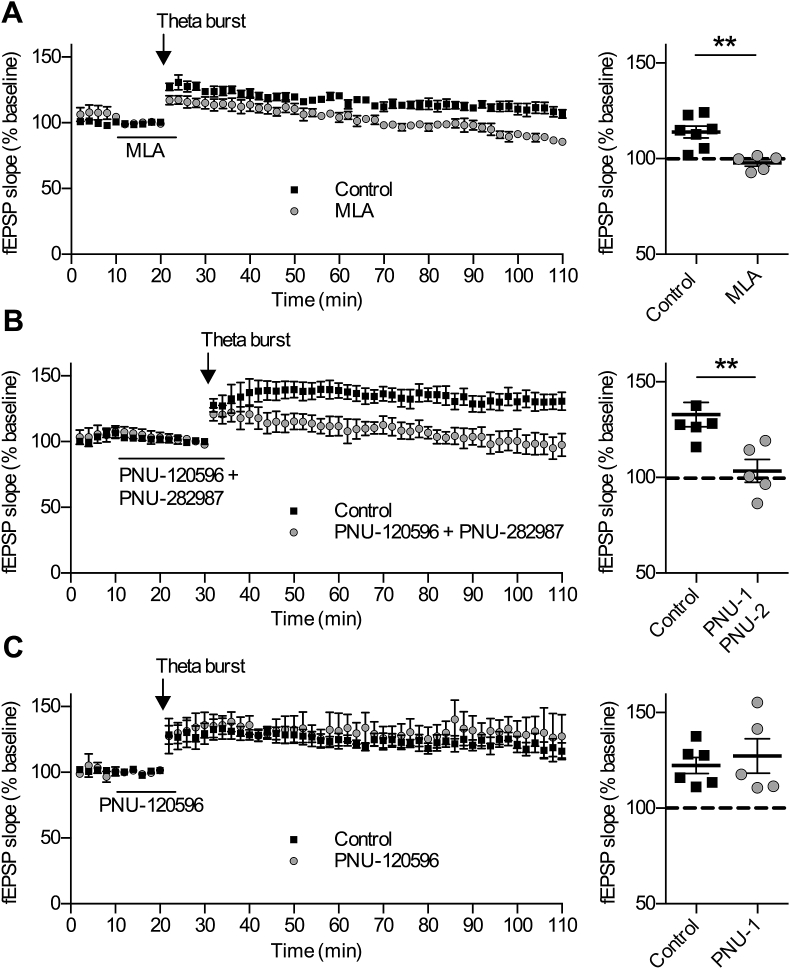
Both antagonism and activation of α7 nAChRs inhibit long-term potentiation in layer V of the prelimbic cortex. Field EPSPs (fEPSPs) were recorded from prelimbic layer V; long-term potentiation was induced via a theta burst stimulation in layer II/III. Recordings were made in the absence (control n = 7 (7)) and presence of bath applied MLA (100 nM; n = 5 (5)) (A), α7 nAChR PAM PNU-120596 (10 μM) and agonist PNU-282987 (300 nM) (control; n = 6 (6); drug n = 5 (5)) (B), and 10 μM PNU-120596 alone (control n = 6 (6); drug n = 5 (5) (C). MLA and PNU-120596 were bath applied for 10 min before and during theta-burst stimulation whereas PNU-120596 + PNU-282987 co-application was bath applied for 20 min. Histogram (right) shows % LTP potentiation from baseline taken 50–60 min post theta burst for each slice. Both MLA and co-application of PNU-120596 and PNU-282987 significantly reduced the levels of LTP from control, p ≤ 0.05, t-test.
Fig. 8
Fig. 8
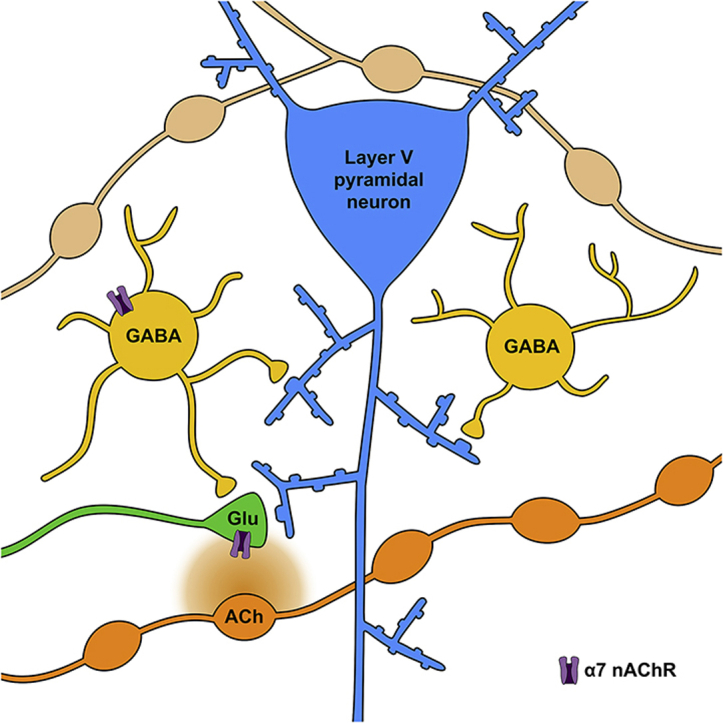
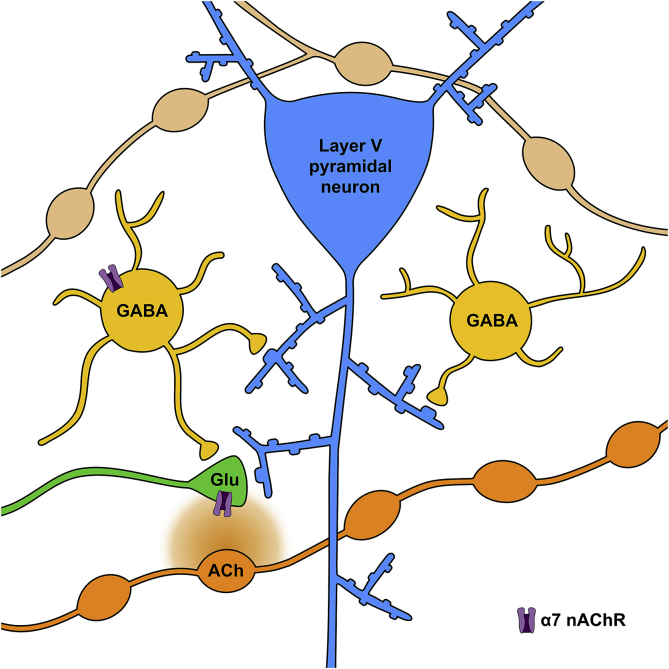
Layer V pyramidal neurons are dynamically controlled by α7 nAChRs. A model illustrating the potential locations of α7 nAChRs and the interplay between glutamatergic, GABAergic and cholinergic systems in layer V of the prelimbic cortex. α7 nAChRs are shown on the terminal of a glutamatergic afferent (green) and on cell bodies of inhibitory interneurons (yellow). Thus α7 nAChRs are able to influence both the excitability and inhibition of layer V pyramidal neurons (blue). Tonic endogenous ACh selectively targets α7 nAChRs on glutamatergic terminals, suggesting close proximity to tonically active en passant varicosities (orange). In contrast, GABAergic interneurons bearing α7 nAChRs are either more distant from cholinergic fibres, or localised close to tonically inactive varicosities (brown). (For interpretation of the references to colour in this figure legend, the reader is referred to the web version of this article.).

References

    1. Alkondon M., Pereira E.F., Barbosa C.T., Albuquerque E.X. Neuronal nicotinic acetylcholine receptor activation modulates gamma-aminobutyric acid release from CA1 neurons of rat hippocampal slices. J. Pharmacol. Exp. Ther. 1997;283:1396–1411. - PubMed
    1. Aracri P., Consonni S., Morini R., Perrella M., Rodighiero S., Amadeo A., Becchetti A. Tonic modulation of GABA release by nicotinic acetylcholine receptors in layer V of the murine prefrontal cortex. Cereb. Cortex. 2010;20:1539–1555. - PubMed
    1. Aston-Jones G., Shaver R., Dinan T.G. Nucleus basalis neurons exhibit axonal branching with decreased impulse conduction velocity in rat cerebrocortex. Brain Res. 1985;325:271–285. - PubMed
    1. Balleine B.W., O'Doherty J.P. Human and rodent homologies in action control: corticostriatal determinants of goal-directed and habitual action. Neuropsychopharmacol. 2010;35:48–69. - PMC - PubMed
    1. Bennett C., Arroyo S., Berns D., Hestrin S. Mechanisms generating dual-component nicotinic EPSCs in cortical interneurons. J. Neurosci. 2012;32:17287–17296. - PMC - PubMed

Publication types

MeSH terms