


Military service, deployments, and exposures in relation to amyotrophic lateral sclerosis etiology
- PMID: 26923711
- PMCID: PMC4876822
- DOI: 10.1016/j.envint.2016.02.014
Military service, deployments, and exposures in relation to amyotrophic lateral sclerosis etiology
Abstract
Background: Factors underlying a possible excess of amyotrophic lateral sclerosis (ALS) among military veterans remain unidentified. Limitations of previous studies on this topic include reliance on ALS mortality as a surrogate for ALS incidence, low statistical power, and sparse information on military-related factors.
Objectives: We evaluated associations between military-related factors and ALS using data from a case-control study of U.S. military veterans.
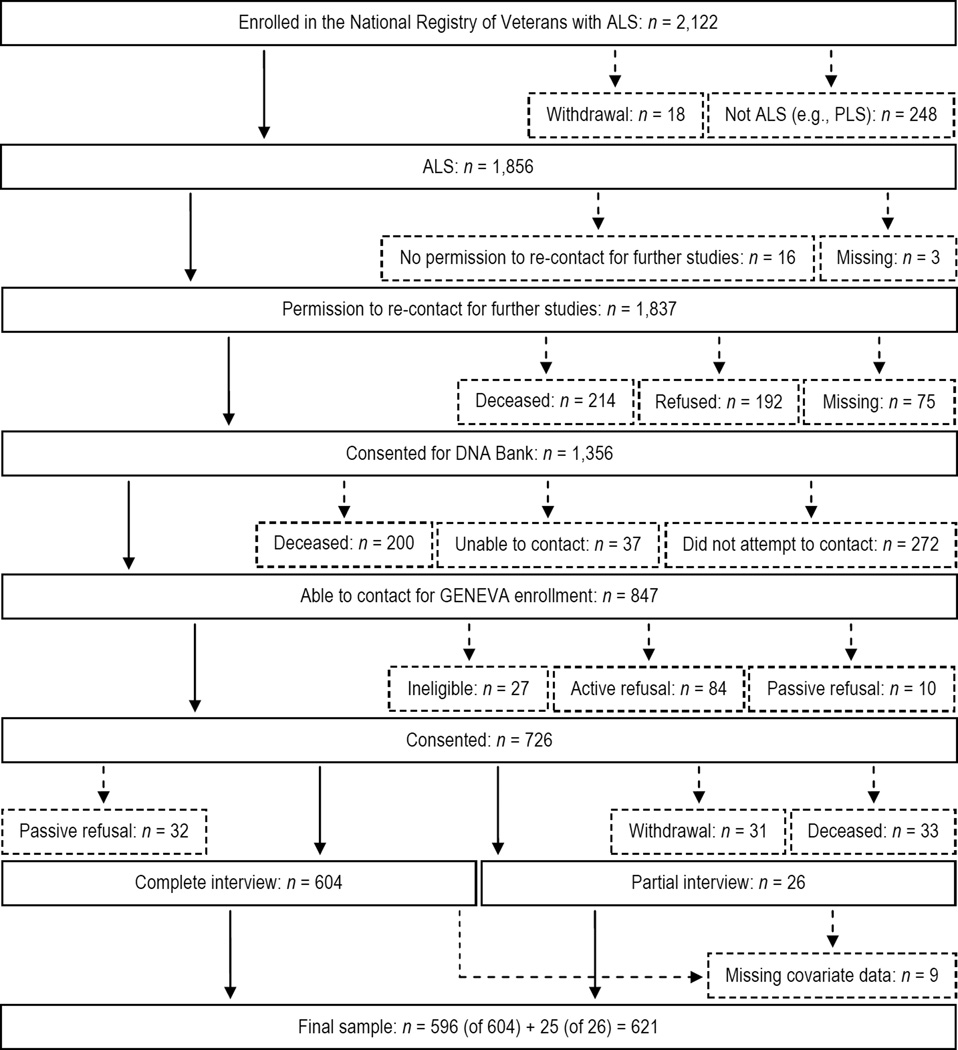
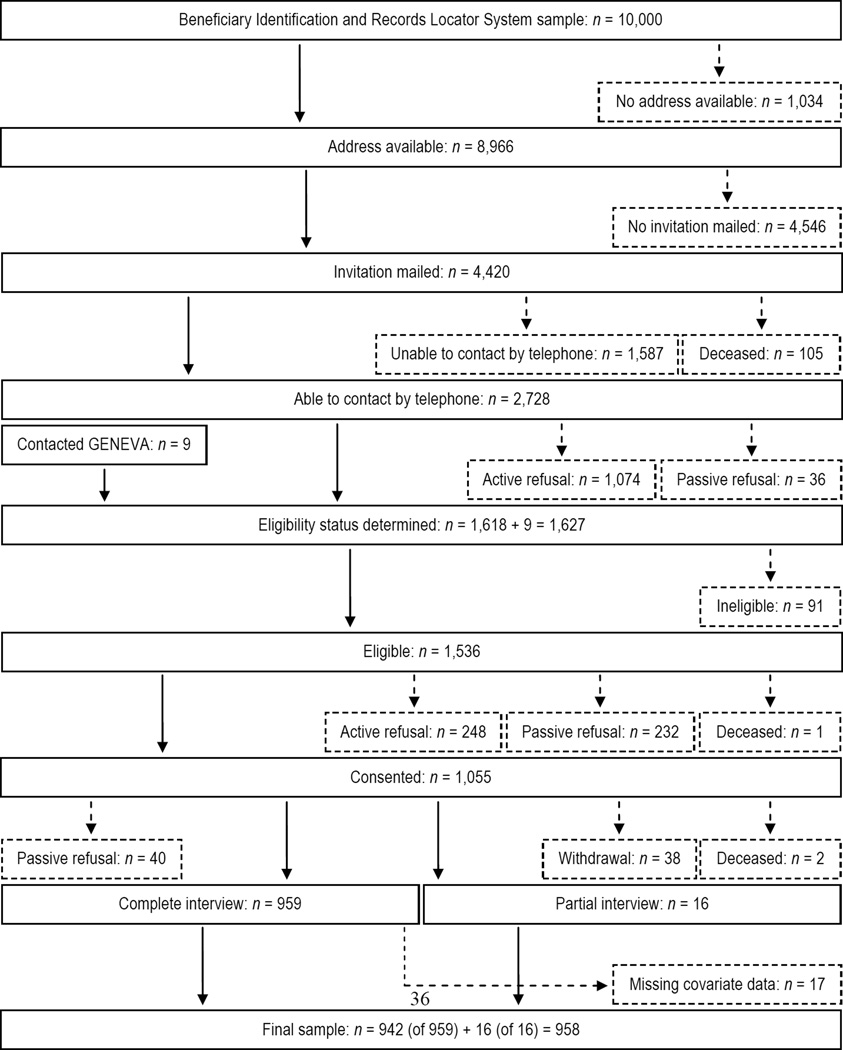
Methods: From 2005 to 2010, we identified medical record-confirmed ALS cases via the National Registry of Veterans with ALS and controls via the Veterans Benefits Administration's Beneficiary Identification and Records Locator System database. In total, we enrolled 621 cases and 958 frequency-matched controls in the Genes and Environmental Exposures in Veterans with Amyotrophic Lateral Sclerosis study. We collected information on military service and deployments and 39 related exposures. We used unconditional logistic regression models to estimate odds ratios (ORs) and 95% confidence intervals (CIs). We used inverse probability weighting to adjust for potential bias from confounding, missing covariate data, and selection arising from a case group that disproportionately included long-term survivors and a control group that may or may not differ from U.S. military veterans at large.
Results: The odds of ALS did not differ for veterans of the Air Force, Army, Marines, and Navy. We found higher odds of ALS for veterans whose longest deployment was World War II or the Korean War and a positive trend with total years of all deployments (OR=1.27; 95% CI: 1.06, 1.52). ALS was positively associated with exposure to herbicides for military purposes, nasopharyngeal radium, personal pesticides, exhaust from heaters or generators, high-intensity radar waves, contaminated food, explosions within one mile, herbicides in the field, mixing and application of burning agents, burning agents in the field, and Agent Orange in the field, with ORs between 1.50 and 7.75.
Conclusions: Although our results need confirmation, they are potentially important given the large number of U.S. military veterans, and they provide clues to potential factors underlying the apparent increase of ALS in veteran populations.
Keywords: Amyotrophic lateral sclerosis; Case-control; Deployment; Etiology; Military.
Published by Elsevier Ltd.
Conflict of interest statement
The authors declare they have no competing financial interests.
Figures
References
-
- Allen KD, Kasarskis EJ, Bedlack RS, Rozear MP, Morgenlander JC, Sabet A, et al. The National Registry of Veterans with amyotrophic lateral sclerosis. Neuroepidemiology. 2008;30:180–190. - PubMed
-
- Arrighi HM, Hertz-Picciotto I. The evolving concept of the healthy worker survivor effect. Epidemiology. 1994;5:189–196. - PubMed
-
- Barth SK, Kang HK, Bullman TA, Wallin MT. Neurological mortality among U.S. veterans of the Persian Gulf War: 13-year follow-up. Am J Ind Med. 2009;52:663–670. - PubMed
Publication types
MeSH terms
Substances
Grants and funding
LinkOut - more resources
Full Text Sources
Other Literature Sources
Medical
Miscellaneous
