


Temperature sensitivity and enzymatic mechanisms of soil organic matter decomposition along an altitudinal gradient on Mount Kilimanjaro
- PMID: 26924084
- PMCID: PMC4770592
- DOI: 10.1038/srep22240
Temperature sensitivity and enzymatic mechanisms of soil organic matter decomposition along an altitudinal gradient on Mount Kilimanjaro
Abstract
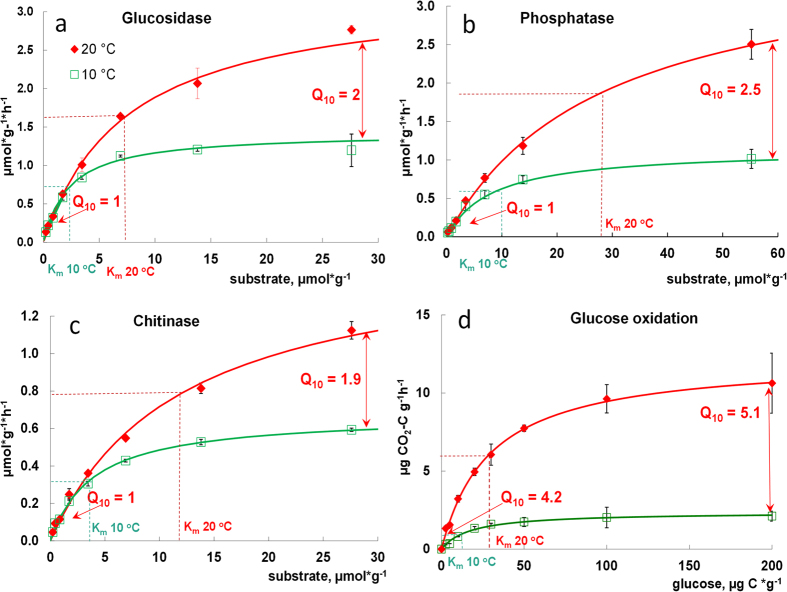
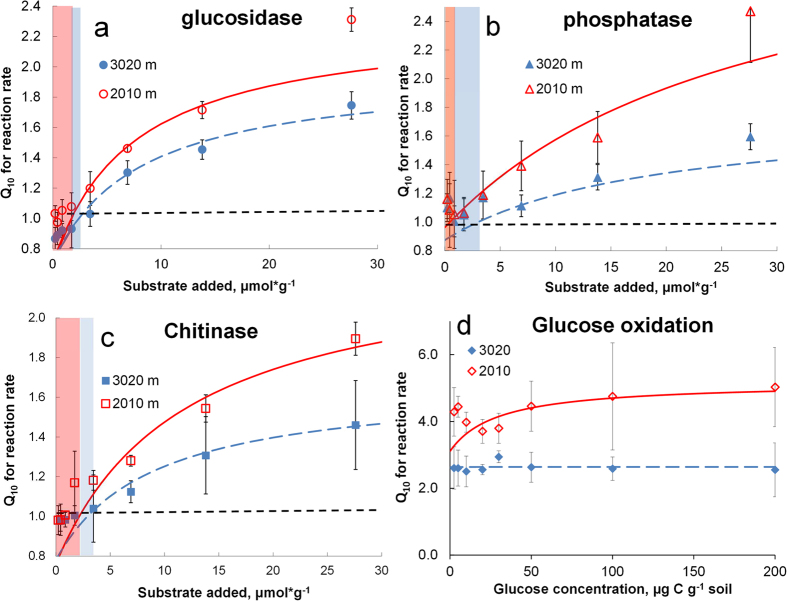
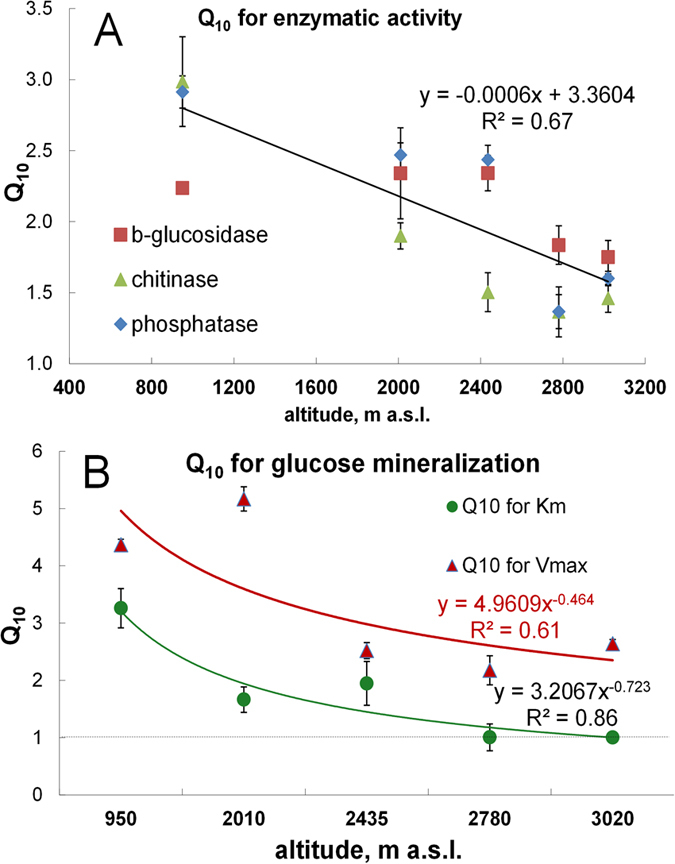
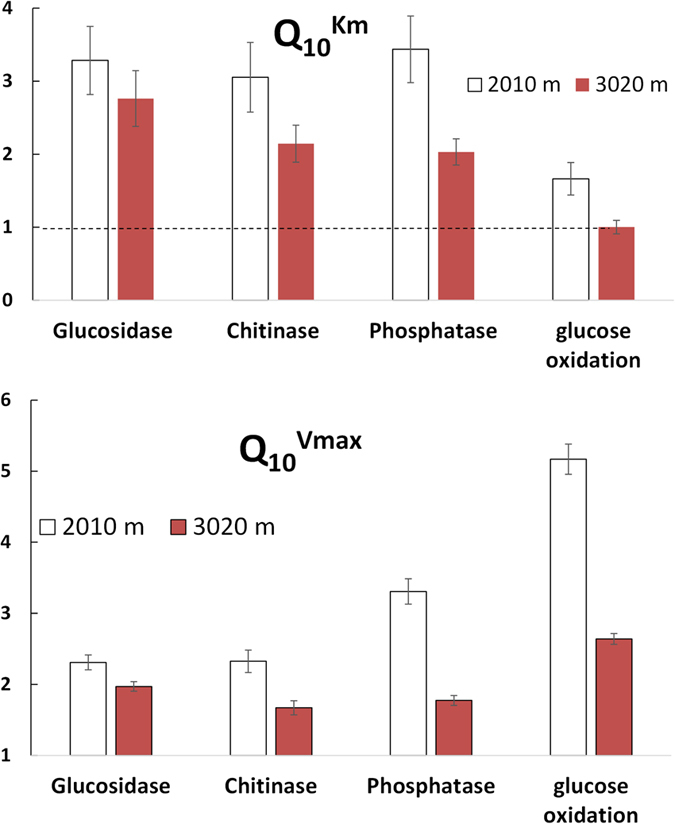
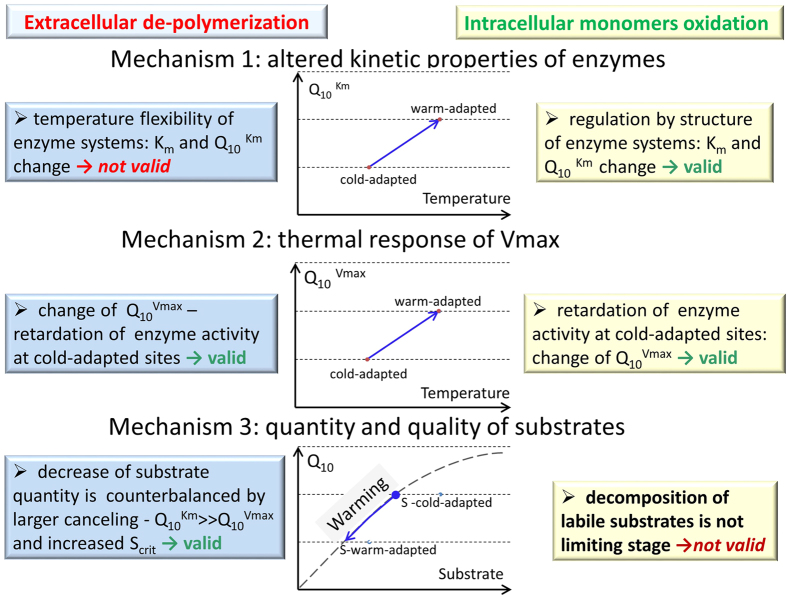
Short-term acceleration of soil organic matter decomposition by increasing temperature conflicts with the thermal adaptation observed in long-term studies. Here we used the altitudinal gradient on Mt. Kilimanjaro to demonstrate the mechanisms of thermal adaptation of extra- and intracellular enzymes that hydrolyze cellulose, chitin and phytate and oxidize monomers ((14)C-glucose) in warm- and cold-climate soils. We revealed that no response of decomposition rate to temperature occurs because of a cancelling effect consisting in an increase in half-saturation constants (Km), which counteracts the increase in maximal reaction rates (Vmax with temperature). We used the parameters of enzyme kinetics to predict thresholds of substrate concentration (Scrit) below which decomposition rates will be insensitive to global warming. Increasing values of Scrit, and hence stronger canceling effects with increasing altitude on Mt. Kilimanjaro, explained the thermal adaptation of polymer decomposition. The reduction of the temperature sensitivity of Vmax along the altitudinal gradient contributed to thermal adaptation of both polymer and monomer degradation. Extrapolating the altitudinal gradient to the large-scale latitudinal gradient, these results show that the soils of cold climates with stronger and more frequent temperature variation are less sensitive to global warming than soils adapted to high temperatures.
Figures
References
-
- Bond-Lamberty B. & Thomson A. Temperature-associated increases in the global soil respiration record. Nature 464, 579–582 (2010). - PubMed
-
- Smith P. & Fang C. C cycle: A warm response by soils. Nature 464, 499–500 (2010). - PubMed
-
- Kirschbaum M. U. F. The temperature dependence of soil organic matter decomposition, and the effect of global warming on soil organic c storage. Soil Biology & Biochemistry 27, 753–760 (1995).
-
- Allison S. D., Wallenstein M. D. & Bradford M. A. Soil-carbon response to warming dependent on microbial physiology. Nature Geosci 3, 336–340 (2010).
-
- Craine J., Fierer N., McLauchlan K. & Elmore A. Reduction of the temperature sensitivity of soil organic matter decomposition with sustained temperature increase. Biogeochemistry 113, 359–368 (2013).
Publication types
MeSH terms
Substances
LinkOut - more resources
Full Text Sources
Other Literature Sources
