


Incidence and viral aetiologies of acute respiratory illnesses (ARIs) in the United States: a population-based study
- PMID: 26931351
- PMCID: PMC7112994
- DOI: 10.1017/S0950268816000315
Incidence and viral aetiologies of acute respiratory illnesses (ARIs) in the United States: a population-based study
Abstract
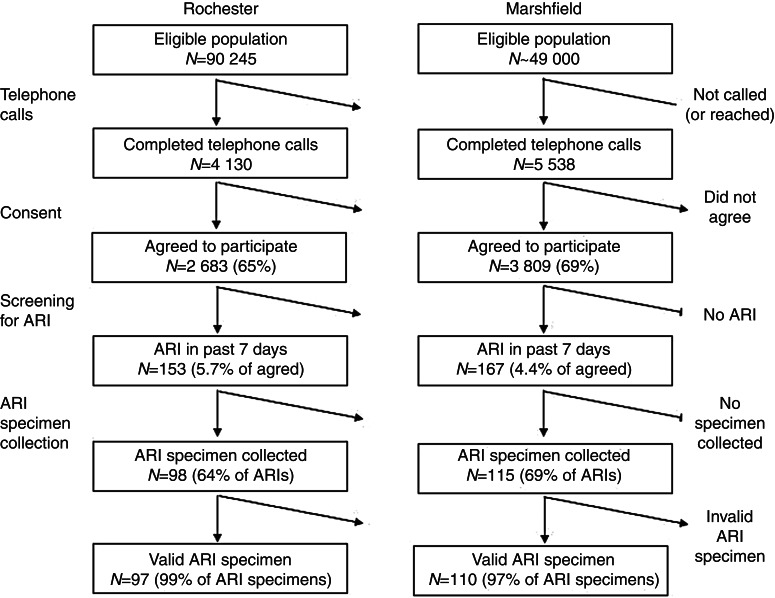
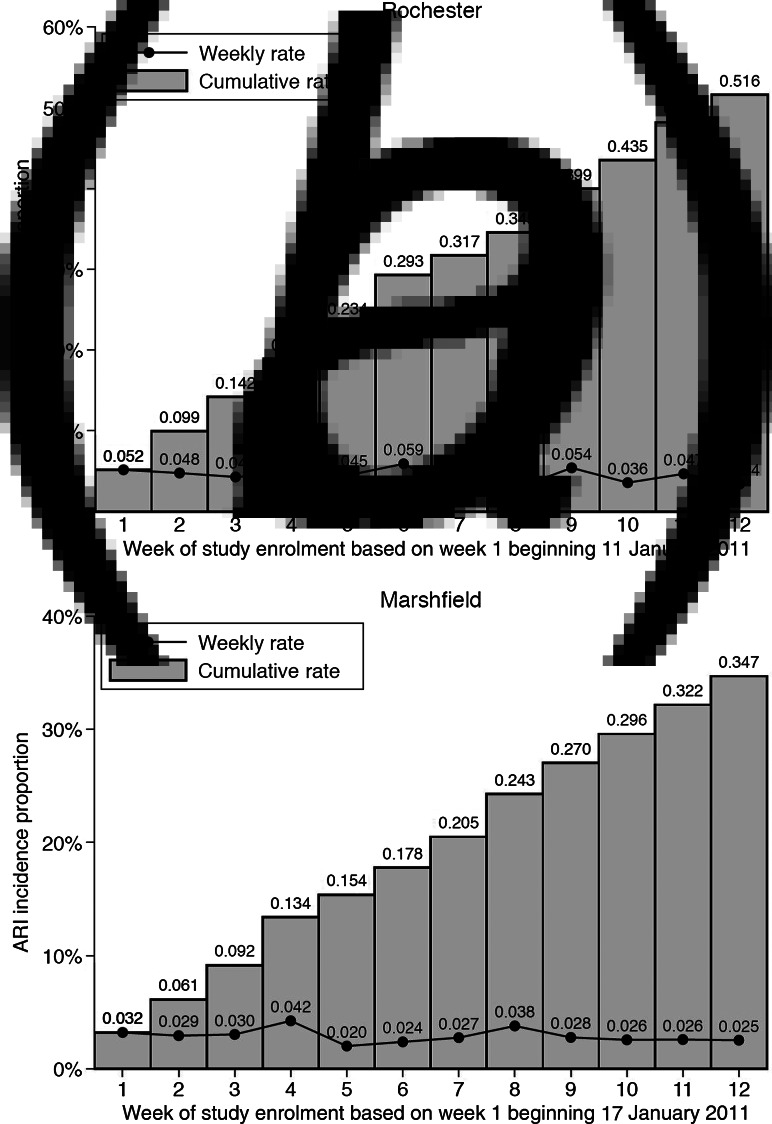
We conducted prospective, community-wide surveillance for acute respiratory illnesses (ARIs) in Rochester, NY and Marshfield, WI during a 3-month period in winter 2011. We estimated the incidence of ARIs in each community, tested for viruses, and determined the proportion of ARIs associated with healthcare visits. We used a rolling cross-sectional design to sample participants, conducted telephone interviews to assess ARI symptoms (defined as a current illness with feverishness or cough within the past 7 days), collected nasal/throat swabs to identify viruses, and extracted healthcare utilization from outpatient/inpatient records. Of 6492 individuals, 321 reported an ARI within 7 days (4·9% total, 5·7% in Rochester, 4·4% in Marshfield); swabs were collected from 208 subjects. The cumulative ARI incidence for the entire 3-month period was 52% in Rochester [95% confidence interval (CI) 42-63] and 35% in Marshfield (95% CI 28-42). A specific virus was identified in 39% of specimens: human coronavirus (13% of samples), rhinovirus (12%), RSV (7%), influenza virus (4%), human metapneumovirus (4%), and adenovirus (1%). Only 39/200 (20%) had a healthcare visit (2/9 individuals with influenza). ARI incidence was ~5% per week during winter.
Keywords: Acute respiratory illnesses (ARIs); influenza; respiratory syncytial virus (RSV).
Figures
References
-
- CDC. Estimates of deaths associated with seasonal influenza,United States, 1976–2007. Morbidity and Mortality Weekly Report 2010; 59: 1057–1062. - PubMed
-
- Iwane MK, et al. Population-based surveillance for hospitalizations associated with respiratory syncytial virus, influenza virus, and parainfluenza viruses among young children. Pediatrics 2004; 113: 1758–1764. - PubMed
-
- Poehling KA, et al. The underrecognized burden of influenza in young children. New England Journal of Medicine 2006; 355: 31–40. - PubMed
-
- Thompson WW, et al. Influenza-associated hospitalizations in the United States. Journal of American Medical Association 2004; 292: 1333–1340. - PubMed
Publication types
MeSH terms
Grants and funding
LinkOut - more resources
Full Text Sources
Other Literature Sources
Medical
Miscellaneous
