Which New Health Technologies Do We Need to Achieve an End to HIV/AIDS?
- PMID: 26933962
- PMCID: PMC4774984
- DOI: 10.1371/journal.pbio.1002372
Which New Health Technologies Do We Need to Achieve an End to HIV/AIDS?
Erratum in
-
Correction: Which New Health Technologies Do We Need to Achieve an End to HIV/AIDS?PLoS Biol. 2016 Jun 7;14(6):e1002487. doi: 10.1371/journal.pbio.1002487. eCollection 2016 Jun. PLoS Biol. 2016. PMID: 27270914 Free PMC article.
Abstract
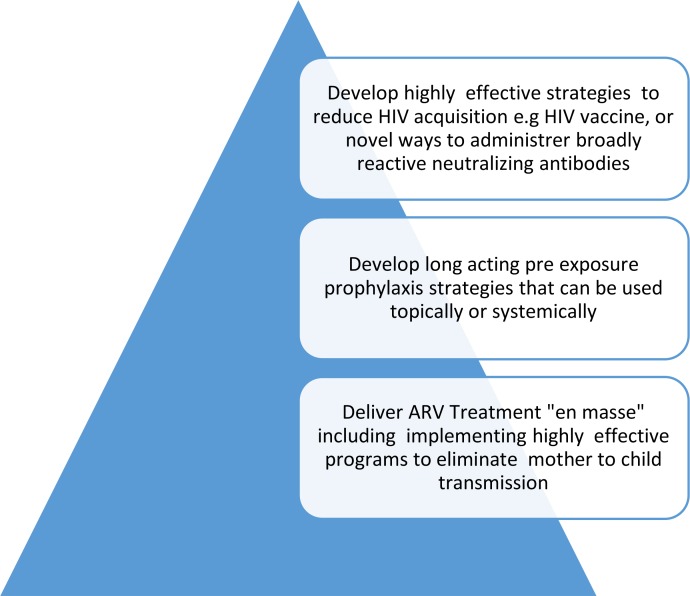
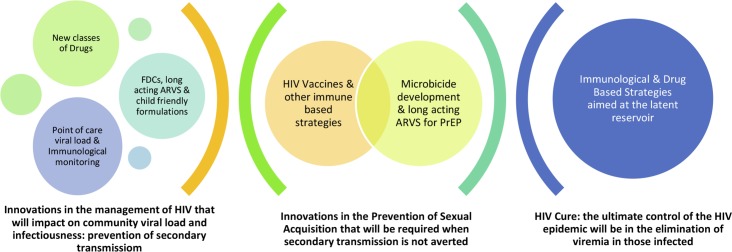
In the last 15 years, antiretroviral therapy (ART) has been the most globally impactful life-saving development of medical research. Antiretrovirals (ARVs) are used with great success for both the treatment and prevention of HIV infection. Despite these remarkable advances, this epidemic grows relentlessly worldwide. Over 2.1 million new infections occur each year, two-thirds in women and 240,000 in children. The widespread elimination of HIV will require the development of new, more potent prevention tools. Such efforts are imperative on a global scale. However, it must also be recognised that true containment of the epidemic requires the development and widespread implementation of a scientific advancement that has eluded us to date--a highly effective vaccine. Striving for such medical advances is what is required to achieve the end of AIDS.
Conflict of interest statement
The authors have declared that no competing interests exist.
Figures
References
-
- Centers for Disease Control and Prevention. HIV Surveillance Report Volume 24: 2012. 2012.
-
- UNAIDS. The Gap Report 2013. Geneva: UNAIDS, 2014.
-
- World Health Organisation. Guideline on when to start antiretroviral therapy and on pre-exposure prophylaxis for HIV Geneva: WHO, 2015. - PubMed
Publication types
MeSH terms
Substances
Grants and funding
LinkOut - more resources
Full Text Sources
Other Literature Sources
Medical
Molecular Biology Databases