Predicting hot spots in protein interfaces based on protrusion index, pseudo hydrophobicity and electron-ion interaction pseudopotential features
- PMID: 26934646
- PMCID: PMC4951271
- DOI: 10.18632/oncotarget.7695
Predicting hot spots in protein interfaces based on protrusion index, pseudo hydrophobicity and electron-ion interaction pseudopotential features
Abstract
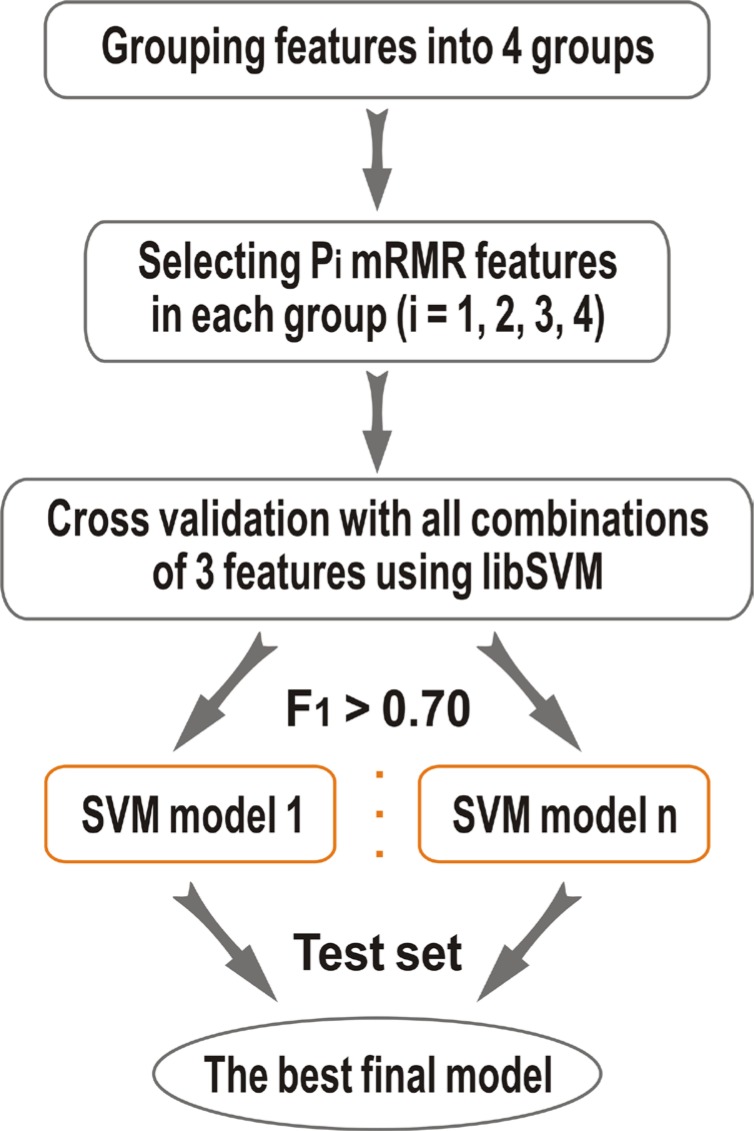
The identification of hot spots, a small subset of protein interfaces that accounts for the majority of binding free energy, is becoming more important for the research of drug design and cancer development. Based on our previous methods (APIS and KFC2), here we proposed a novel hot spot prediction method. For each hot spot residue, we firstly constructed a wide variety of 108 sequence, structural, and neighborhood features to characterize potential hot spot residues, including conventional ones and new one (pseudo hydrophobicity) exploited in this study. We then selected 3 top-ranking features that contribute the most in the classification by a two-step feature selection process consisting of minimal-redundancy-maximal-relevance algorithm and an exhaustive search method. We used support vector machines to build our final prediction model. When testing our model on an independent test set, our method showed the highest F1-score of 0.70 and MCC of 0.46 comparing with the existing state-of-the-art hot spot prediction methods. Our results indicate that these features are more effective than the conventional features considered previously, and that the combination of our and traditional features may support the creation of a discriminative feature set for efficient prediction of hot spots in protein interfaces.
Keywords: cancer driver mutation; electron-ion interaction pseudopotential; hot spot; protrusion index; pseudo hydrophobicity.
Conflict of interest statement
The authors declare that they have no competing interests.
Figures
References
-
- Wu Z, Zhao X, Chen L. Identifying responsive functional modules from protein-protein interaction network. Molecules and cells. 2009;27:271–277. - PubMed
-
- Clackson T, Wells JA. A hot spot of binding energy in a hormone-receptor interface. Science. 1995;267:383–386. - PubMed
-
- Thorn KS, Bogan AA. ASEdb: a database of alanine mutations and their effects on the free energy of binding in protein interactions. Bioinformatics. 2001;17:284–285. - PubMed
Publication types
MeSH terms
Substances
LinkOut - more resources
Full Text Sources
Other Literature Sources