Review
. 2016 Apr;28(2):146-58.
doi: 10.1016/j.smim.2016.02.002. Epub 2016 Feb 28.

Immune and regulatory functions of neutrophils in inflammatory bone loss

Affiliations
Review

Immune and regulatory functions of neutrophils in inflammatory bone loss

George Hajishengallis et al. Semin Immunol. 2016 Apr.

Abstract

Although historically viewed as merely anti-microbial effectors in acute infection or injury, neutrophils are now appreciated to be functionally versatile with critical roles also in chronic inflammation. Periodontitis, a chronic inflammatory disease that destroys the tooth-supporting gums and bone, is particularly affected by alterations in neutrophil numbers or function, as revealed by observations in monogenic disorders and relevant mouse models. Besides being a significant debilitating disease and health burden in its own right, periodontitis is thus an attractive model to dissect uncharted neutrophil-associated (patho)physiological pathways. Here, we summarize recent evidence that neutrophils can contribute to inflammatory bone loss not only through the typical bystander injury dogma but intriguingly also through their absence from the affected tissue, where they normally perform important immunomodulatory functions. Moreover, we discuss recent advances in the interactions of neutrophils with the vascular endothelium and - upon extravasation - with bacteria, and how the dysregulation of these interactions leads to inflammatory tissue damage. Overall, neutrophils have both protective and destructive roles in periodontitis, as they are involved in both the maintenance of periodontal tissue homeostasis and the induction of inflammatory bone loss. This highlights the importance of developing approaches that promote or sustain a fine balance between homeostatic immunity and inflammatory pathology.

Keywords: Bone loss; Del-1; Inflammation; Leukocyte-adhesion deficiency; Neutrophils; Periodontitis.


Figures

Figure 1
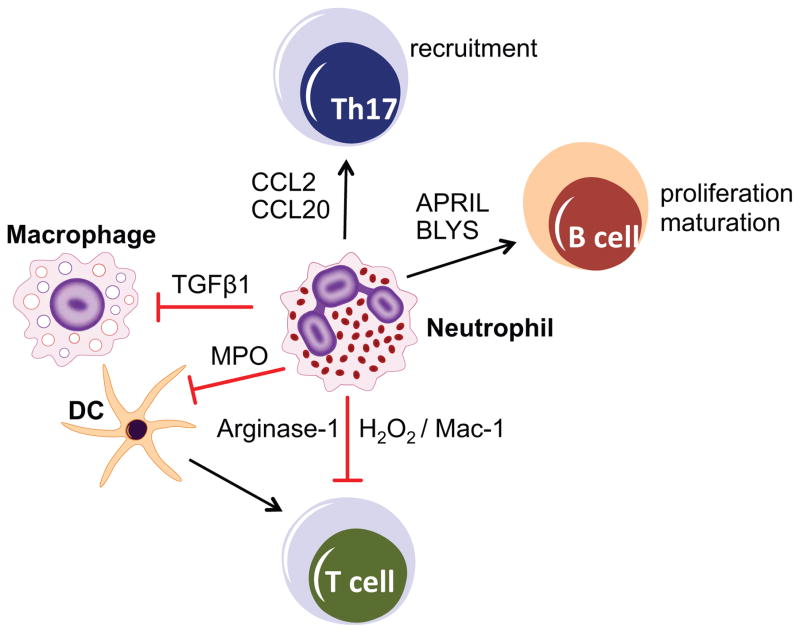
Figure 1. Neutrophil cross-talk with other leukocyte types
Whereas the recruitment and activation of neutrophils has long been known to be regulated by chemokines and cytokines secreted by both tissue stromal and resident leukocytes, neutrophils are now appreciated for their de novo biosynthetic capacity. They can produce and release immunoregulatory molecules that can activate or suppress other leukocyte types, thereby exacerbating or controlling inflammation depending on context. A few examples with potential relevance to periodontal disease are given. Neutrophils release CCL2 and CCL20 and recruit Th17 cells to sites of inflammation. By secreting BLyS and APRIL, neutrophils promote the proliferation and maturation of B cells into plasma cells. Neutrophils can potentially suppress T cell activation by releasing arginase-1 (depletes arginine required for T cell activation) or by delivering H2O2 into the immunological synapse in a Mac-1 integrin–dependent manner. Neutrophils can also indirectly suppress T cell activation through a myeloperoxidase-dependent mechanism that inhibits dendritic cell (DC) function. Neutrophil-derived TGFβ1 can promote resolution of inflammation by suppressing macrophage inflammatory responses.
Figure 2
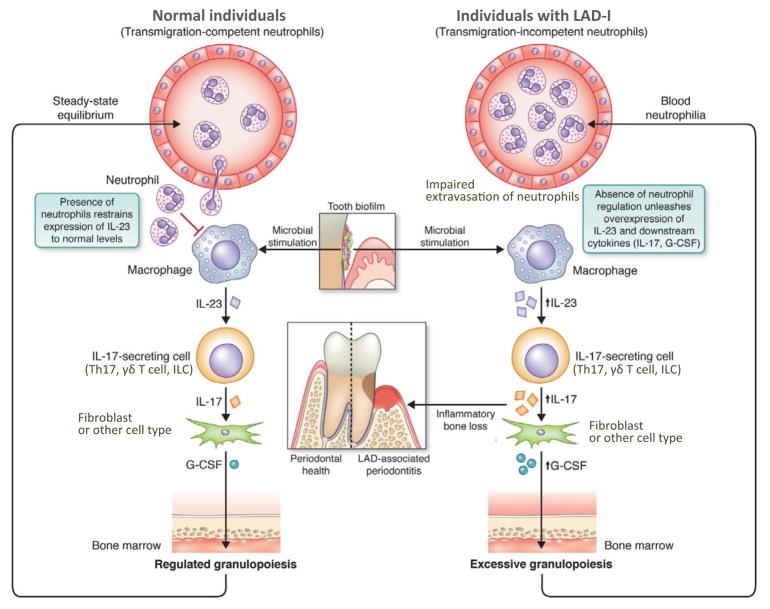
Figure 2. Neutrophil involvement in the pathogenesis of LAD-I periodontitis
In LAD-I, the neutrostat circuit, and hence the regulation of the granulopoietic IL-23–IL-17–G-CSF cascade, is disrupted because the CD18-deficient neutrophils fail to extravasate. The absence of recruited neutrophils to the periodontal tissue of LAD-I patients leads to unrestrained local production of IL-23 and thus of IL-17 and G-CSF. Whereas increased G-CSF leads to excessive granulopoiesis and blood neutrophilia, elevated IL-17 (produced by Th17, γδ T cells, or innate lymphoid cells [ILC] [47]) leads to inflammatory bone loss. In normal individuals, on the other hand, the recruitment of neutrophils regulates the expression of the same cytokine cascade maintaining homeostasis in terms of periodontal health and granulopoiesis.
Figure 3
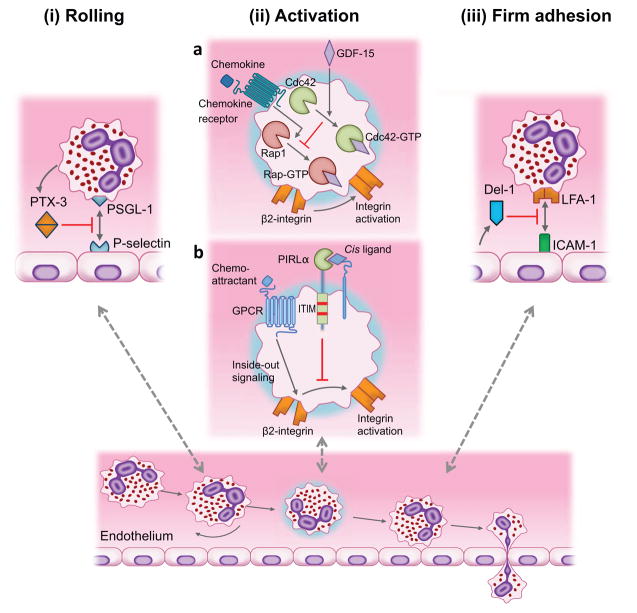
Figure 3. Inhibition of distinct steps of the leukocyte adhesion cascade by endogenous modulators
(i) Neutrophil-secreted PTX3 binds to endothelial P-selectin thereby inhibiting its interaction with PSGL-1 required for rolling. (iia) GDF-15 inhibits chemokine-induced activation of β2 integrins. The inhibitory action of GDF-15 on integrin activation is mediated via upregulation of Cdc42-GTPase activity that antagonizes the activity of Rap1-GTPase. (iib) The paired immunoglobulin-like type 2 receptor-α (PILRα) on neutrophils interacts with as yet unidentified cis ligands and induces immunoreceptor tyrosine-based inhibitory motif (ITIM) signaling, which inhibits chemoattractant-induced β2 integrin activation. (iii) Endothelial cell-derived Del-1 inhibits LFA-1-dependent leukocyte adhesion. The interaction of leukocyte LFA-1 with ICAM-1 on the endothelium is a major adhesive mechanism for firm leukocyte arrest on the endothelium and subsequent extravasation. Updated from Hajishengallis and Chavakis (ref. [8]).

References

    1. Kobayashi SD, DeLeo FR. Role of neutrophils in innate immunity: a systems biology-level approach. Wiley Interdiscip Rev Syst Biol Med. 2009;1:309–333. - PMC - PubMed
    1. Amulic B, Cazalet C, Hayes GL, Metzler KD, Zychlinsky A. Neutrophil function: from mechanisms to disease. Annu Rev Immunol. 2012;30:459–489. - PubMed
    1. Mantovani A, Cassatella MA, Costantini C, Jaillon S. Neutrophils in the activation and regulation of innate and adaptive immunity. Nat Rev Immunol. 2011;11:519–531. - PubMed
    1. Dancey JT, Deubelbeiss KA, Harker LA, Finch CA. Neutrophil kinetics in man. J Clin Invest. 1976;58:705–715. - PMC - PubMed
    1. Furze RC, Rankin SM. Neutrophil mobilization and clearance in the bone marrow. Immunology. 2008;125:281–288. - PMC - PubMed

Publication types

MeSH terms

LinkOut - more resources