


Intensive aquaculture selects for increased virulence and interference competition in bacteria
- PMID: 26936249
- PMCID: PMC4810868
- DOI: 10.1098/rspb.2015.3069
Intensive aquaculture selects for increased virulence and interference competition in bacteria
Abstract
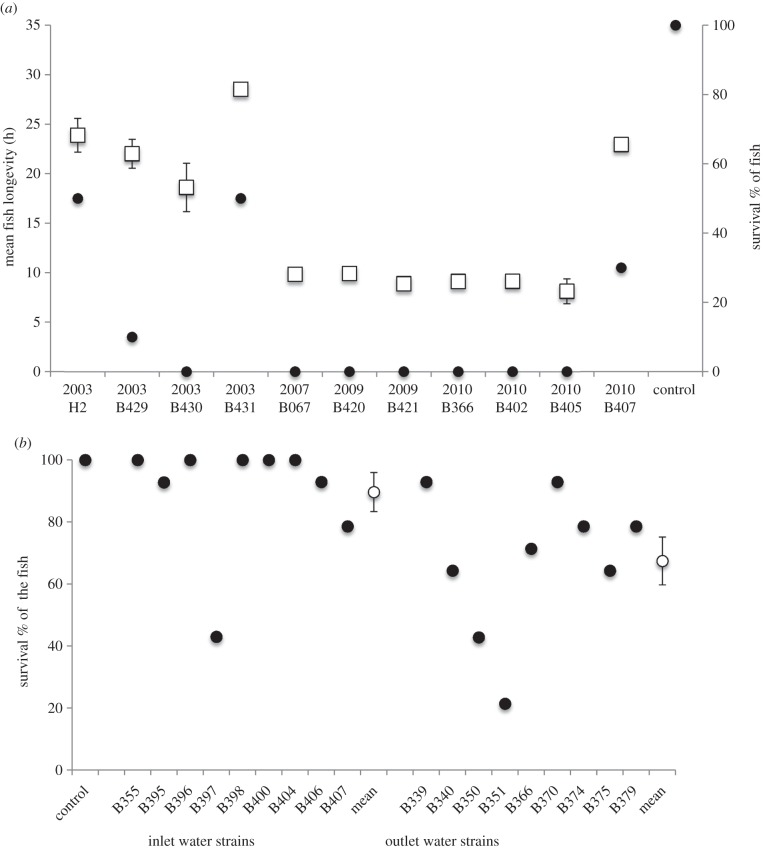
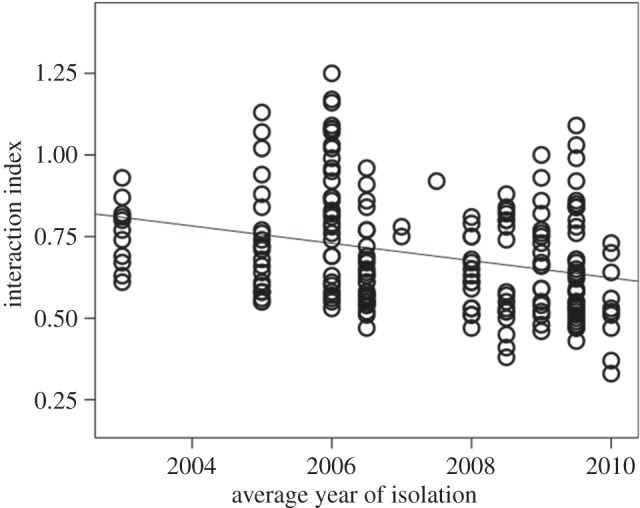
Although increased disease severity driven by intensive farming practices is problematic in food production, the role of evolutionary change in disease is not well understood in these environments. Experiments on parasite evolution are traditionally conducted using laboratory models, often unrelated to economically important systems. We compared how the virulence, growth and competitive ability of a globally important fish pathogen, Flavobacterium columnare, change under intensive aquaculture. We characterized bacterial isolates from disease outbreaks at fish farms during 2003-2010, and compared F. columnare populations in inlet water and outlet water of a fish farm during the 2010 outbreak. Our data suggest that the farming environment may select for bacterial strains that have high virulence at both long and short time scales, and it seems that these strains have also evolved increased ability for interference competition. Our results are consistent with the suggestion that selection pressures at fish farms can cause rapid changes in pathogen populations, which are likely to have long-lasting evolutionary effects on pathogen virulence. A better understanding of these evolutionary effects will be vital in prevention and control of disease outbreaks to secure food production.
Keywords: Flavobacterium columnare; aquaculture; evolution; fish farming; pathogen; virulence.
© 2016 The Author(s).
Figures
References
-
- Altizer S, Harvell D, Friedle E. 2003. Rapid evolutionary dynamics and disease threats to biodiversity. Trends Ecol. Evol. 18, 589–596. ( 10.1016/j.tree.2003.08.013) - DOI
-
- Galvani AP. 2003. Epidemiology meets evolutionary ecology. Trends Ecol. Evol. 18, 132–139. ( 10.1016/S0169-5347(02)00050-2) - DOI
Publication types
MeSH terms
LinkOut - more resources
Full Text Sources
Other Literature Sources
