


Alcohol and Immediate Risk of Cardiovascular Events: A Systematic Review and Dose-Response Meta-Analysis
- PMID: 26936862
- PMCID: PMC4783255
- DOI: 10.1161/CIRCULATIONAHA.115.019743
Alcohol and Immediate Risk of Cardiovascular Events: A Systematic Review and Dose-Response Meta-Analysis
Abstract
Background: Although considerable research describes the cardiovascular effects of habitual moderate and heavy alcohol consumption, the immediate risks following alcohol intake have not been well characterized. Based on its physiological effects, alcohol may have markedly different effects on immediate and long-term risk.
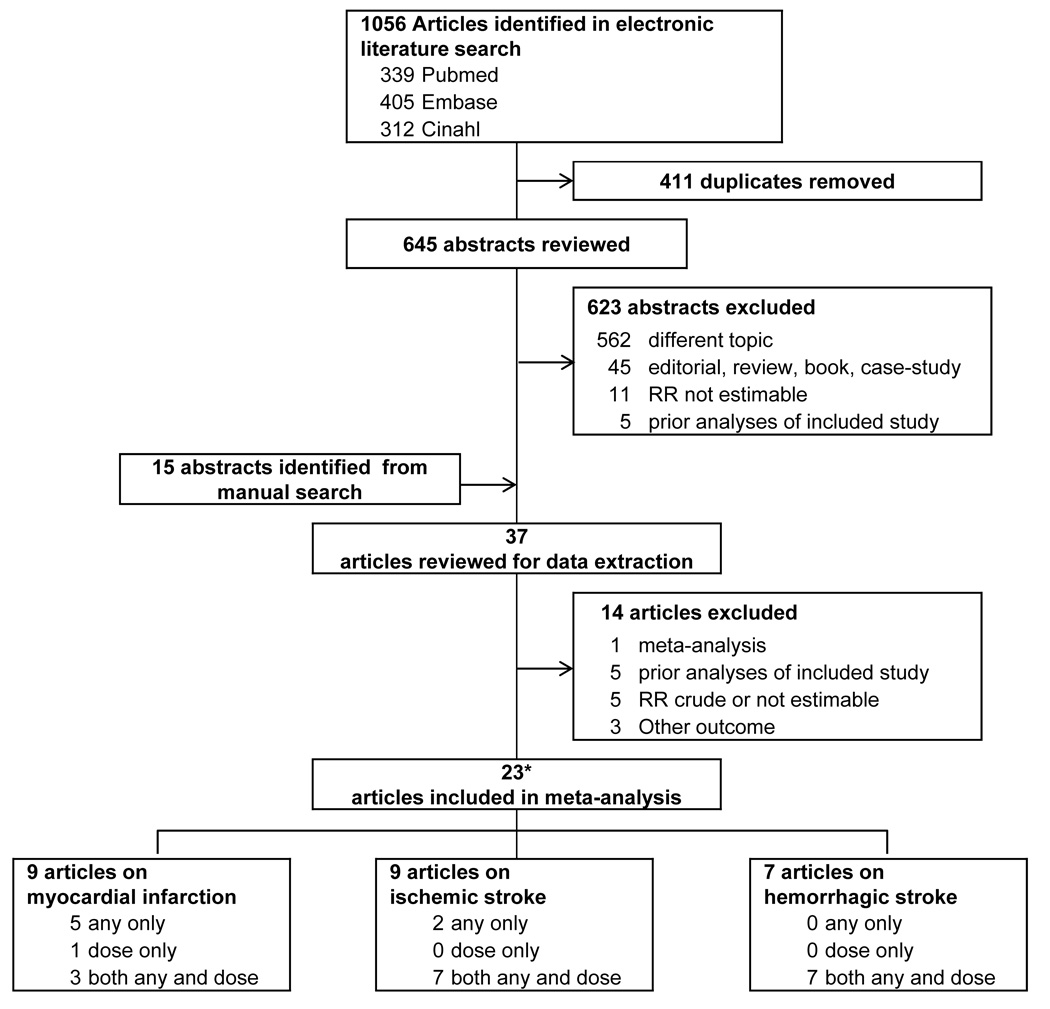
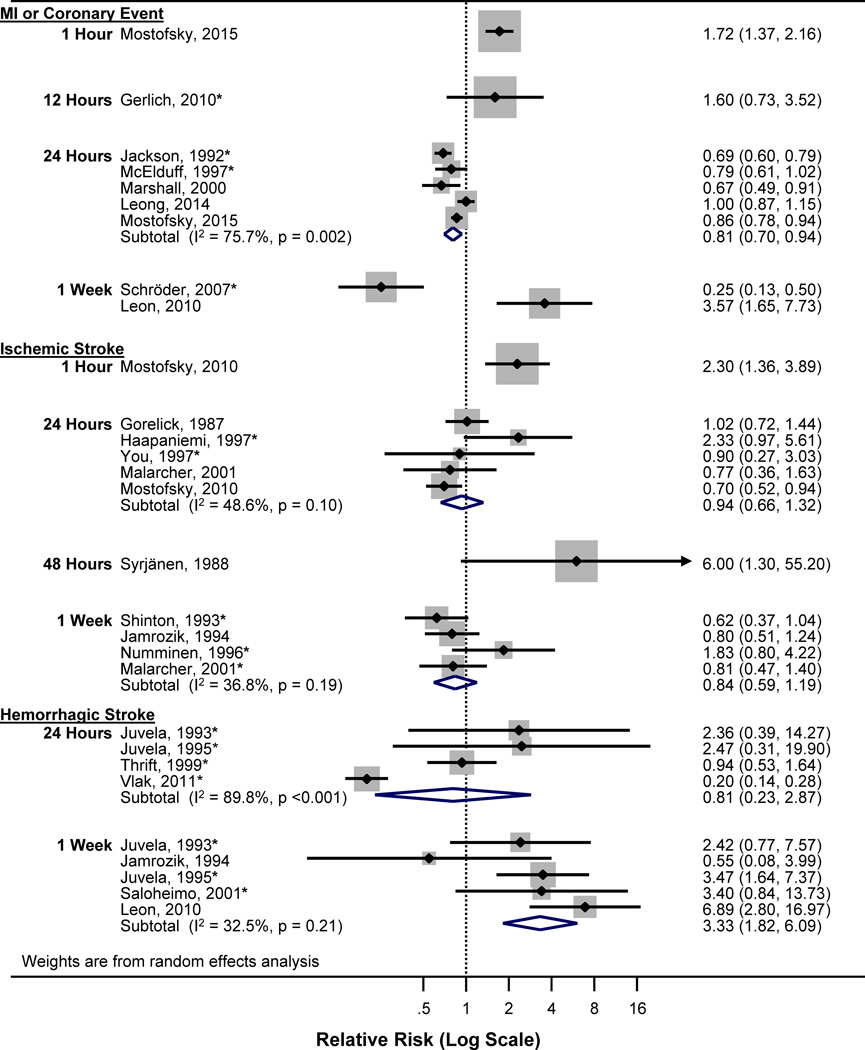
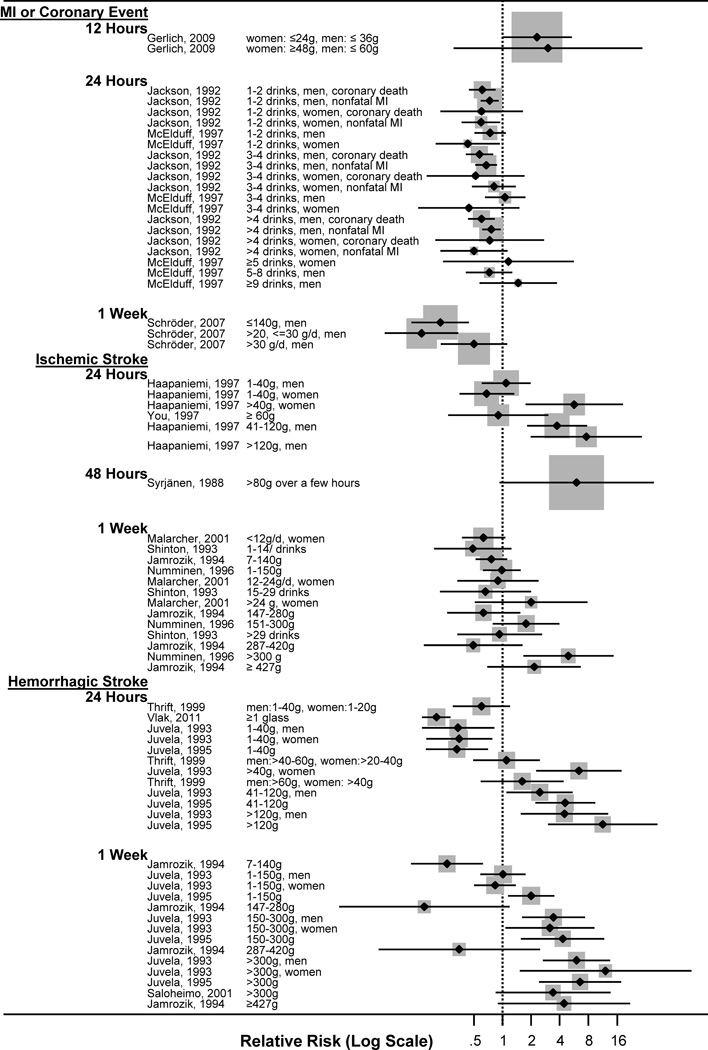
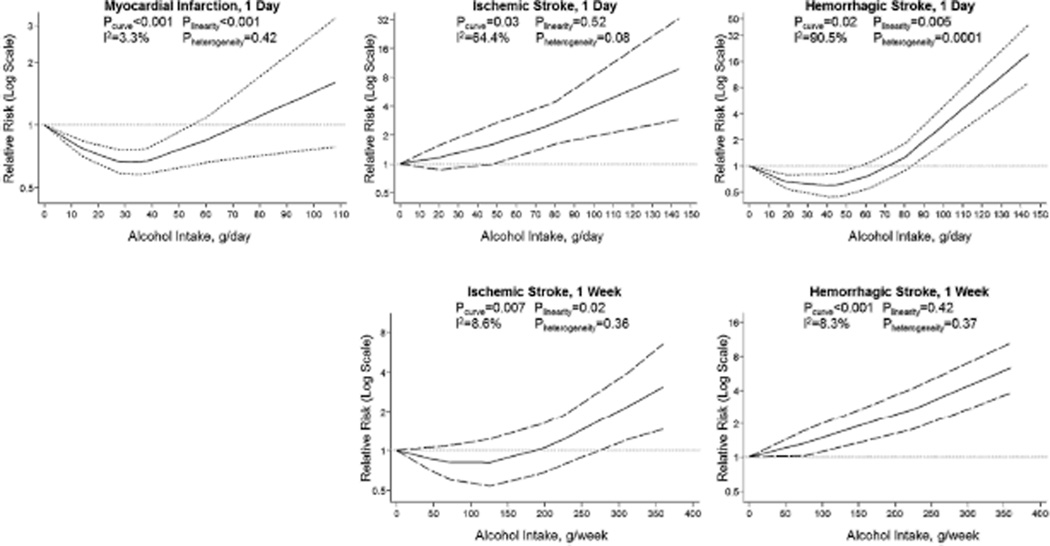
Methods and results: We searched CINAHL, Embase, and PubMed from inception to March 12, 2015, supplemented with manual screening for observational studies assessing the association between alcohol intake and cardiovascular events in the following hours and days. We calculated pooled relative risks and 95% confidence intervals for the association between alcohol intake and myocardial infarction, ischemic stroke, and hemorrhagic stroke using DerSimonian and Laird random-effects models to model any alcohol intake or dose-response relationships of alcohol intake and cardiovascular events. Among 1056 citations and 37 full-text articles reviewed, 23 studies (29 457 participants) were included. Moderate alcohol consumption was associated with an immediately higher cardiovascular risk that was attenuated after 24 hours, and even protective for myocardial infarction and hemorrhagic stroke (≈2-4 drinks: relative risk=30% lower risk) and protective against ischemic stroke within 1 week (≈6 drinks: 19% lower risk). In contrast, heavy alcohol drinking was associated with higher cardiovascular risk in the following day (≈6-9 drinks: relative risk=1.3-2.3) and week (≈19-30 drinks: relative risk=2.25-6.2).
Conclusions: There appears to be a consistent finding of an immediately higher cardiovascular risk following any alcohol consumption, but, by 24 hours, only heavy alcohol intake conferred continued risk.
Keywords: alcohol drinking; cardiovascular diseases; dose-response relationship, drug; epidemiology; meta-analysis.
© 2016 American Heart Association, Inc.
Figures
References
-
- Mukamal KJ, Conigrave KM, Mittleman MA, Camargo CA, Jr, Stampfer MJ, Willett WC, Rimm EB. Roles of drinking pattern and type of alcohol consumed in coronary heart disease in men. N Engl J Med. 2003;348:109–118. - PubMed
-
- Spaak J, Merlocco AC, Soleas GJ, Tomlinson G, Morris BL, Picton P, Notarius CF, Chan CT, Floras JS. Dose-related effects of red wine and alcohol on hemodynamics, sympathetic nerve activity, and arterial diameter. Am J Physiol Heart Circ Physiol. 2008;294:H605–H612. - PubMed
-
- Sengul C, Cevik C, Ozveren O, Sunbul A, Oduncu V, Akgun T, Can MM, Semiz E, Dindar I. Acute alcohol consumption is associated with increased interatrial electromechanical delay in healthy men. Cardiol J. 2011;18:682–686. - PubMed
Publication types
MeSH terms
Substances
Grants and funding
LinkOut - more resources
Full Text Sources
Other Literature Sources
Medical
