


Self-management of health care behaviors for COPD: a systematic review and meta-analysis
- PMID: 26937183
- PMCID: PMC4762587
- DOI: 10.2147/COPD.S90812
Self-management of health care behaviors for COPD: a systematic review and meta-analysis
Abstract
Purpose: This systematic review aimed to identify the most effective components of interventions to facilitate self-management of health care behaviors for patients with COPD. PROSPERO registration number CRD42011001588.
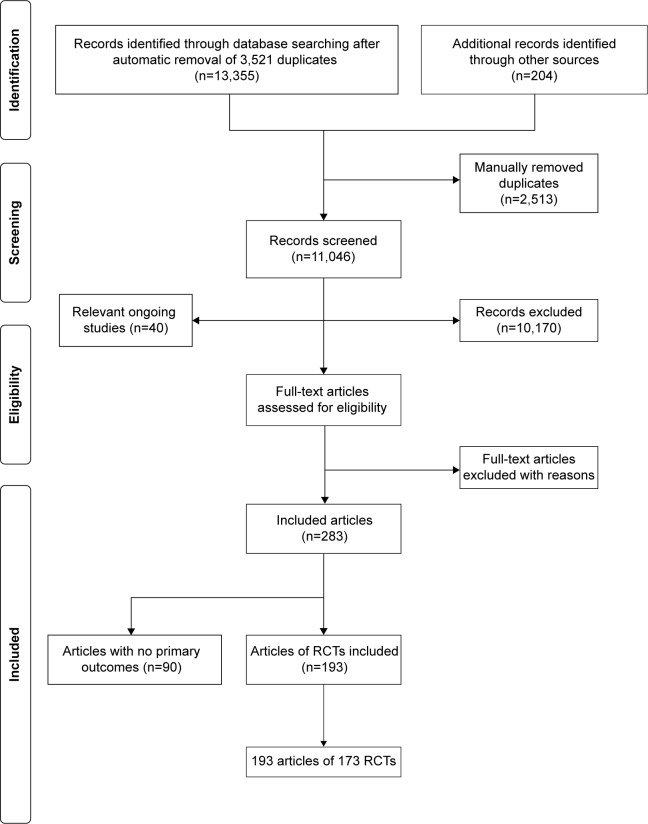
Methods: We used standard review methods with a systematic search to May 2012 for randomized controlled trials of self-management interventions reporting hospital admissions or health-related quality of life (HRQoL). Mean differences (MD), hazard ratios, and 95% confidence intervals (CIs) were calculated and pooled using random-effects meta-analyses. Effects among different subgroups of interventions were explored including single/multiple components and multicomponent interventions with/without exercise.
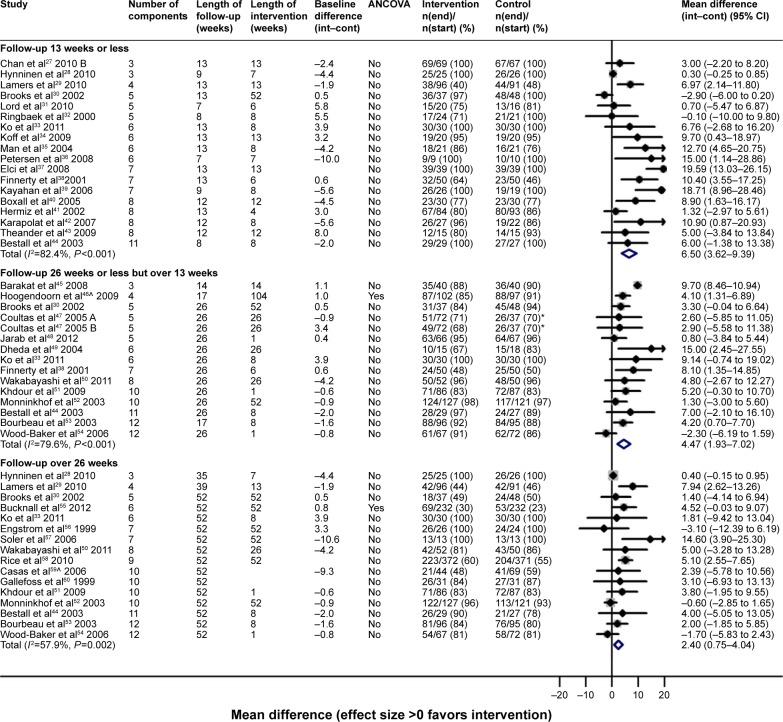
Results: One hundred and seventy-three randomized controlled trials were identified. Self-management interventions had a minimal effect on hospital admission rates. Multicomponent interventions improved HRQoL (studies with follow-up >6 months St George's Respiratory Questionnaire (MD 2.40, 95% CI 0.75-4.04, I (2) 57.9). Exercise was an effective individual component (St George's Respiratory Questionnaire at 3 months MD 4.87, 95% CI 3.96-5.79, I (2) 0%).
Conclusion: While many self-management interventions increased HRQoL, little effect was seen on hospital admissions. More trials should report admissions and follow-up participants beyond the end of the intervention.
Keywords: COPD; meta-analysis; self-management; systematic review.
Figures
References
-
- Behnke M, Taube C, Kirsten D, Lehnigk B, Jorres RA, Magnussen H. Home-based exercise is capable of preserving hospital-based improvements in severe chronic obstructive pulmonary disease. Respir Med. 2000;94(12):1184–1191. - PubMed
-
- Bendstrup KE, Ingemann JJ, Holm S, Bengtsson B. Out-patient rehabilitation improves activities of daily living, quality of life and exercise tolerance in chronic obstructive pulmonary disease. Eur Respir J. 1997;10(12):2801–2806. - PubMed
-
- Bestall JC, Paul EA, Garrod R, et al. Longitudinal trends in exercise capacity and health status after pulmonary rehabilitation in patients with COPD. Respir Med. 2003;97(2):173–180. - PubMed
Publication types
MeSH terms
Grants and funding
LinkOut - more resources
Full Text Sources
Other Literature Sources
Medical
