


Histones as mediators of host defense, inflammation and thrombosis
- PMID: 26939619
- PMCID: PMC5549641
- DOI: 10.2217/fmb.15.151
Histones as mediators of host defense, inflammation and thrombosis
Abstract
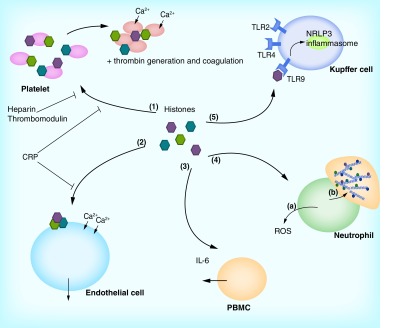
Histones are known for their ability to bind to and regulate expression of DNA. However, histones are also present in cytoplasm and extracellular fluids where they serve host defense functions and promote inflammatory responses. Histones are a major component of neutrophil extracellular traps that contribute to bacterial killing but also to inflammatory injury. Histones can act as antimicrobial peptides and directly kill bacteria, fungi, parasites and viruses, in vitro and in a variety of animal hosts. In addition, histones can trigger inflammatory responses in some cases acting through Toll-like receptors or inflammasome pathways. Extracellular histones mediate organ injury (lung, liver), sepsis physiology, thrombocytopenia and thrombin generation and some proteins can bind histones and reduce these potentially harmful effects.
Keywords: antimicrobial peptides; histones; innate immunity; neutrophils; platelets.
Conflict of interest statement
Figures
References
-
- Luger K, Mader AW, Richmond RK, Sargent DF, Richmond TJ. Crystal structure of the nucleosome core particle at 2.8 A resolution. Nature. 1997;389(6648):251–260. - PubMed
-
- Allan J, Hartman PG, Crane-Robinson C, Aviles FX. The structure of histone H1 and its location in chromatin. Nature. 1980;288(5792):675–679. - PubMed
-
- Delange RJ, Smith EL. Histones: structure and function. Annu. Rev. Biochem. 1971;40:279–314. - PubMed
-
- Verdone L, Caserta M, Di Mauro E. Role of histone acetylation in the control of gene expression. Biochem. Cell Biol. 2005;83(3):344–353. - PubMed
Publication types
MeSH terms
Substances
Grants and funding
LinkOut - more resources
Full Text Sources
Other Literature Sources
Medical
