All-Cause Mortality in Women With Severe Postpartum Psychiatric Disorders
- PMID: 26940804
- PMCID: PMC5325688
- DOI: 10.1176/appi.ajp.2015.14121510
All-Cause Mortality in Women With Severe Postpartum Psychiatric Disorders
Abstract
Objective: The postpartum period is associated with a high risk of psychiatric episodes. The authors studied mortality in women with first-onset severe psychiatric disorders following childbirth and compared their mortality rates with those in women from the background population including other female psychiatric patients (mothers and childless women).
Method: In a register-based cohort study with linked information from Danish population registers, the authors identified women with first psychiatric inpatient or outpatient contacts 0-3 months postpartum. The main outcome measure was mortality rate ratios (MRRs): deaths from natural causes (diseases and medical conditions) or unnatural causes (suicides, accidents, and homicides). The cohort included 1,545,857 women representing 68,473,423 person-years at risk.
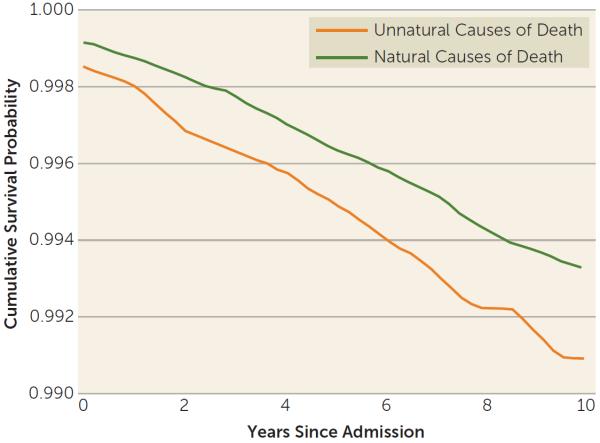
Results: In total, 2,699 women had first-onset psychiatric disorders 0-3 months postpartum, and 96 of these died during follow-up. Women with postpartum psychiatric disorders had a higher MRR (3.74; 95% CI=3.06-4.57) than non-postpartum-onset mothers (MRR=2.73; 95% CI=2.67-2.79) when compared with mothers with no psychiatric history. However, childless women with psychiatric diagnoses had the highest MRR (6.15; 95% CI=5.94-6.38). Unnatural cause of death represented 40.6% of fatalities among women with postpartum psychiatric disorders, and within the first year after diagnosis, suicide risk was drastically increased (MRR=289.42; 95% CI=144.02-581.62) when compared with mothers with no psychiatric history.
Conclusions: Women with severe postpartum psychiatric disorders had increased MRRs compared with mothers without psychiatric diagnoses, and the first year after diagnosis represents a time of particularly high relative risk for suicide in this vulnerable group.
Figures
Comment in
-
First-Onset Postpartum Psychiatric Disorders Portend High 1-Year Unnatural-Cause Mortality Risk.Am J Psychiatry. 2016 Jun 1;173(6):559-61. doi: 10.1176/appi.ajp.2016.16030317. Am J Psychiatry. 2016. PMID: 27245187 Free PMC article. No abstract available.
References
-
- Munk-Olsen T, Laursen TM, Pedersen CB, et al. New parents and mental disorders: a population-based register study. JAMA. 2006;296:2582–2589. - PubMed
-
- Kendell RE, Chalmers JC, Platz C. Epidemiology of puerperal psychoses. Br J Psychiatry. 1987;150:662–673. - PubMed
-
- Howard LM, Molyneaux E, Dennis CL, et al. Non-psychotic mental disorders in the perinatal period. Lancet. 2014;384:1775–1788. - PubMed
Publication types
MeSH terms
Grants and funding
LinkOut - more resources
Full Text Sources
Other Literature Sources
Medical