. 2016 Mar 4;351(6277):1090-3.
doi: 10.1126/science.aad6881.

Multiplexed protein-DNA cross-linking: Scrunching in transcription start site selection

Affiliations

Multiplexed protein-DNA cross-linking: Scrunching in transcription start site selection

Jared T Winkelman et al. Science. .

Abstract

In bacterial transcription initiation, RNA polymerase (RNAP) selects a transcription start site (TSS) at variable distances downstream of core promoter elements. Using next-generation sequencing and unnatural amino acid-mediated protein-DNA cross-linking, we have determined, for a library of 4(10) promoter sequences, the TSS, the RNAP leading-edge position, and the RNAP trailing-edge position. We find that a promoter element upstream of the TSS, the "discriminator," participates in TSS selection, and that, as the TSS changes, the RNAP leading-edge position changes, but the RNAP trailing-edge position does not change. Changes in the RNAP leading-edge position, but not the RNAP trailing-edge position, are a defining hallmark of the "DNA scrunching" that occurs concurrent with RNA synthesis in initial transcription. We propose that TSS selection involves DNA scrunching prior to RNA synthesis.


Figures

Fig. 1
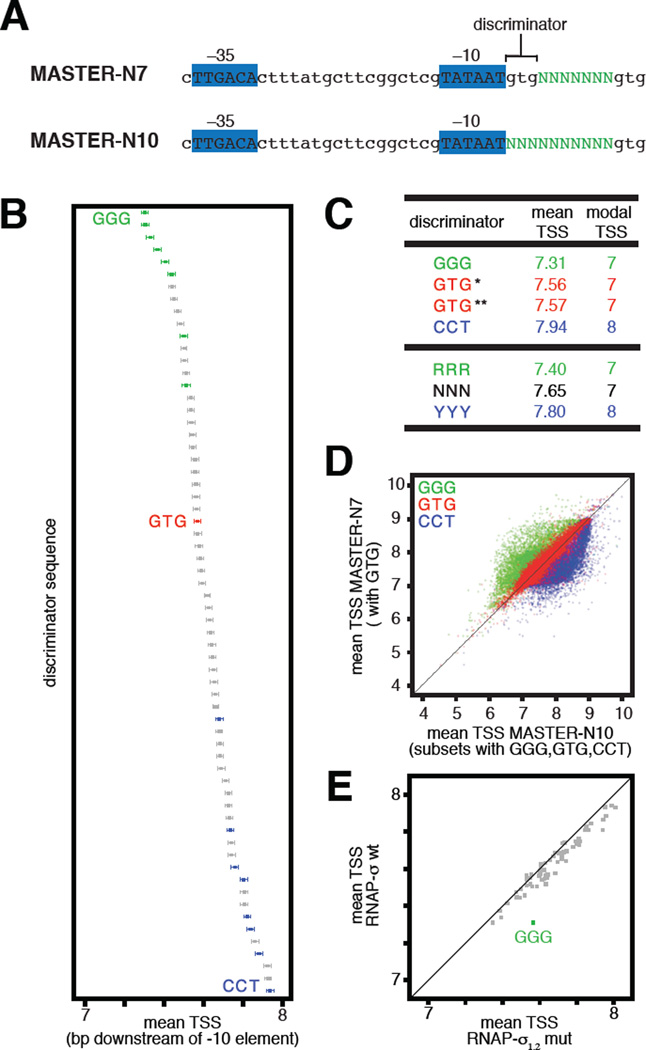
Fig. 1. Sequences upstream of TSS region affect TSS selection
(A) Promoter sequences analyzed in MASTER-N7 (2) and MASTER-N10. Promoter -35, -10, and discriminator elements are indicated. Green, randomized nucleotides. (B) Effect of discriminator on position of TSS (numbered in bp downstream of -10 element). Data show means and 99.9% confidence intervals for each of the 64 discriminator sequences (~16,000 templates analyzed for each discriminator). Green, GGG and other RRR discriminators; blue, CCT and other YYY discriminators; red, GTG discriminator. (C) Mean and modal TSS. *, GTG data from MASTER-N7; **, GTG data from MASTER-N10. (D) Upstream and downstream shifts in TSS selection with the ~16,000 GGG and ~16,000 CCT discriminators (green and blue, respectively) relative to the ~16,000 GTG discriminators (red). (E) Effect of σ1.2-discriminator interactions on TSS selection (downstream shift in mean TSS for ~16,000 GGG-discriminator templates on replacement of σ by σ1.2 mutant).
Fig. 2
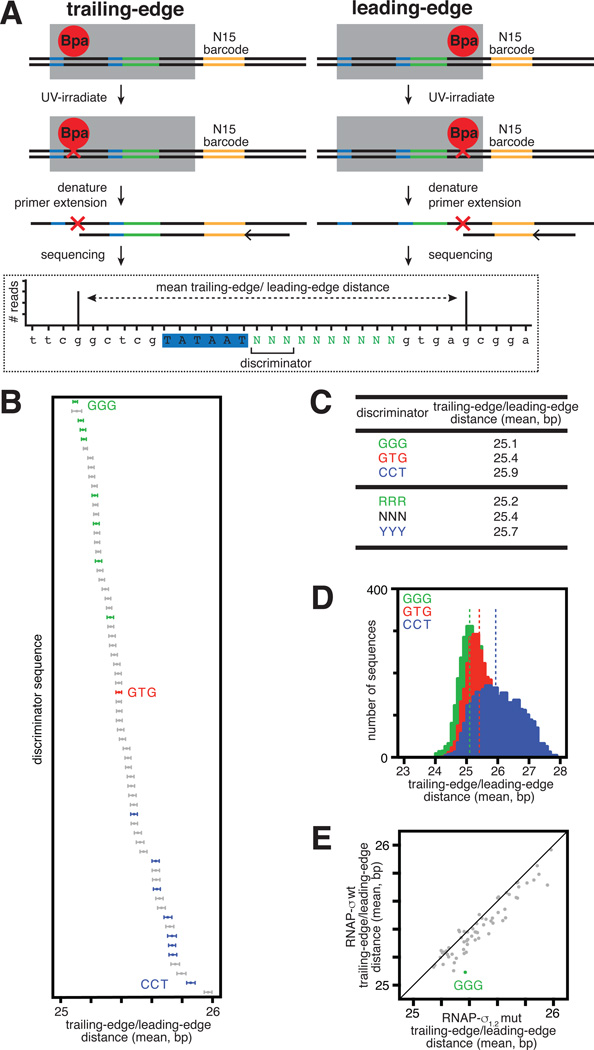
Fig. 2. Sequences upstream of TSS region affect RNAP trailing-edge/leading-edge distance
(A) MASTER-N10-XL. (B) Effect of discriminator on RNAP trailing-edge/leading-edge distance in RPo (symbols as in Fig. 1). (C) RNAP trailing-edge/leading-edge distances. (D) Decreases and increases in RNAP trailing-edge/leading-edge distance with the ~16,000 GGG- and ~16,000 CCT-discriminator templates (green and blue, respectively) relative to the ~16,000 GTG-discriminator templates (red). Dashed lines indicate mean trailing-edge/leading-edge distances. (E) Effect of σ1.2-discriminator interactions on RNAP trailing-edge/leading-edge distance (increase in RNAP trailing-edge/leading-edge distance for ~16,000 GGG-discriminator templates on replacement of σ by σ1.2 mutant).
Fig. 3
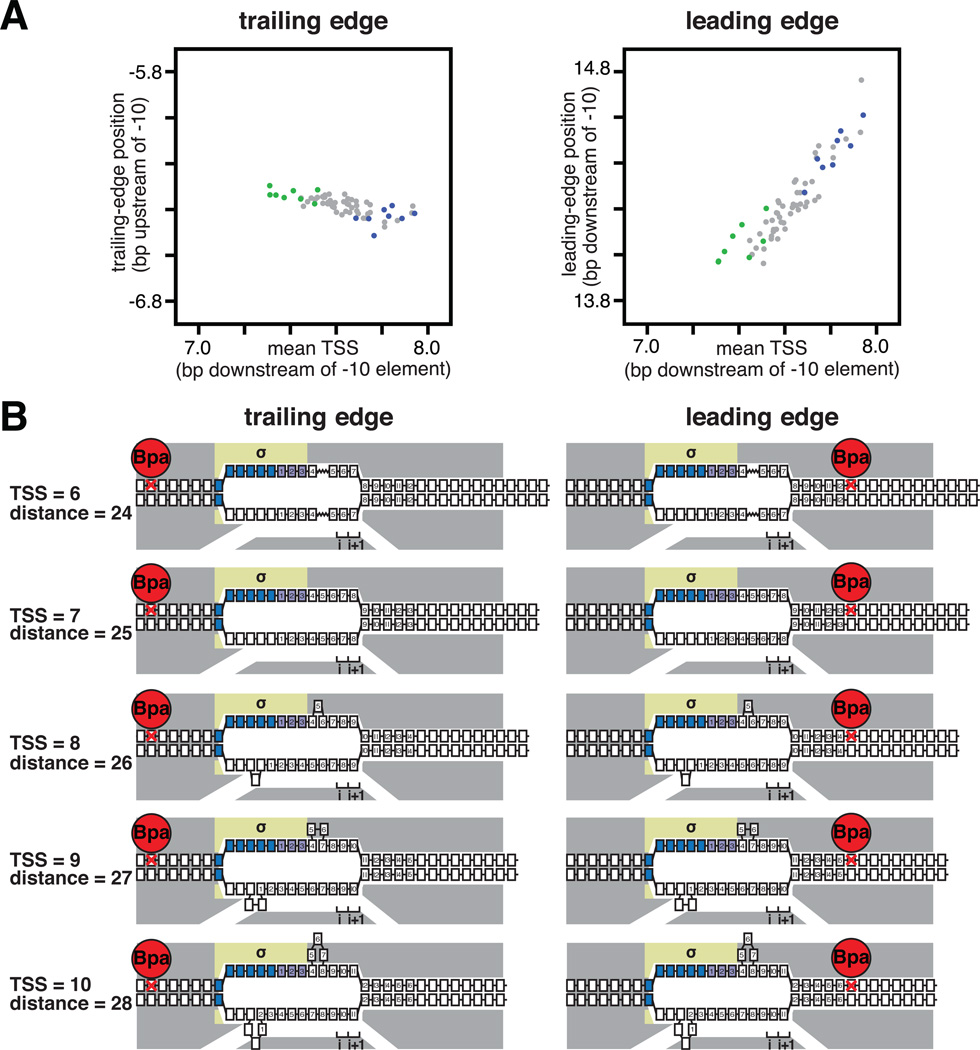
Fig. 3. As TSS changes, RNAP leading-edge position changes, but RNAP trailing-edge position does not change
(A) RNAP trailing-edge position (left; slope ~0) and RNAP leading-edge position (right; slope ~1) as a function of mean TSS for each of the 64 discriminator sequences (~16,000 templates analyzed for each discriminator). (B) Interpretation: changes in TSS selection result from changes in DNA scrunching. Gray, RNAP; yellow, σ; blue, -10 element nucleotides; purple, discriminator nucleotides; i and i+1, NTP binding sites; red, Bpa and nucleotide crosslinked to Bpa; boxes, DNA nucleotides (nontemplate-strand nucleotides above template-strand nucleotides; nucleotides downstream of -10 element numbered). Scrunching is indicated by bulged-out nucleotides. Anti-scrunching is indicated by a “stretched” nucleotide-nucleotide linkage.
Fig. 4
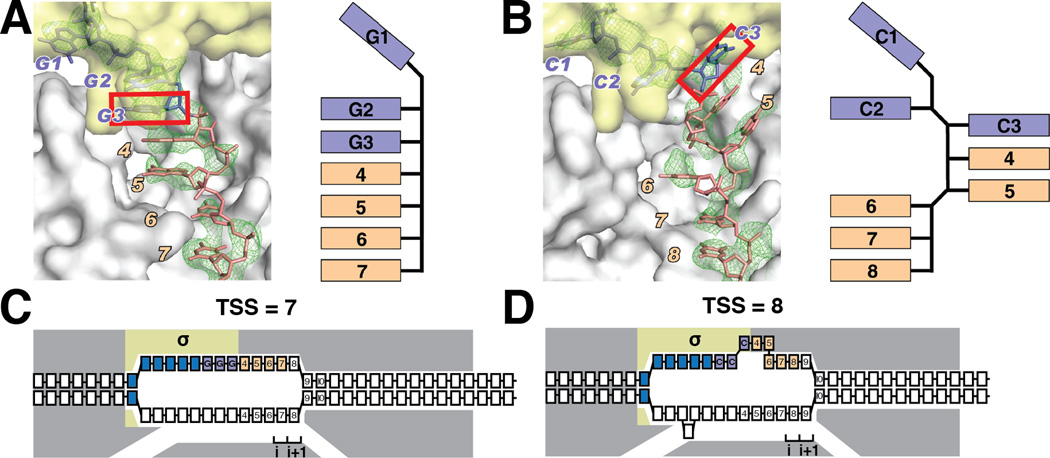
Fig. 4. Crystal structures define paths of DNA nontemplate-strands with representative RRR and YYY discriminators
(A) Crystal structure of an initiation complex with RRR discriminator and nontemplate-strand length corresponding to TSS at position 7 (RPo-GGG-7). Left, simulated annealing |Fo-Fc| omit map contoured at 2.3σ and atomic model for interactions of RNAP with DNA nontemplate-strand. Right, schematic path of DNA. Gray, RNAP; yellow, σ; purple, discriminator nucleotides; pink, nontemplate-strand nucleotides downstream of discriminator; green, simulated annealing |Fo-Fc| omit map contoured at 2.3σ. Red box, third nucleotide of discriminator. (B) Crystal structure of an initiation complex with YYY discriminator and nontemplate-strand length corresponding to TSS at position 8 (RPo-CCC-8; symbols as in A). (C–D) Interpretation: The different position of the third nucleotide of the discriminator in the structure with a YYY discriminator increases the distance between the third nucleotide of the discriminator and downstream duplex DNA, accommodating an additional nucleotide in the connector.

References

    1. Ruff EF, Record MT, Artsimovitch I. Initial events in bacterial transcription initiation. Biomolecules. 2015;5:1035–1062. - PMC - PubMed
    1. Vvedenskaya IO, et al. Massively systematic transcript readout (MASTER) Mol. Cell. 2015;60:953–965. - PMC - PubMed
    1. Jeong W, Kang C. Start site selection at lacUV5 promoter affected by the sequence context around the initiation sites. Nucleic Acids Res. 1994;22:4667–4672. - PMC - PubMed
    1. Liu J, Turnbough CL. Effects of transcriptional start site sequence and position on nucleotide-sensitive selection of alternative start sites at the pyrC promoter in Escherichia coli. J Bacteriol. 1994;176:2938–2945. - PMC - PubMed
    1. Walker KA, Osuna R. Factors affecting start site selection at the Escherichia coli fis promoter. J. Bacteriol. 2002;184:4783–4791. - PMC - PubMed

Publication types

LinkOut - more resources