


A Comparison of Measures of Endothelial Function in Patients with Peripheral Arterial Disease and Age and Gender Matched Controls
- PMID: 26942010
- PMCID: PMC4752993
- DOI: 10.1155/2016/2969740
A Comparison of Measures of Endothelial Function in Patients with Peripheral Arterial Disease and Age and Gender Matched Controls
Abstract
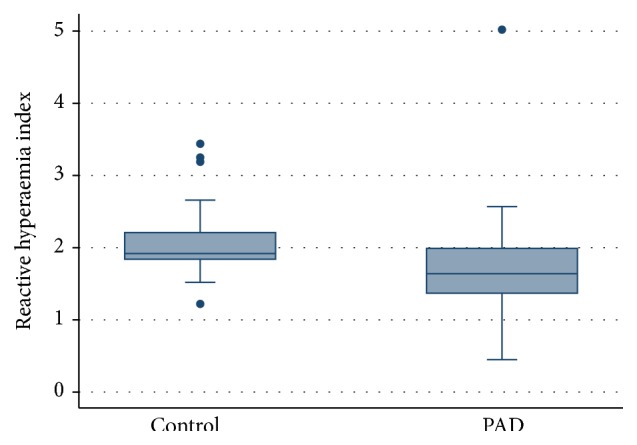
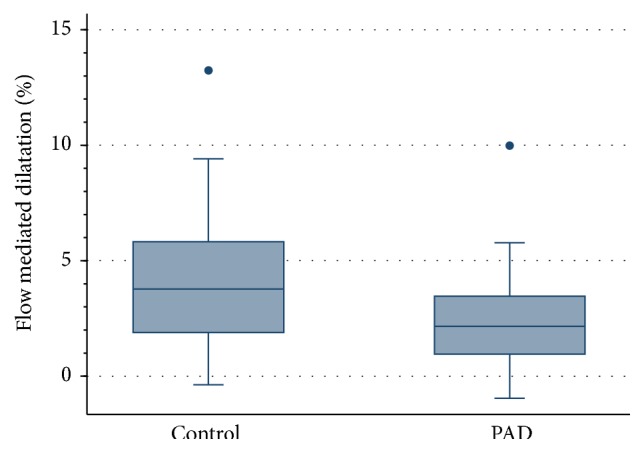
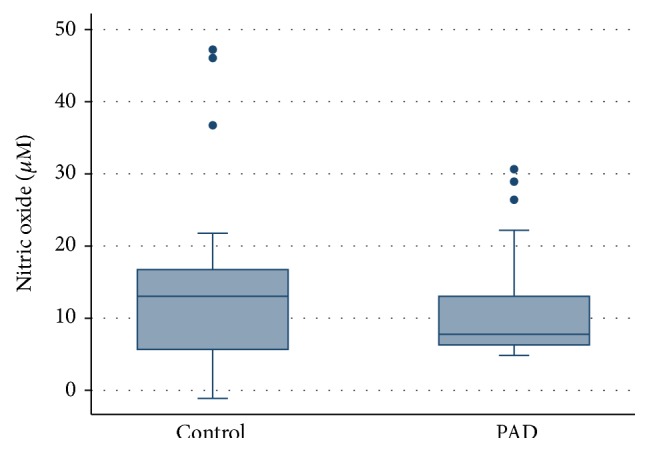
This study compared flow-mediated dilatation (FMD), peripheral artery tonometry (PAT), and serum nitric oxide (NO) measures of endothelial function in patients with peripheral artery disease (PAD) against age/gender matched controls. 25 patients (mean age: 72.4 years, M : F 18 : 7) with established PAD and an age/gender matched group of 25 healthy controls (mean age: 72.4 years, M : F 18 : 7) were studied. Endothelial function was measured using the % FMD, reactive hyperemia index (RHI) using PAT and serum NO (μmol). Difference for each method between PAD and control patients and correlation between the methods were investigated. FMD and RHI were lower in patients with PAD (median FMD for PAD = 2.16% versus control = 3.77%, p = 0.034 and median RHI in PAD = 1.64 versus control = 1.92, p = 0.005). NO levels were not significantly different between the groups (PAD median = 7.70 μmol, control median = 13.05 μmol, p = 0.662). These results were obtained in elderly patients and cannot be extrapolated to younger individuals. FMD and PAT both demonstrated a lower hyperaemic response in patients with PAD; however, FMD results in PAD patients were unequivocally reduced whereas half the PAD patients had RHI values above the established threshold for endothelial dysfunction. This suggests that FMD is a more appropriate method for the measurement of NO-mediated endothelial function.
Figures
References
-
- Targonski P. V., Bonetti P. O., Pumper G. M., Higano S. T., Holmes D. R., Jr., Lerman A. Coronary endothelial dysfunction is associated with an increased risk of cerebrovascular events. Circulation. 2003;107(22):2805–2809. doi: 10.1161/01.cir.0000072765.93106.ee. - DOI - PubMed
LinkOut - more resources
Full Text Sources
Other Literature Sources
Medical
