Review
. 2016:2016:1543809.
doi: 10.1155/2016/1543809. Epub 2016 Jan 5.

Lipids and Oxidative Stress Associated with Ethanol-Induced Neurological Damage

Affiliations
Review

Lipids and Oxidative Stress Associated with Ethanol-Induced Neurological Damage

José A Hernández et al. Oxid Med Cell Longev. 2016.

Abstract

The excessive intake of alcohol is a serious public health problem, especially given the severe damage provoked by chronic or prenatal exposure to alcohol that affects many physiological processes, such as memory, motor function, and cognitive abilities. This damage is related to the ethanol oxidation in the brain. The metabolism of ethanol to acetaldehyde and then to acetate is associated with the production of reactive oxygen species that accentuate the oxidative state of cells. This metabolism of ethanol can induce the oxidation of the fatty acids in phospholipids, and the bioactive aldehydes produced are known to be associated with neurotoxicity and neurodegeneration. As such, here we will review the role of lipids in the neuronal damage induced by ethanol-related oxidative stress and the role that lipids play in the related compensatory or defense mechanisms.


Figures
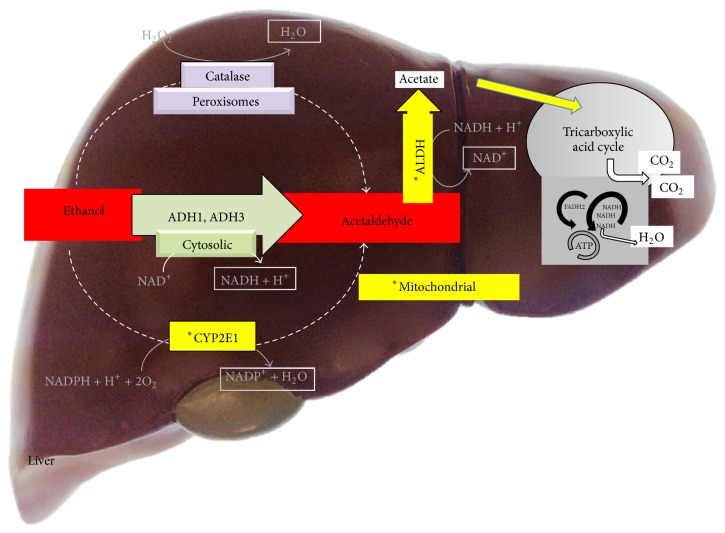
Figure 1
Figure 1
Mechanisms of ethanol metabolism in the liver. Alcohol dehydrogenase (ADH) and aldehyde dehydrogenase (ALDH) are the main enzymes that convert ethanol to acetate in the liver.
Figure 2
Figure 2
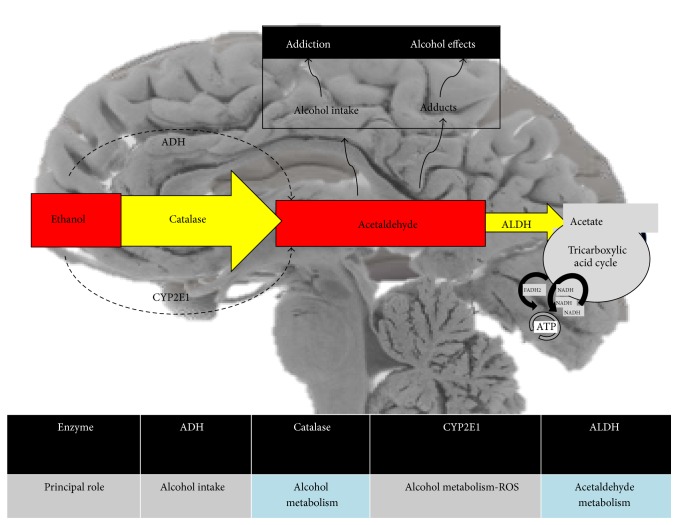
Enzymes related to ethanol metabolism in the brain and their principal role. Note the importance of acetaldehyde in ethanol metabolism.
Figure 3
Figure 3
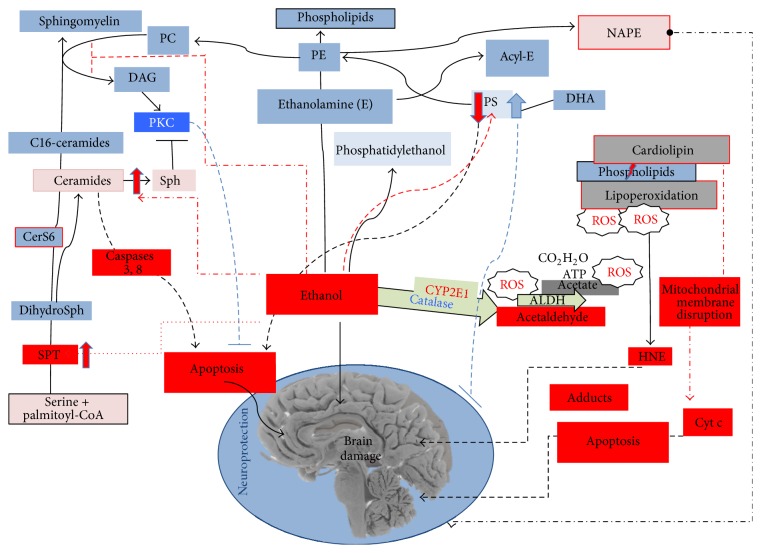
The role of lipids in ethanol-induced damage. Lipid metabolic pathways may be involved in neurodegeneration, such as lipoperoxidation, reduced phosphatidylserine (PS), N-acyl-PE (NAPE), and ceramide/Sph (sphingosine). Some lipids are produced as a compensatory mechanism and they fulfill a protective role, such as c16-ceramide, PS, sphingomyelin (SM), phosphatidyl ethanolamine (PE), and phosphatidylethanol.
Figure 4
Figure 4
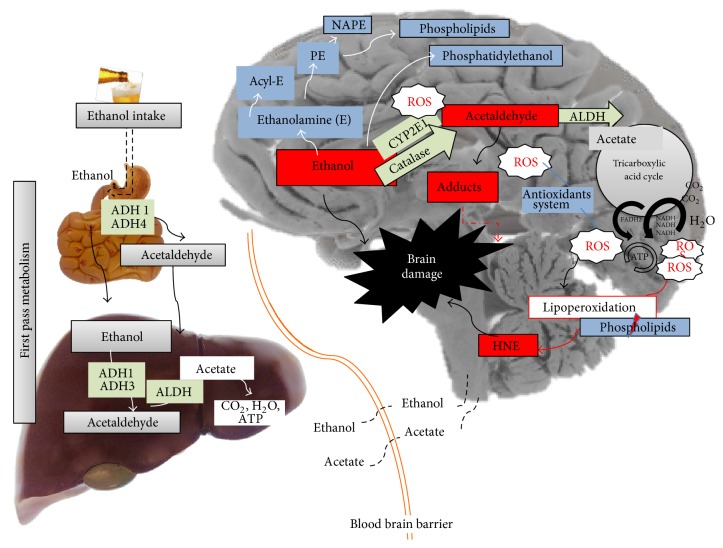
Oxidative stress and the role of lipids related to ethanol metabolism in the brain. Ethanol intake undergoes first pass metabolism in the stomach, intestine, and liver, although excess ethanol reaches the brain. Ethanol metabolism increases oxidative stress and lipid oxidation occurs, affecting mitochondrial membrane phospholipids and provoking cell death, thereby provoking damage in the brain. However ethanol-induced damage can be avoided by the activation of compensatory mechanisms involving lipids: E (ethanolamine), PE (phosphatidylethanolamine), acyl-E (acyl-ethanolamine), and NAPE (N-acyl-phosphatidylethanolamine).

References

    1. Chartier K. G., Hesselbrock M. N., Hesselbrock V. M. Ethnicity and gender comparisons of health consequences in adults with alcohol dependence. Substance Use and Misuse. 2013;48(3):200–210. doi: 10.3109/10826084.2013.747743. - DOI - PMC - PubMed
    1. Kiecolt K. J., Aggen S. H., Kendler K. S. Genetic and environmental influences on the relationship between mastery and alcohol dependence. Alcoholism: Clinical and Experimental Research. 2013;37(6):905–913. doi: 10.1111/acer.12058. - DOI - PMC - PubMed
    1. Alaux-Cantin S., Warnault V., Legastelois R., et al. Alcohol intoxications during adolescence increase motivation for alcohol in adult rats and induce neuroadaptations in the nucleus accumbens. Neuropharmacology. 2013;67:521–531. doi: 10.1016/j.neuropharm.2012.12.007. - DOI - PubMed
    1. Roerecke M., Rehm J. Cause-specific mortality risk in alcohol use disorder treatment patients: a systematic review and meta-analysis. International Journal of Epidemiology. 2014;43(3):906–919. doi: 10.1093/ije/dyu018.dyu018 - DOI - PubMed
    1. Calhoun F., Attilia M. L., Spagnolo P. A., Rotondo C., Mancinelli R., Ceccanti M. National Institute on Alcohol Abuse and Alcoholism and the study of fetal alcohol spectrum disorders. The International Consortium. Annali dell'Istituto Superiore di Sanita. 2006;42(1):4–7. - PubMed

LinkOut - more resources