Effects of Steroid Hormone in Avian Follicles
- PMID: 26949949
- PMCID: PMC4782083
- DOI: 10.5713/ajas.15.0310
Effects of Steroid Hormone in Avian Follicles
Abstract
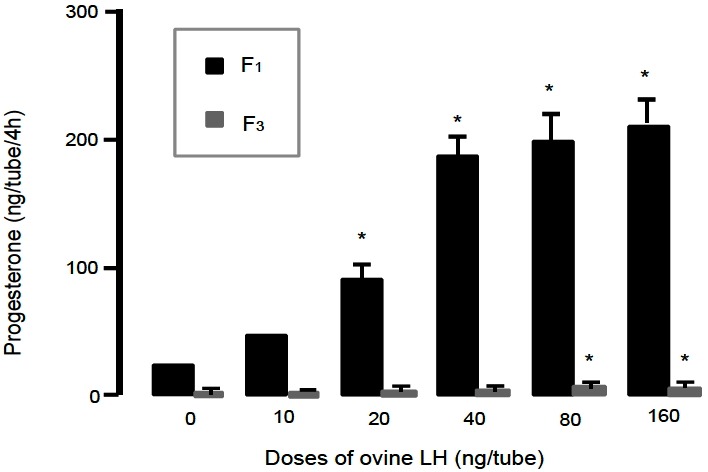
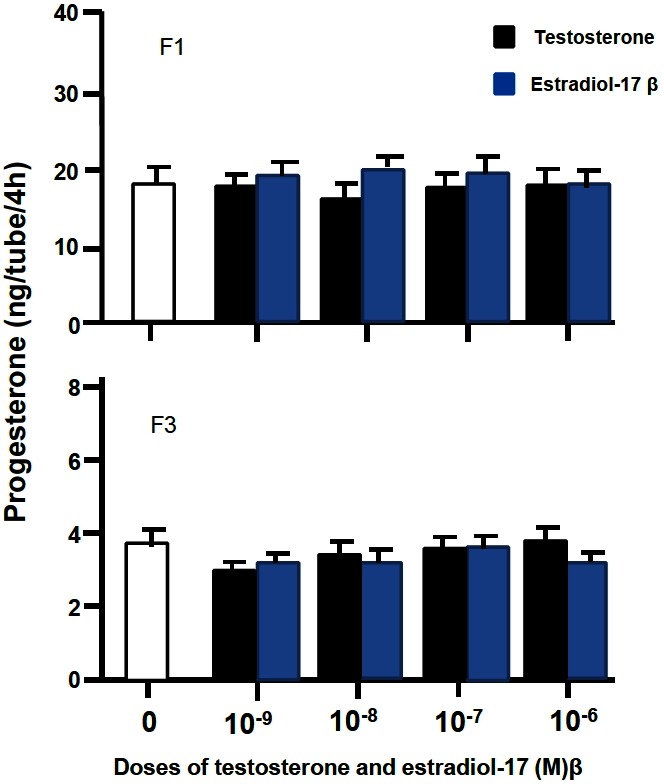
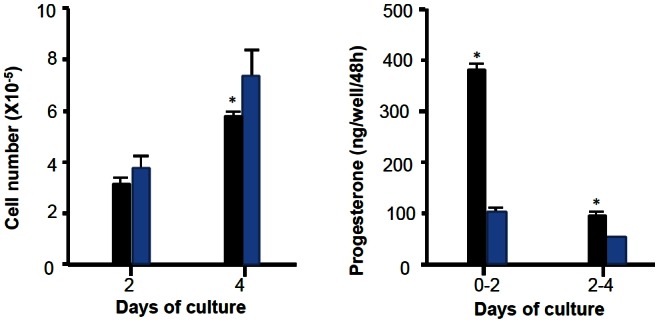
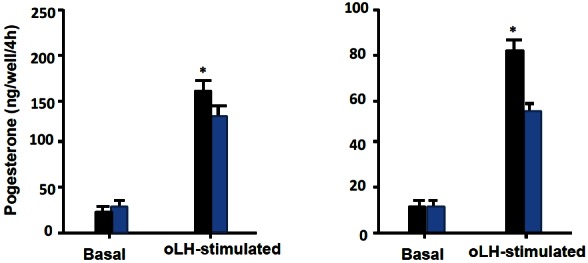
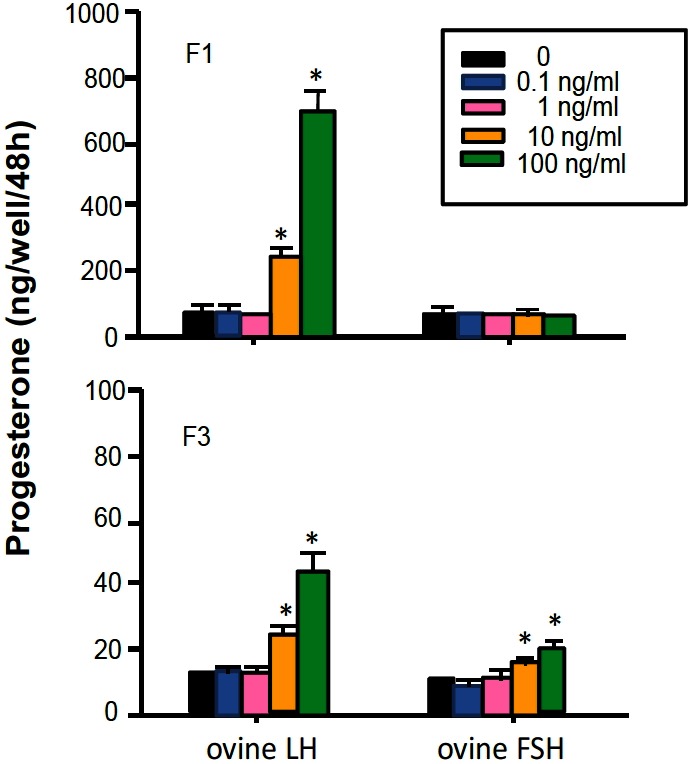
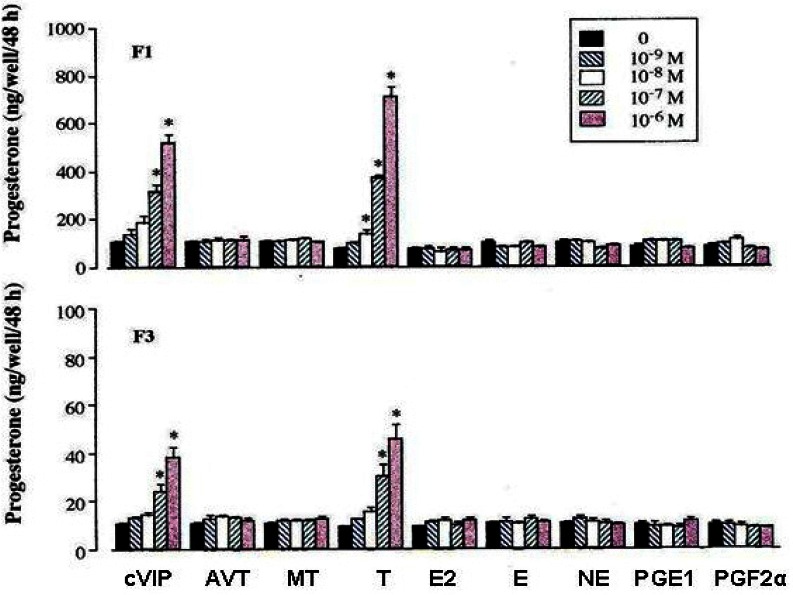
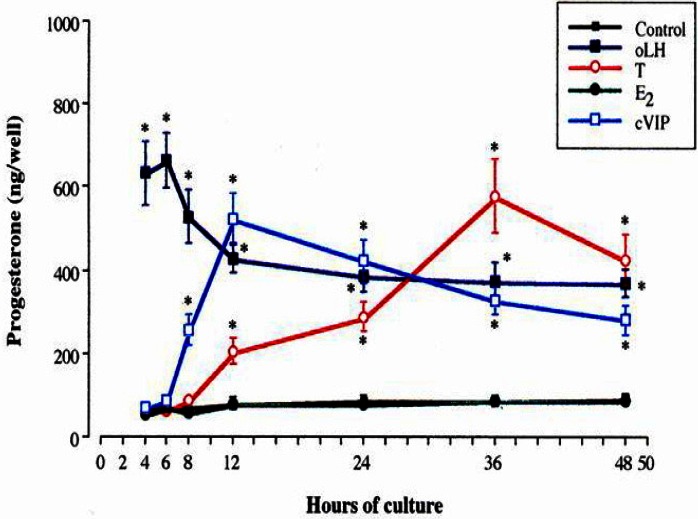
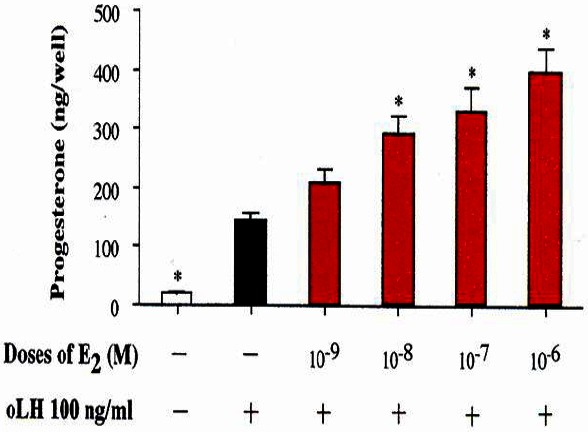
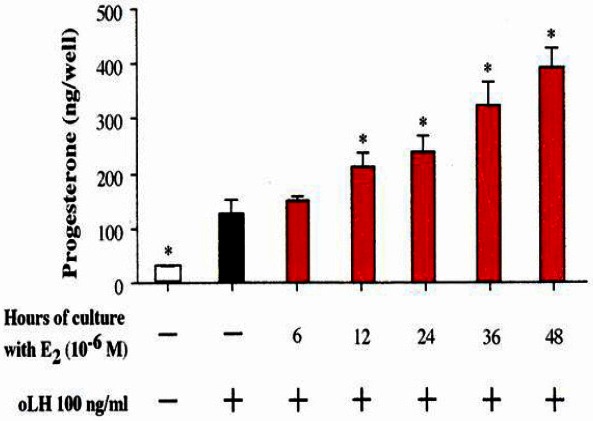
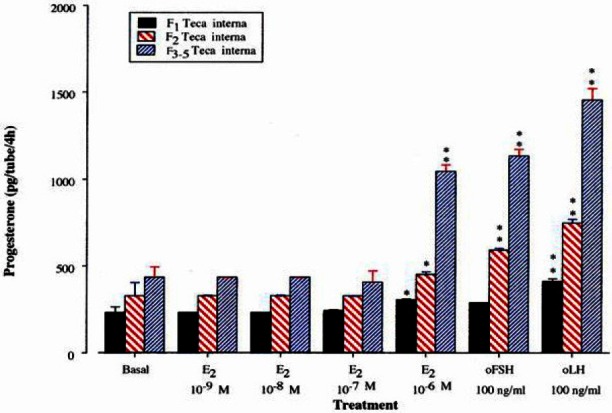
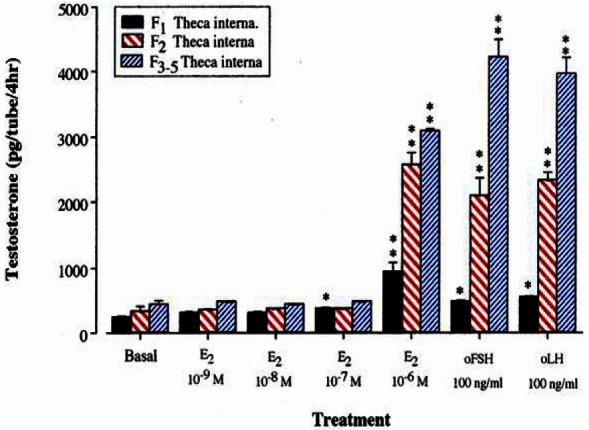
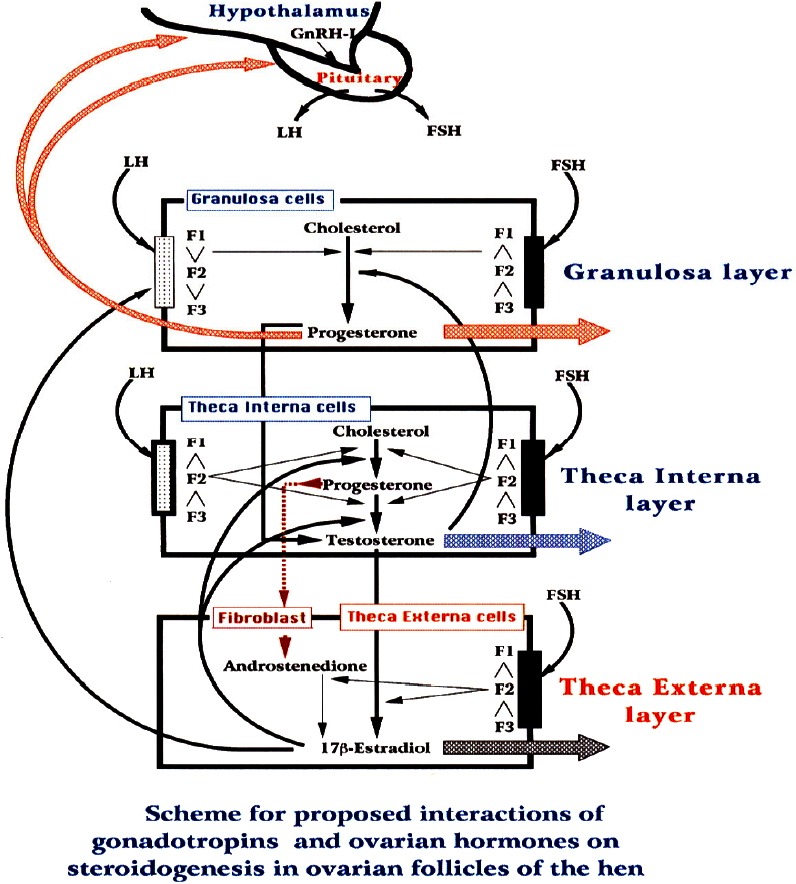
The aim of the present study was to examine the effects of testosterone (T) and estradiol-17β (E2) on the production of progesterone (P4) by granulosa cells, and of the E2 on the production of P4 and T by theca internal cells. In the first experiment, granulosa cells isolated from the largest (F1) and third largest (F3) preovulatory follicle were incubated for 4 h in short-term culture system, P4 production by granulosa cells of both F1 and F3 was increased in a dose-dependent manner by ovine luteinizing hormone (oLH), but not T or E2. In the second experiment, F1 and F3 granulosa cells cultured for 48 h in the developed monolayer culture system were recultured for an additional 48 h with increasing doses of various physiological active substances existing in the ovary, including T and E2. Basal P4 production for 48 h during 48 to 96 h of the cultured was about nine fold greater by F1 granulosa cells than by F3 granulosa cells. In substances examined oLH, chicken vasoactive intestinal polypeptide (cVIP) and T, but not E2, stimulated in a dose-dependent manner P4 production in both F1 and F3 granulosa cells. In addition, when the time course of P4 production by F1 granulosa cells in response to oLH, cVIP, T and E2 was examined for 48 h during 48 to 96 h of culture, although E2 had no effect on P4 production by granulosa cells of F1 during the period from 48 to 96 h of culture, P4 production with oLH was found to be increased at 4 h of the culture, with a maximal 9.14 fold level at 6 h. By contrast, P4 production with cVIP and T increased significantly (p<0.05) from 8 and 12 h of the culture, respectively, with maximal 6.50 fold response at 12 h and 6, 48 fold responses at 36 h. Furthermore, when F1 granulosa cells were precultured with E2 for various times before 4 h culture with oLH at 96 h of culture, the increase in P4 production in response to oLH with a dose-related manner was only found at a pretreatment time of more than 12 h. In the third experiment, theca internal cells of F1, F2 and the largest third to fifth preovulatory follicles (F3-5) were incubated for 4 h in short-term culture system with increasing doses of E2. The production of P4 and T by theca internal cells were increased with the addition of E2 of 10(-6) M. These increases were greater in smaller follicles. These results indicate that, in granulosa cells of the hen, T may have a direct stimulatory action in the long term on P4 production, and on E2 in long-term action which may enhance the sensitivity to LH for P4 production, and thus, in theca internal cells, E2 in short term action may stimulate the production of P4 and T.
Keywords: Granulosa; Preovulatory Follicles; Steroids Hormone; Theca Internal and External Cells.
Figures
References
-
- Armstrong DG. Ovarian aromatase activity in the domestic fowl (Gallus domesticus) J Endocrinol. 1984;100:81–86. - PubMed
-
- Asem EK, Hertelendy F. Steroidogenesis and cAMP production in isolated avian granulosa cells during follicular maturation: Lack of positive correlation. Acta Endocrimol. 1986;113:289–297. - PubMed
-
- Barano JL, Hammond JM. Serum-free medium enhances growth and differentiation of cultured pig granulosa cells. Endocrinology. 1985;116:51–58. - PubMed
-
- Barnes JLS, Hammond JM. Serum-free cell culture: A unifying approach. Cell. 1980;22:649–655. - PubMed
-
- Caicedo RE. Steroidogenesis in theca cells of chicken follicles. Tecnociencia. 2004;6:71–83.
LinkOut - more resources
Full Text Sources
Other Literature Sources
Miscellaneous