


Demographic and Clinical Predictors of High Healthcare Use in Patients with Inflammatory Bowel Disease
- PMID: 26950309
- PMCID: PMC4868776
- DOI: 10.1097/MIB.0000000000000763
Demographic and Clinical Predictors of High Healthcare Use in Patients with Inflammatory Bowel Disease
Abstract
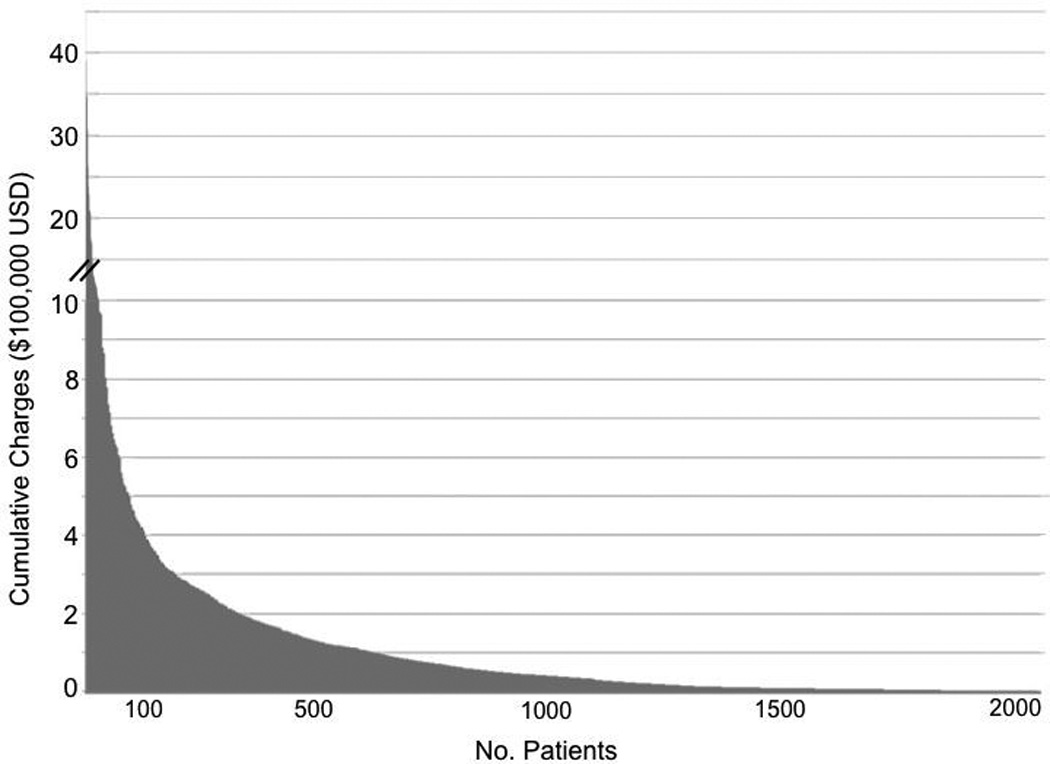
Background: Inflammatory bowel disease (IBD) is a heterogeneous chronic inflammatory condition requiring significant healthcare expenditure. Subgroups of individuals contribute disproportionately to spending. We aimed to determine demographic and clinical factors predictive of high healthcare expenditures for IBD patients followed over a multiyear period.
Methods: This was a registry analysis using a prospective observational, consented, natural history registry from a tertiary IBD center and associated medical charges, not including pharmacy expenses. The 100 patients with the highest medical charges (top 5%) were compared with the median 300 patients. Logistic regression determined demographic and clinical factors associated with high charge patients.
Results: IBD patients in the high charge group had significantly more unemployment (P < 0.0001), were of black race (P = 0.013), comorbid psychiatric illness (P = 0.002), hypertension (P = 0.01), diabetes (P = 0.004), opiate use (P < 0.0001), perianal involvement (P = 0.002), penetrating disease (P < 0.0001), and extensive colitis (P = 0.01). In multivariate analysis, unemployment (Crohn's disease [CD]: odds ratio [OR], 3.04; 95% confidence interval [CI], 1.32-7.02; ulcerative colitis [UC]: OR, 2.68; 95% CI, 1.20-5.99), psychiatric illness (UC: OR, 2.08; 95% CI, 1.03-4.19), opiates (CD: OR, 5.61; 95% CI, 2.67-11.82; UC: OR, 5.14; 95% CI, 2.52-10.48), prior surgery (CD: OR, 3.29; 95% CI, 1.59-6.82; UC: OR, 2.72; 95% CI, 1.39-5.32), penetrating CD (OR, 3.29; 95% CI, 1.02-10.62), and corticosteroid requirement (CD: OR, 3.78; 95% CI, 1.86-7.65; UC: OR, 2.98; 95% CI, 1.51-5.90) remained independently associated with high charges.
Conclusions: High expenditure IBD patients were affected by more severe disease. The high prevalence of depression, anxiety, and chronic pain in these patients suggests the need for focused treatment of these comorbidities ultimately to reduce financial burden.
Conflict of interest statement
Figures
References
-
- Ananthakrishnan AN, Weber LR, Knox JF, et al. Permanent work disability in Crohn's disease. The American journal of gastroenterology. 2008;103:154–161. - PubMed
-
- Molodecky NA, Soon IS, Rabi DM, et al. Increasing incidence and prevalence of the inflammatory bowel diseases with time, based on systematic review. Gastroenterology. 2012;142:46–54.e42. quiz e30. - PubMed
Publication types
MeSH terms
Substances
Grants and funding
LinkOut - more resources
Full Text Sources
Other Literature Sources
Medical
