


Epigenetic response to environmental stress: Assembly of BRG1-G9a/GLP-DNMT3 repressive chromatin complex on Myh6 promoter in pathologically stressed hearts
- PMID: 26952936
- PMCID: PMC7397641
- DOI: 10.1016/j.bbamcr.2016.03.002
Epigenetic response to environmental stress: Assembly of BRG1-G9a/GLP-DNMT3 repressive chromatin complex on Myh6 promoter in pathologically stressed hearts
Abstract
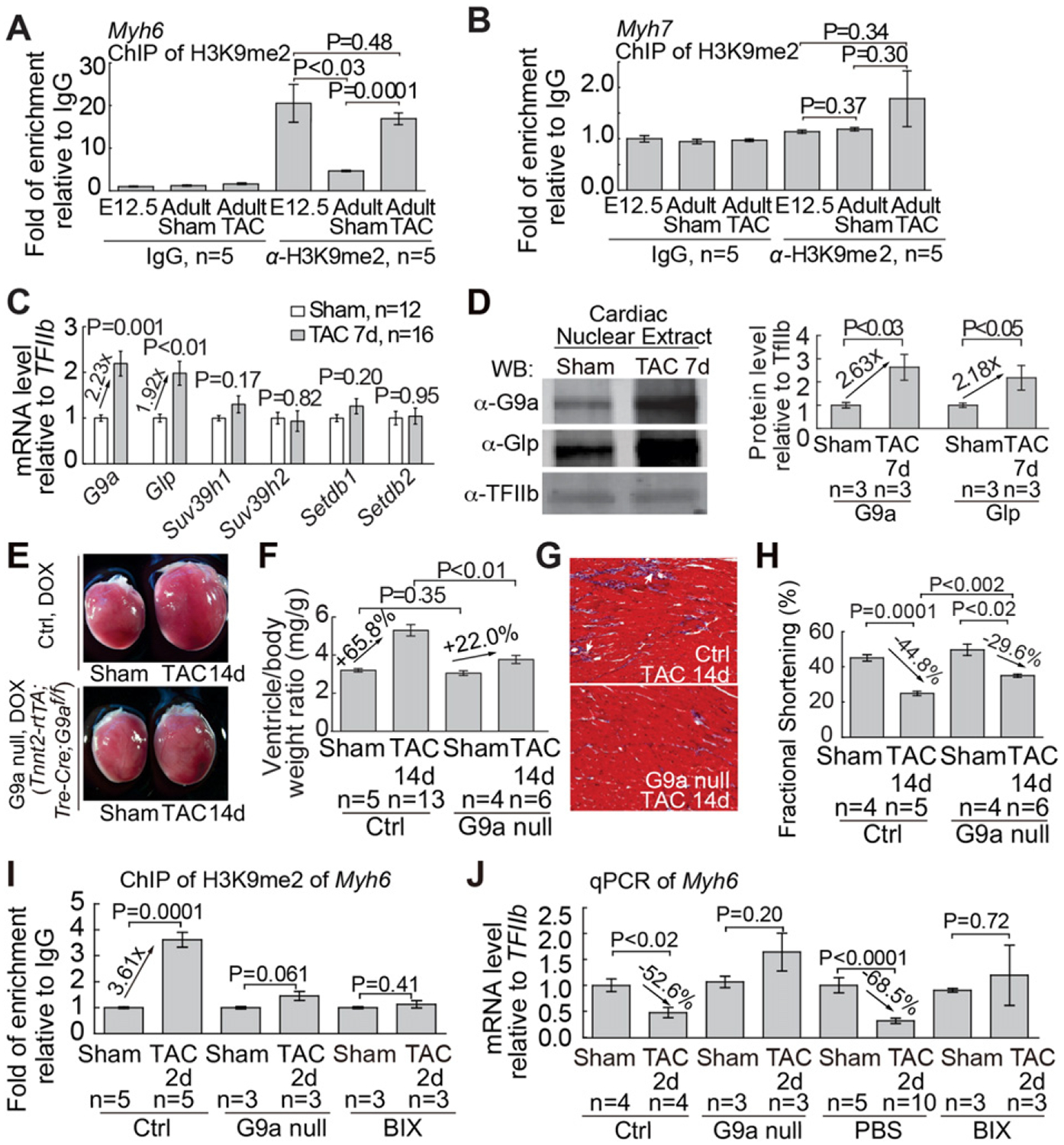
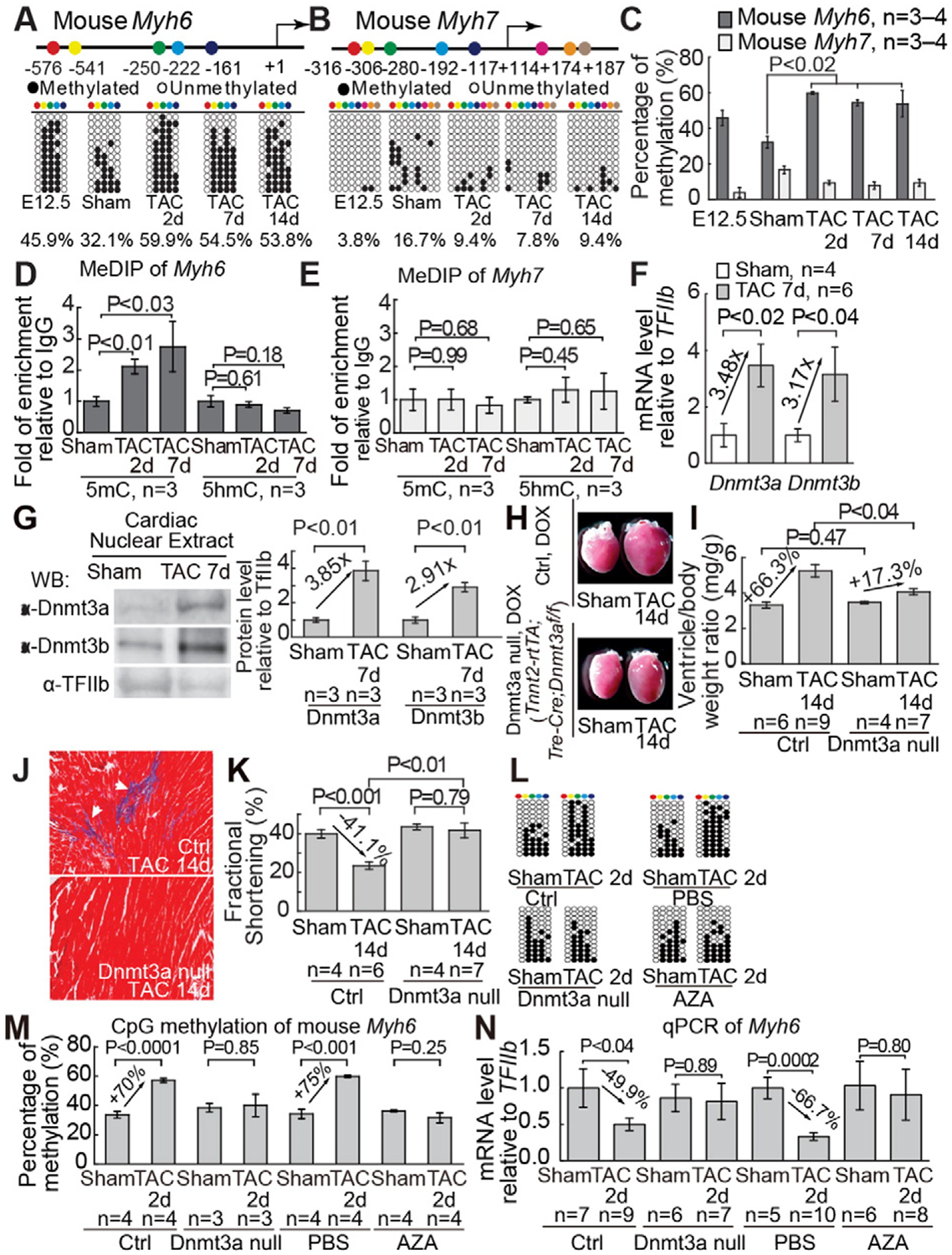
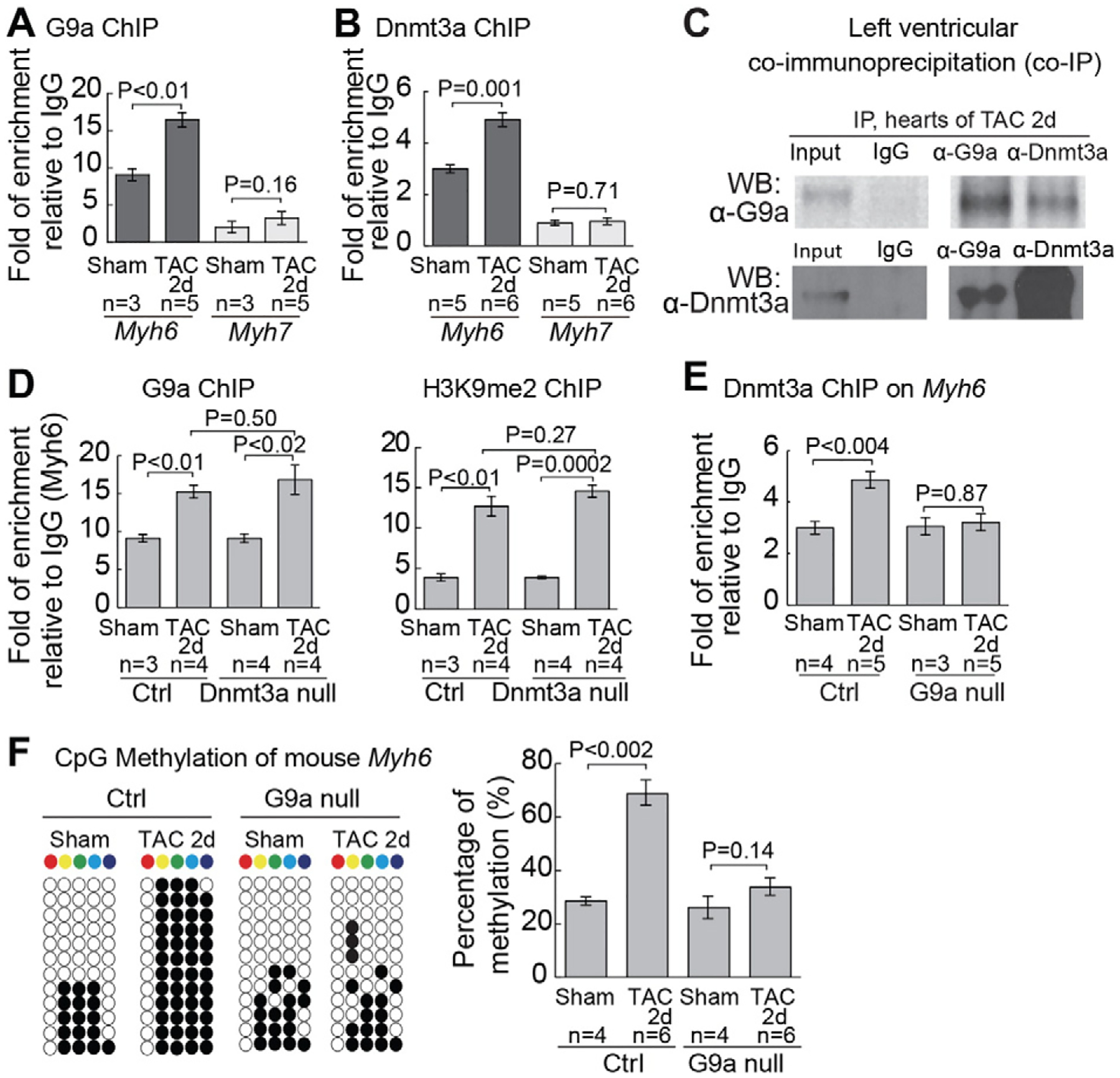
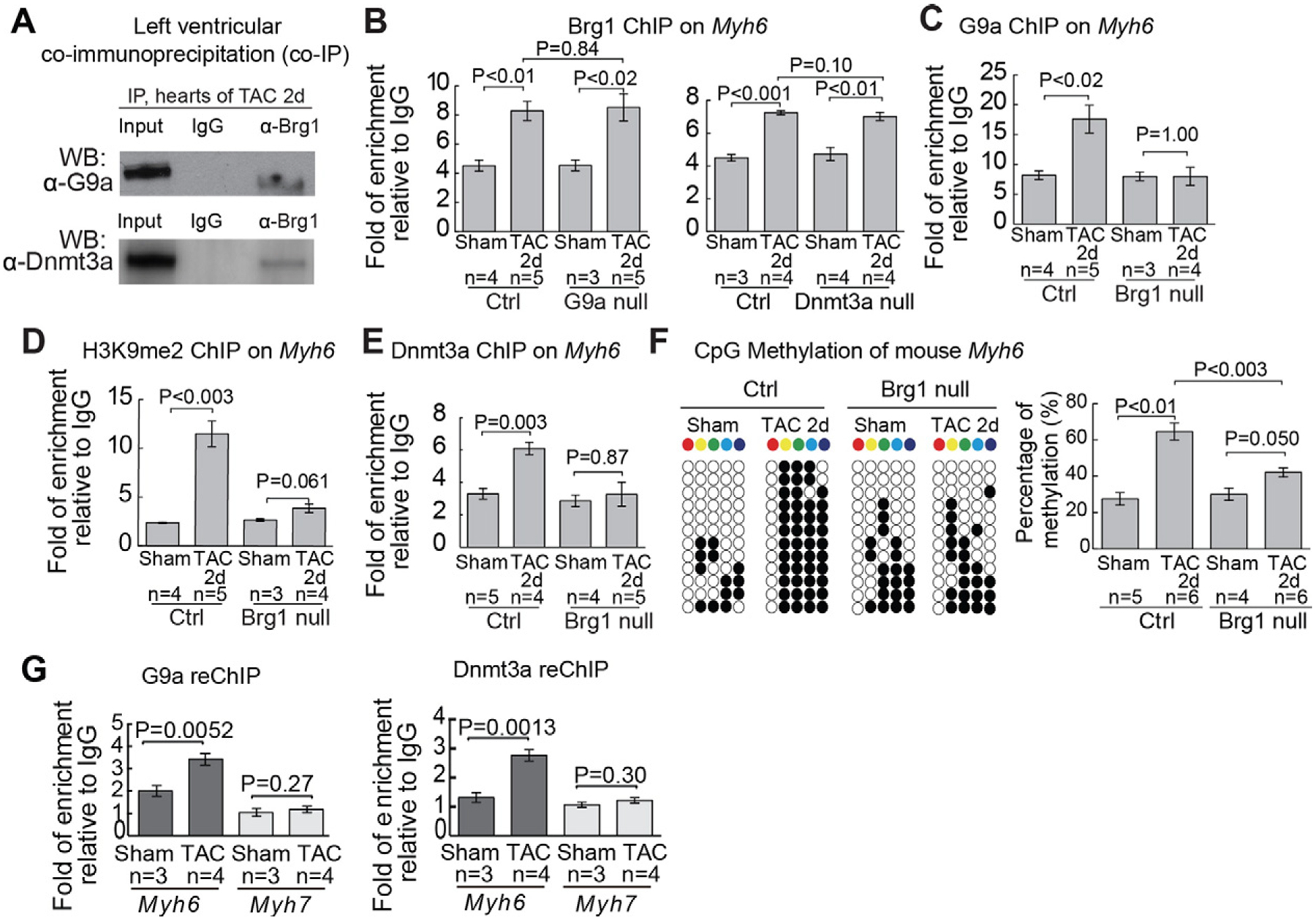
Chromatin structure is determined by nucleosome positioning, histone modifications, and DNA methylation. How chromatin modifications are coordinately altered under pathological conditions remains elusive. Here we describe a stress-activated mechanism of concerted chromatin modification in the heart. In mice, pathological stress activates cardiomyocytes to express Brg1 (nucleosome-remodeling factor), G9a/Glp (histone methyltransferase), and Dnmt3 (DNA methyltransferase). Once activated, Brg1 recruits G9a and then Dnmt3 to sequentially assemble repressive chromatin-marked by H3K9 and CpG methylation-on a key molecular motor gene (Myh6), thereby silencing Myh6 and impairing cardiac contraction. Disruption of Brg1, G9a or Dnmt3 erases repressive chromatin marks and de-represses Myh6, reducing stress-induced cardiac dysfunction. In human hypertrophic hearts, BRG1-G9a/GLP-DNMT3 complex is also activated; its level correlates with H3K9/CpG methylation, Myh6 repression, and cardiomyopathy. Our studies demonstrate a new mechanism of chromatin assembly in stressed hearts and novel therapeutic targets for restoring Myh6 and ventricular function. The stress-induced Brg1-G9a-Dnmt3 interactions and sequence of repressive chromatin assembly on Myh6 illustrates a molecular mechanism by which the heart epigenetically responds to environmental signals. This article is part of a Special Issue entitled: Cardiomyocyte Biology: Integration of Developmental and Environmental Cues in the Heart edited by Marcus Schaub and Hughes Abriel.
Keywords: Brg1; Cardiac hypertrophy; Cardiomyopathy; Chromatin remodeling; DNA methylation; Dnmt; G9a; Gene silencing; H3K9me2; Heart failure; Histone methylation; Myosin heavy chain.
Copyright © 2016. Published by Elsevier B.V.
Conflict of interest statement
Conflict of interest
The authors have not conflict of interest to report at this time.
Figures
References
-
- Abraham WT, Gilbert EM, Lowes BD, Minobe WA, Larrabee P, Roden RL, Dutcher D, Sederberg J, Lindenfeld JA, Wolfel EE, et al. , Coordinate changes in Myosin heavy chain isoform gene expression are selectively associated with alterations in dilated cardiomyopathy phenotype, Mol. Med 8 (2002) 750–760. - PMC - PubMed
-
- Bestor TH, The DNA methyltransferases of mammals, Hum. Mol. Genet 9 (2000) 2395–2402. - PubMed
-
- Bird A, Putting the DNA back into DNA methylation, Nat. Genet 43 (2011) 1050–1051. - PubMed
-
- Cedar H, Bergman Y, Linking DNA methylation and histone modification: patterns and paradigms, Nat. Rev. Genet 10 (2009) 295–304. - PubMed
-
- Clapier CR, Cairns BR, The biology of chromatin remodeling complexes, Annu. Rev. Biochem 78 (2009) 273–304. - PubMed
Publication types
MeSH terms
Substances
Grants and funding
LinkOut - more resources
Full Text Sources
Other Literature Sources
Medical
Molecular Biology Databases
Miscellaneous
