


Review
doi: 10.4103/0301-4738.178146.
Does tight control of systemic factors help in the management of diabetic retinopathy?
Affiliations
- PMID: 26953026
- PMCID: PMC4821124
- DOI: 10.4103/0301-4738.178146
Item in Clipboard
Review
Does tight control of systemic factors help in the management of diabetic retinopathy?
Indian J Ophthalmol.
2016 Jan.
Abstract
Diabetic retinopathy (DR), one of the leading causes of preventable blindness, is associated with many systemic factors that contribute to the development and progression of this microvascular complication of diabetes. While the duration of diabetes is the major risk factor for the development of DR, the main modifiable systemic risk factors for development and progression of DR are hyperglycemia, hypertension, and dyslipidemia. This review article looks at the evidence that control of these systemic factors has significant benefits in delaying the onset and progression of DR.
Figures
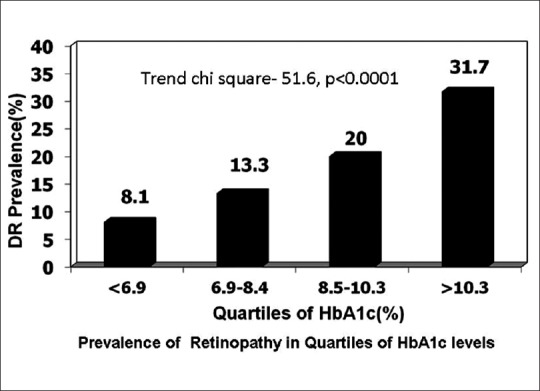
The Chennai Urban Rural Epidemiological Study: Prevalence of retinopathy based on quartiles of glycated hemoglobin levels
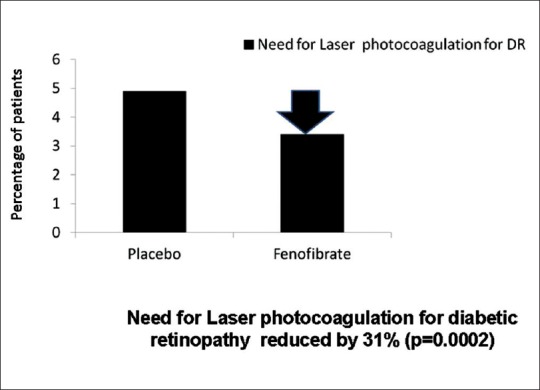
Fenofibrate Intervention and Event Lowering in Diabetes study-effect of fenofibrate on the need for laser photocoagulation for diabetic retinopathy
Comment in
-
Comment to: Dual effect hypothesis of insulin analogs on diabetic retinopathy.Indian J Ophthalmol. 2016 Jun;64(6):476-7. doi: 10.4103/0301-4738.187693. Indian J Ophthalmol. 2016. PMID: 27488166 Free PMC article. No abstract available.
-
Author's reply.Indian J Ophthalmol. 2016 Jun;64(6):477-8. doi: 10.4103/0301-4738.187694. Indian J Ophthalmol. 2016. PMID: 27488167 Free PMC article. No abstract available.
References
-
- World Health Organization. Global Initiative for the Elimination of Avoidable Blindness. WHO/PBL/97.61 Rev 2. 2006. [Last accessed on 2016 Jan 05]. Available from: http://www.who.int/blindness/Vision2020_report.pdf .
-
- Pradeepa R, Anitha B, Mohan V, Ganesan A, Rema M. Risk factors for diabetic retinopathy in a South Indian type 2 diabetic population – The Chennai urban rural epidemiology study (CURES) eye study 4. Diabet Med. 2008;25:536–42. - PubMed
-
- Raman R, Rani PK, Reddi Rachepalle S, Gnanamoorthy P, Uthra S, Kumaramanickavel G, et al. Prevalence of diabetic retinopathy in India: Sankara Nethralaya diabetic retinopathy epidemiology and molecular genetics study report 2. Ophthalmology. 2009;116:311–8. - PubMed
-
- Aiello LP, Cahill MT, Wong JS. Systemic considerations in the management of diabetic retinopathy. Am J Ophthalmol. 2001;132:760–76. - PubMed
Publication types
MeSH terms
Substances
LinkOut - more resources
Full Text Sources
Other Literature Sources
Medical
