. 2016 Mar 8:6:22843.
doi: 10.1038/srep22843.

A Web Server and Mobile App for Computing Hemolytic Potency of Peptides

Affiliations

A Web Server and Mobile App for Computing Hemolytic Potency of Peptides

Kumardeep Chaudhary et al. Sci Rep. .

Abstract

Numerous therapeutic peptides do not enter the clinical trials just because of their high hemolytic activity. Recently, we developed a database, Hemolytik, for maintaining experimentally validated hemolytic and non-hemolytic peptides. The present study describes a web server and mobile app developed for predicting, and screening of peptides having hemolytic potency. Firstly, we generated a dataset HemoPI-1 that contains 552 hemolytic peptides extracted from Hemolytik database and 552 random non-hemolytic peptides (from Swiss-Prot). The sequence analysis of these peptides revealed that certain residues (e.g., L, K, F, W) and motifs (e.g., "FKK", "LKL", "KKLL", "KWK", "VLK", "CYCR", "CRR", "RFC", "RRR", "LKKL") are more abundant in hemolytic peptides. Therefore, we developed models for discriminating hemolytic and non-hemolytic peptides using various machine learning techniques and achieved more than 95% accuracy. We also developed models for discriminating peptides having high and low hemolytic potential on different datasets called HemoPI-2 and HemoPI-3. In order to serve the scientific community, we developed a web server, mobile app and JAVA-based standalone software (http://crdd.osdd.net/raghava/hemopi/).


Figures
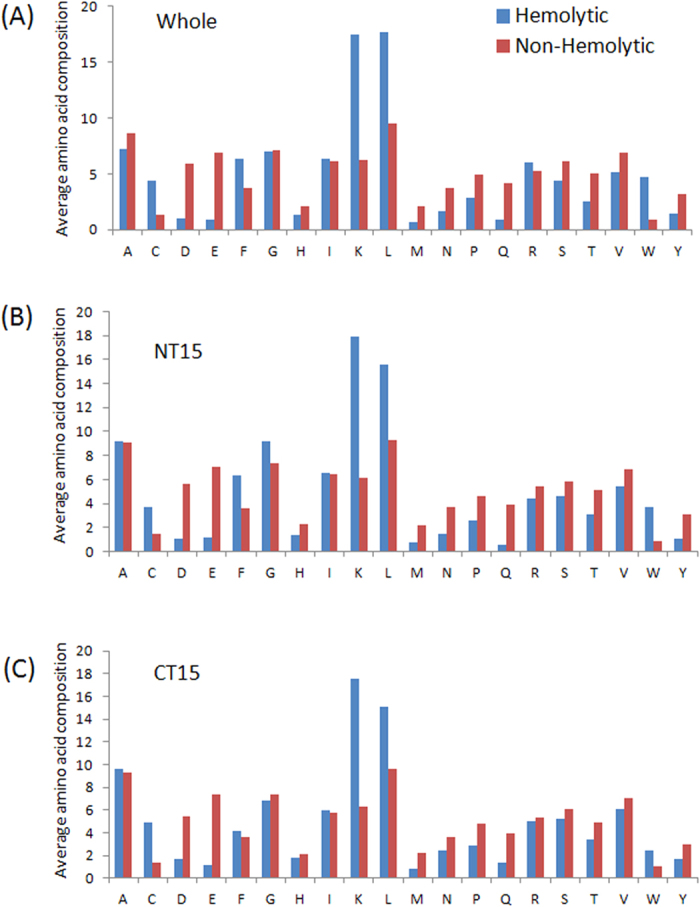
Figure 1
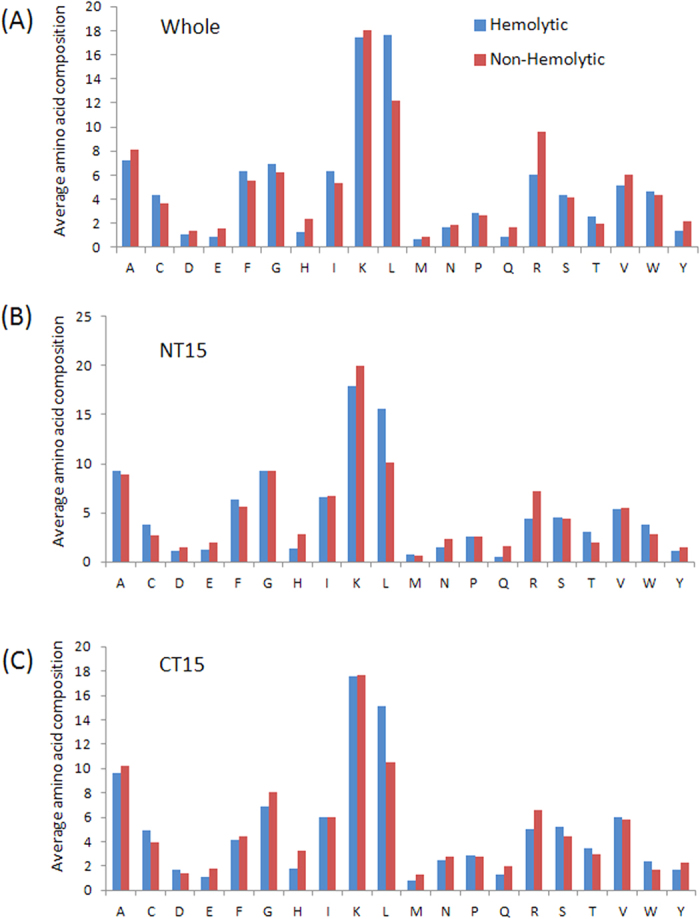
Figure 1. Amino acid composition of HemoPI-1 dataset peptides.
Percent average amino acid composition of: (A) whole peptides, (B) N-terminal residues and (C) C-terminal residues between hemolytic and non-hemolytic peptides of HemoPI-1 dataset.
Figure 2
Figure 2. Amino acid composition of HemoPI-2 dataset peptides.
Percent average amino acid composition of: (A) whole peptides, (B) N-terminal residues, and (C) C-terminal residues between hemolytic and non-hemolytic peptides of HemoPI-2 dataset.
Figure 3
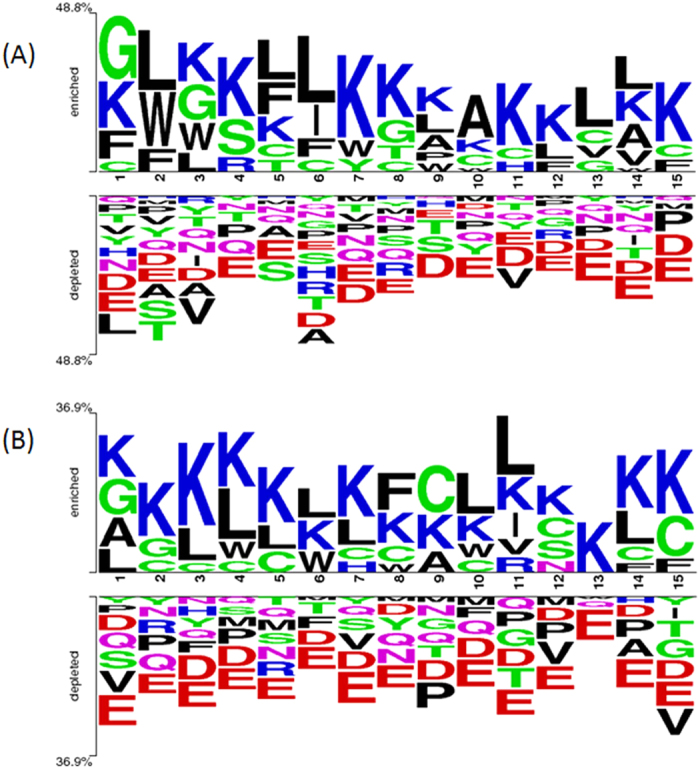
Figure 3. Two sample logos of hemolytic and non-hemolytic peptides of HemoPI-1 dataset.
The figure depicts the two sample logos of: (A) first fifteen residues (N-terminus) and (B) last fifteen residues (C-terminus) of hemolytic (enriched) and non-hemolytic (depleted) peptides, where size of residue is proportional to its propensity.
Figure 4
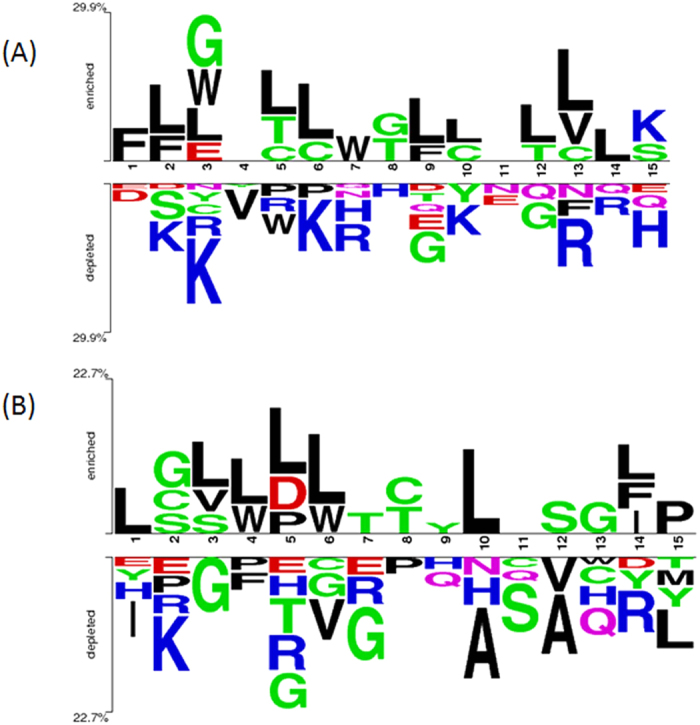
Figure 4. Two sample logos of hemolytic and non-hemolytic peptides of HemoPI-2 dataset.
The figure depicts the sequence logos of: (A) first fifteen residues (N-terminus) and (B) last fifteen residues (C-terminus) of hemolytic (enriched) and non-hemolytic (depleted) peptides, where size of residue is proportional to its propensity.
Figure 5
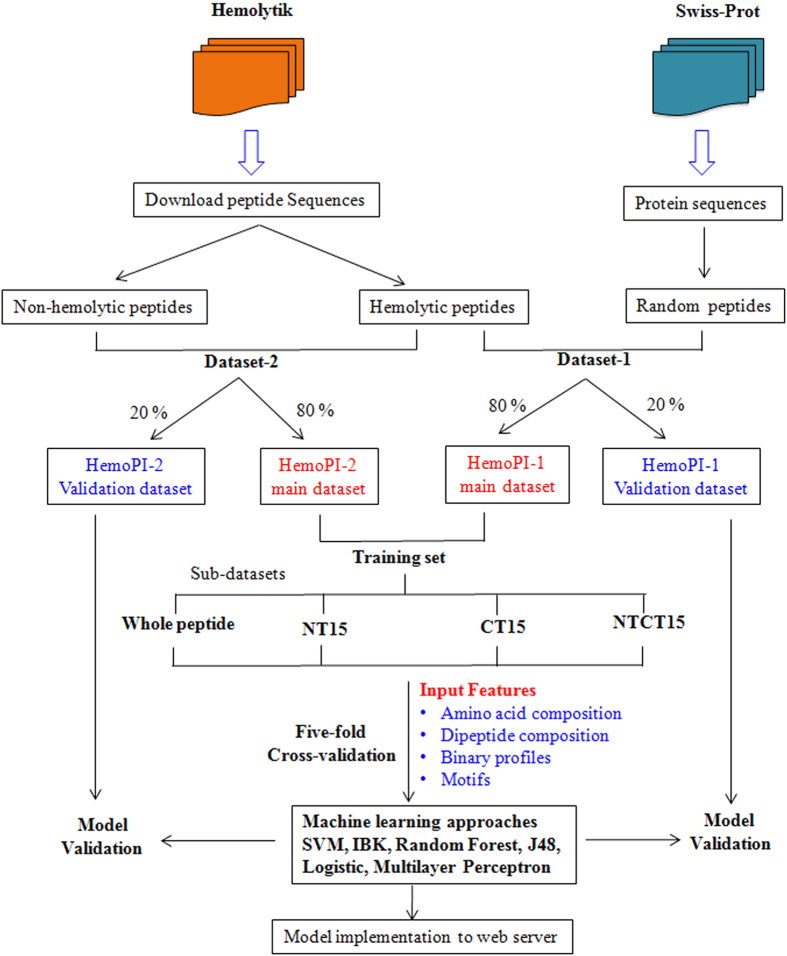
Figure 5. Schematic representation of HemoPI approach.

References

    1. McGregor D. P. Discovering and improving novel peptide therapeutics. Curr Opin Pharmacol 8, 616–619 (2008). - PubMed
    1. Wang G., Li X. & Wang Z. APD2: the updated antimicrobial peptide database and its application in peptide design. Nucleic Acids Res 37, D933–937 (2009). - PMC - PubMed
    1. Waghu F. H. et al. CAMP: Collection of sequences and structures of antimicrobial peptides. Nucleic Acids Res 42, D1154–1158 (2014). - PMC - PubMed
    1. Seshadri Sundararajan V. et al. DAMPD: a manually curated antimicrobial peptide database. Nucleic Acids Res 40, D1108–1112 (2012). - PMC - PubMed
    1. Bell A. Antimalarial peptides: the long and the short of it. Curr Pharm Des 17, 2719–2731 (2011). - PubMed

Publication types

LinkOut - more resources