. 2016 Apr 22;60(5):2972-80.
doi: 10.1128/AAC.01950-15. Print 2016 May.

Distribution and Relationships of Antimicrobial Resistance Determinants among Extended-Spectrum-Cephalosporin-Resistant or Carbapenem-Resistant Escherichia coli Isolates from Rivers and Sewage Treatment Plants in India

Affiliations

Distribution and Relationships of Antimicrobial Resistance Determinants among Extended-Spectrum-Cephalosporin-Resistant or Carbapenem-Resistant Escherichia coli Isolates from Rivers and Sewage Treatment Plants in India

Masato Akiba et al. Antimicrob Agents Chemother. .

Abstract

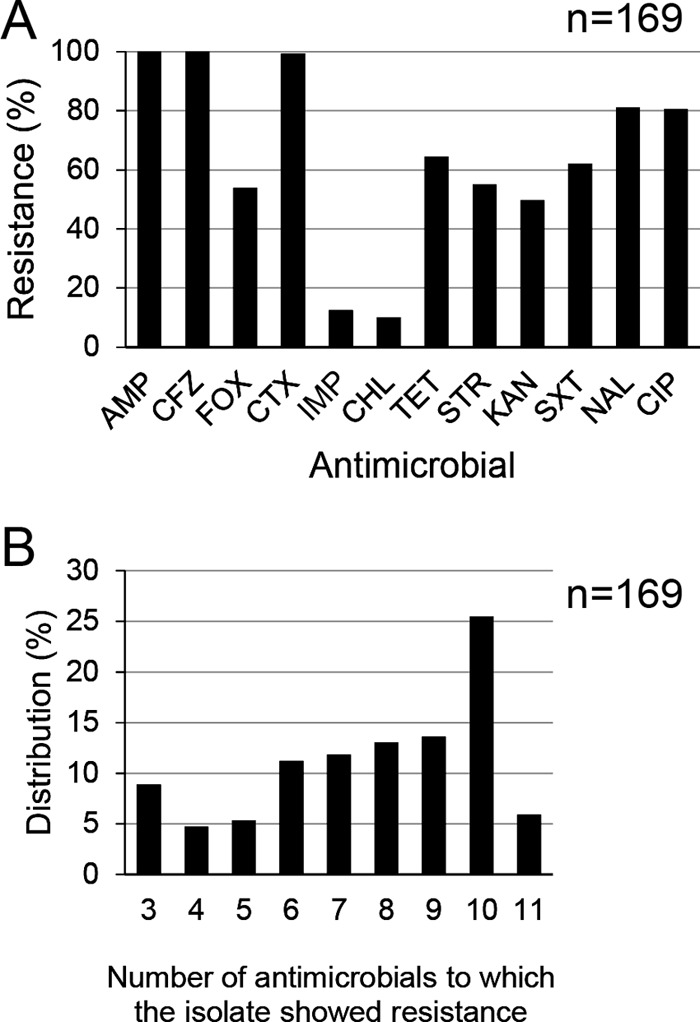
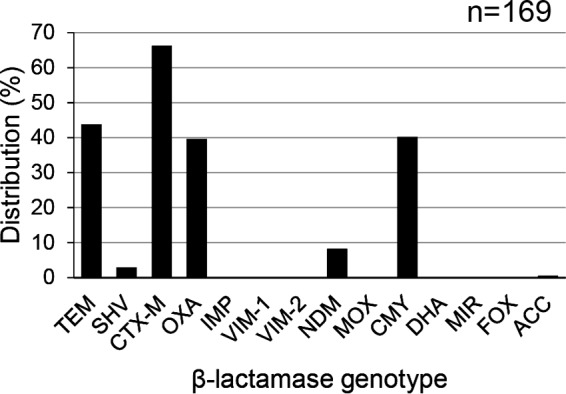
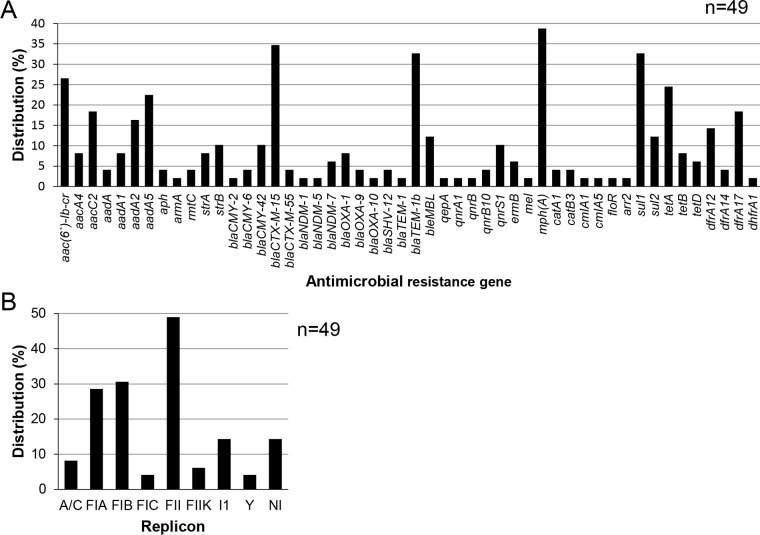
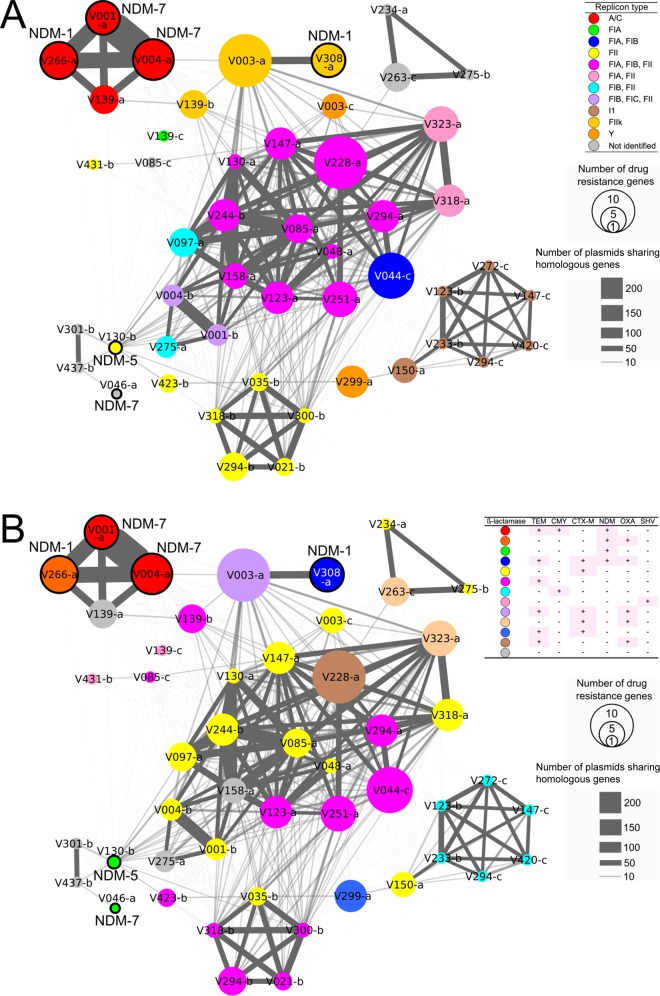
To determine the distribution and relationship of antimicrobial resistance determinants among extended-spectrum-cephalosporin (ESC)-resistant or carbapenem-resistant Escherichia coli isolates from the aquatic environment in India, water samples were collected from rivers or sewage treatment plants in five Indian states. A total of 446 E. coli isolates were randomly obtained. Resistance to ESC and/or carbapenem was observed in 169 (37.9%) E. coli isolates, which were further analyzed. These isolates showed resistance to numerous antimicrobials; more than half of the isolates exhibited resistance to eight or more antimicrobials. The blaNDM gene was detected in 14/21 carbapenem-resistant E. coli isolates: blaNDM-1 in 2 isolates, blaNDM-5 in 7 isolates, and blaNDM-7 in 5 isolates. The blaCTX-M gene was detected in 112 isolates (66.3%): blaCTX-M-15 in 108 isolates and blaCTX-M-55 in 4 isolates. We extracted 49 plasmids from selected isolates, and their whole-genome sequences were determined. Fifty resistance genes were detected, and 11 different combinations of replicon types were observed among the 49 plasmids. The network analysis results suggested that the plasmids sharing replicon types tended to form a community, which is based on the predicted gene similarity among the plasmids. Four communities each containing from 4 to 17 plasmids were observed. Three of the four communities contained plasmids detected in different Indian states, suggesting that the interstate dissemination of ancestor plasmids has already occurred. Comparison of the DNA sequences of the blaNDM-positive plasmids detected in this study with known sequences of related plasmids suggested that various mutation events facilitated the evolution of the plasmids and that plasmids with similar genetic backgrounds have widely disseminated in India.


Figures

FIG 1
FIG 1
(A) Distribution of resistance to 12 antimicrobials among the extended-spectrum-cephalosporin-resistant and/or carbapenem-resistant E. coli isolates. The x axis indicates the antimicrobials used in this study: ampicillin (AMP), cefazolin (CFZ), cefoxitin (FOX), cefotaxime (CTX), imipenem (IMP), chloramphenicol (CHL), tetracycline (TET), streptomycin (STR), kanamycin (KAN), sulfamethoxazole-trimethoprim (SXT), nalidixic acid (NAL), and ciprofloxacin (CIP). The y axis indicates the prevalence of antimicrobial-resistant isolates. (B) The numbers of antimicrobials to which the same E. coli isolates for which the results are shown in panel A are resistant.
FIG 2
FIG 2
Distribution of β-lactamase genes among the extended-spectrum-cephalosporin-resistant and/or carbapenem-resistant E. coli isolates.
FIG 3
FIG 3
(A) Distribution of genes conferring antimicrobial resistance detected in the sequences of 49 selected plasmids obtained from extended-spectrum-cephalosporin-resistant and/or carbapenem-resistant E. coli isolates; (B) distribution of replicon types detected in the 49 selected plasmids.
FIG 4
FIG 4
Network community analysis of the 49 selected plasmids based on the whole or draft plasmid genome sequences. Each circle represents a plasmid. The circle diameters correlate with the number of antimicrobial resistance genes in the plasmid. blaNDM-positive plasmids are highlighted by black borders. Plasmids sharing at least 2 homologous genes (at least 100% identity at the amino acid level, 90% ORF coverage, and a length difference of less than 10%) are connected by gray lines. The widths of the gray lines correlate with the quantity of homologous genes shared. Each plasmid is colored by replicon type (A) or the pattern of possession of β-lactamase genes (B). The prefix “p” was removed from the plasmid names.
FIG 5
FIG 5
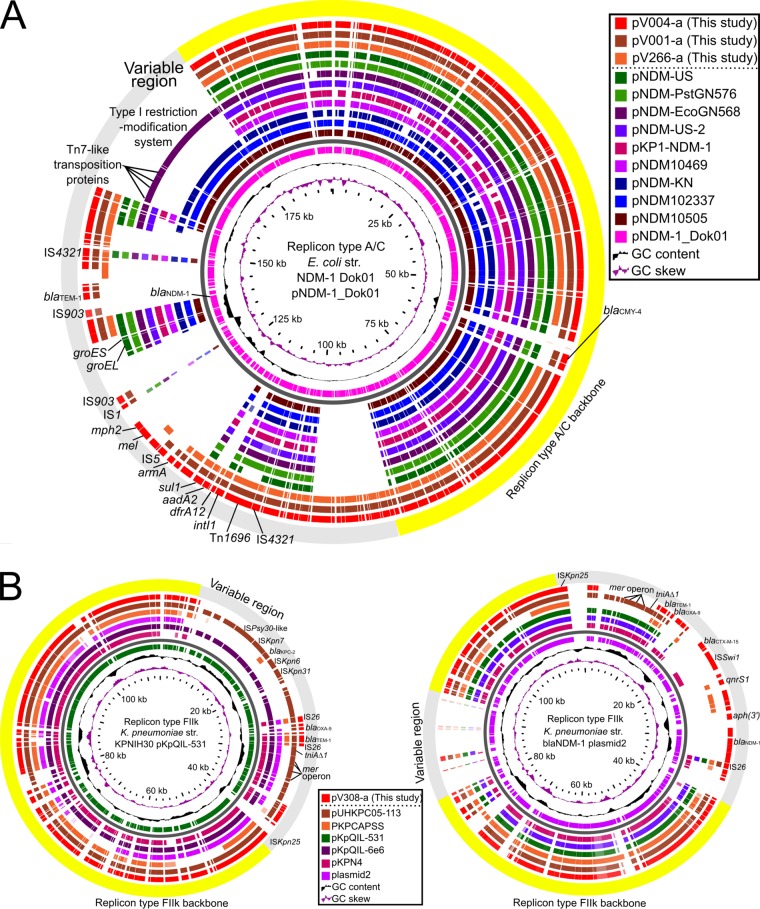
Circular alignments of the DNA sequences of four blaNDM-positive plasmids obtained in this study and known related plasmid sequences. The visualized area shows that the percent identity of similar genes between the reference plasmid and other plasmids was at least 80%. The known sequences of the following plasmids (GenBank accession numbers) were included: pNDM-US (NZ_CP006661), pNDM-PstGN576 (KJ802405), pNDM-EcoGN568 (KJ802404), pNDM-US-2 (KJ588779), pKP1-NDM-1 (KF992018), pNDM10469 (JN861072), pNDM-KN (JN157804), pNDM102337 (JF714412), pNDM10505 (JF503991), pNDM-1_Dok01 (AP012208), pKPCAPSS (KP008371), pKpQIL-531 (CP008833), pKpQIL-6e6 (CP007730), pKPN4 (CP000649), and plasmid2 (CP009115). (A) Alignment of replicon type A/C plasmids. Draft genome sequence data for plasmids pV001-a, pV004-a, and pV266-a were obtained in this study. Ten known sequences of blaNDM-positive plasmids were included, and pNDM-1_Dok01 was used as a reference. (B) Alignments of replicon type FIIk plasmid sequences. Draft genome sequence data for plasmid pV308-a were obtained in this study. Six known sequences of blaKPC-2- or blaNDM-1-positive plasmids were included, and pKpQIL-531 (left) and plasmid2 (right) were used as references.
FIG 6
FIG 6
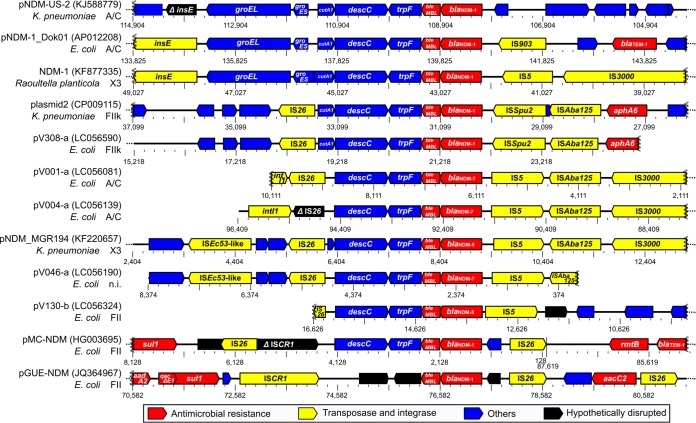
Linear alignment of DNA sequences of blaNDM genes and the flanking regions of various plasmids. Draft genome sequence data for five blaNDM-positive plasmids obtained in this study were used. Data for pV266-a were omitted because the blaNDM-1-positive contig originating from this plasmid does not contain flanking regions. Seven known sequences of blaNDM-positive plasmids, as indicated, were included. GenBank accession numbers are given in parentheses.

References

    1. World Health Organization. 2014. Antimicrobial resistance: global report on surveillance. World Health Organization, Geneva, Switzerland: http://www.who.int/drugresistance/documents/surveillancereport/en/.
    1. Centers for Disease Control and Prevention. 2013. Antibiotic resistance threats in the United States, 2013. Centers for Disease Control and Prevention, Atlanta, GA: http://www.cdc.gov/drugresistance/threat-report-2013/.
    1. Yong D, Toleman MA, Giske CG, Cho HS, Sundman K, Lee K, Walsh TR. 2009. Characterization of a new metallo-β-lactamase gene, blaNDM-1, and a novel erythromycin esterase gene carried on a unique genetic structure in Klebsiella pneumoniae sequence type 14 from India. Antimicrob Agents Chemother 53:5046–5054. doi: 10.1128/AAC.00774-09. - DOI - PMC - PubMed
    1. Berrazeg M, Diene S, Medjahed L, Parola P, Drissi M, Raoult D, Rolain J. 2014. New Delhi metallo-β-lactamase around the world: an eReview using Google maps. Euro Surveill 19(20):pii=20809. doi: 10.2807/1560-7917.ES2014.19.20.20809. - DOI - PubMed
    1. Walsh TR, Weeks J, Livermore DM, Toleman MA. 2011. Dissemination of NDM-1 positive bacteria in the New Delhi environment and its implications for human health: an environmental point prevalence study. Lancet Infect Dis 11:355–362. doi: 10.1016/S1473-3099(11)70059-7. - DOI - PubMed

MeSH terms

LinkOut - more resources