Nanoparticle-Based Therapies for Wound Biofilm Infection: Opportunities and Challenges
- PMID: 26955044
- PMCID: PMC4939068
- DOI: 10.1109/TNB.2016.2527600
Nanoparticle-Based Therapies for Wound Biofilm Infection: Opportunities and Challenges
Abstract
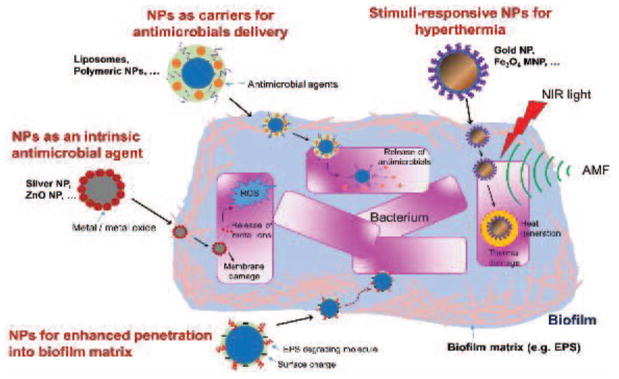
Clinical data from human chronic wounds implicates biofilm formation with the onset of wound chronicity. Despite the development of novel antimicrobial agents, the cost and complexity of treating chronic wound infections associated with biofilms remain a serious challenge, which necessitates the development of new and alternative approaches for effective anti-biofilm treatment. Recent advancement in nanotechnology for developing a new class of nanoparticles that exhibit unique chemical and physical properties holds promise for the treatment of biofilm infections. Over the last decade, nanoparticle-based approaches against wound biofilm infection have been directed toward developing nanoparticles with intrinsic antimicrobial properties, utilizing nanoparticles for controlled antimicrobials delivery, and applying nanoparticles for antibacterial hyperthermia therapy. In addition, a strategy to functionalize nanoparticles towards enhanced penetration through the biofilm matrix has been receiving considerable interest recently by means of achieving an efficient targeting to the bacterial cells within biofilm matrix. This review summarizes and highlights the recent development of these nanoparticle-based approaches as potential therapeutics for controlling wound biofilm infection, along with current challenges that need to be overcome for their successful clinical translation.
Figures
References
-
- Fux CA, Costerton JW, Stewart PS, Stoodley P. Survival strategies of infectious biofilms. Trends Microbiol. 2005 Jan;13:34–40. - PubMed
-
- Klausen M, Aaes-Jorgensen A, Molin S, Tolker-Nielsen T. Involvement of bacterial migration in the development of complex multicellular structures in Pseudomonas aeruginosa biofilms. Mol Microbiol. 2003 Oct;50:61–8. - PubMed
-
- Costerton JW, Stewart PS, Greenberg PE. Bacterial biofilms: a common cause of persistent infections. Science. 1999 May 21;284:1318–22. - PubMed
-
- Celli J, Finlay BB. Bacterial avoidance of phagocytosis. Trends Microbiol. 2002 May;10:232–7. - PubMed
Publication types
MeSH terms
Substances
Grants and funding
LinkOut - more resources
Full Text Sources
Other Literature Sources
Medical