


Plasmodium falciparum: multifaceted resistance to artemisinins
- PMID: 26955948
- PMCID: PMC4784301
- DOI: 10.1186/s12936-016-1206-9
Plasmodium falciparum: multifaceted resistance to artemisinins
Abstract
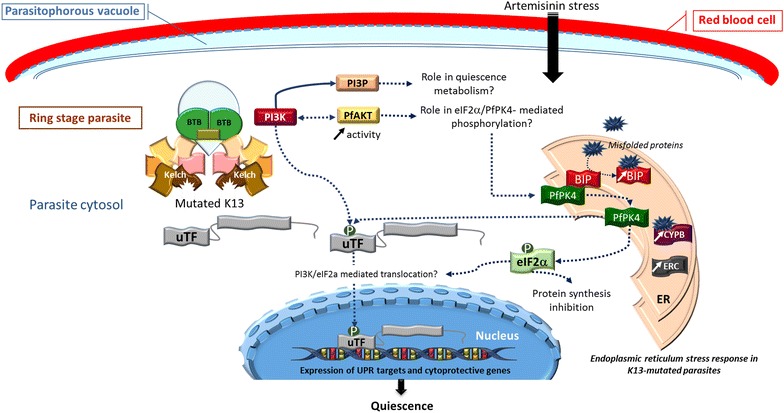
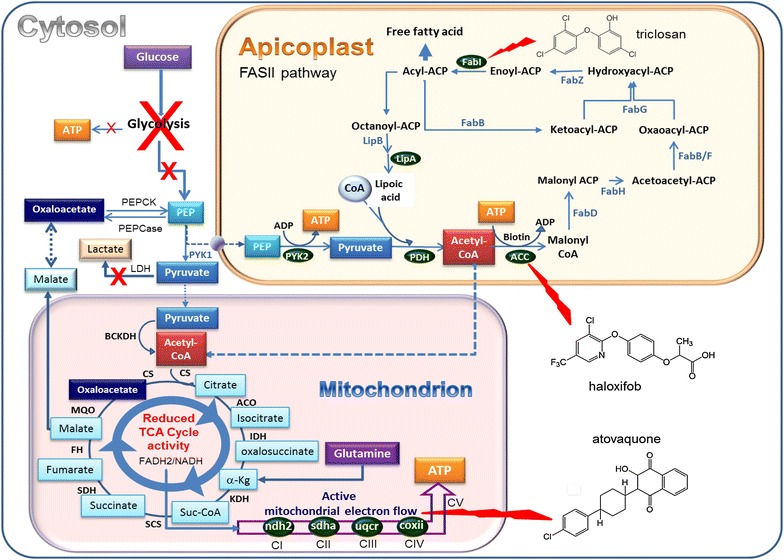
Plasmodium falciparum resistance to artemisinins, the most potent and fastest acting anti-malarials, threatens malaria elimination strategies. Artemisinin resistance is due to mutation of the PfK13 propeller domain and involves an unconventional mechanism based on a quiescence state leading to parasite recrudescence as soon as drug pressure is removed. The enhanced P. falciparum quiescence capacity of artemisinin-resistant parasites results from an increased ability to manage oxidative damage and an altered cell cycle gene regulation within a complex network involving the unfolded protein response, the PI3K/PI3P/AKT pathway, the PfPK4/eIF2α cascade and yet unidentified transcription factor(s), with minimal energetic requirements and fatty acid metabolism maintained in the mitochondrion and apicoplast. The detailed study of these mechanisms offers a way forward for identifying future intervention targets to fend off established artemisinin resistance.
Figures
References
-
- Nobel price. http://www.nobelprize.org/nobel_prizes/medicine/laureates/2015/. 2015.
-
- WHO . Status report on artemisinin and ACT resistance. Geneva: World Health Organization; 2015.
-
- Duru V, Khim N, Leang R, Kim S, Domergue A, Kloeung N, et al. Plasmodium falciparum dihydroartemisinin-piperaquine failures in Cambodia are associated with mutant K13 parasites presenting high survival rates in novel piperaquine in vitro assays: retrospective and prospective investigations. BMC Med. 2015;13:305. doi: 10.1186/s12916-015-0539-5. - DOI - PMC - PubMed
Publication types
MeSH terms
Substances
LinkOut - more resources
Full Text Sources
Other Literature Sources
Molecular Biology Databases
