


Neuroprotection by Estrogen and Progesterone in Traumatic Brain Injury and Spinal Cord Injury
- PMID: 26955967
- PMCID: PMC4981744
- DOI: 10.2174/1570159x14666160309123554
Neuroprotection by Estrogen and Progesterone in Traumatic Brain Injury and Spinal Cord Injury
Abstract
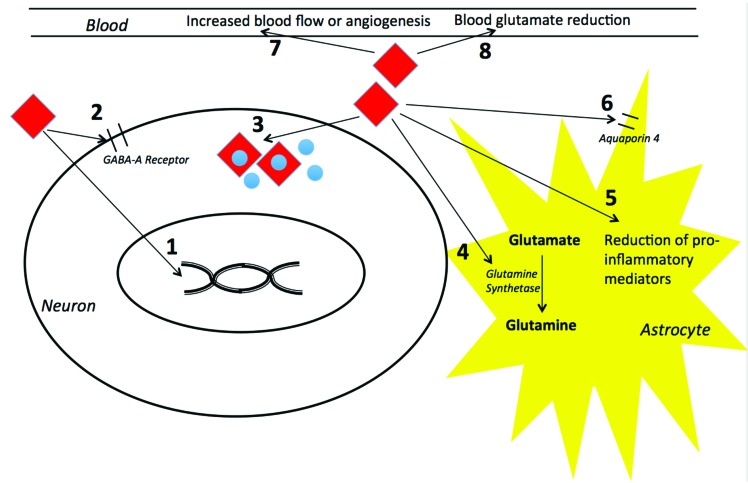
In recent years there has been a growing body of clinical and laboratory evidence demonstrating the neuroprotective effects of estrogen and progesterone after traumatic brain injury (TBI) and spinal cord injury (SCI). In humans, women have been shown to have a lower incidence of morbidity and mortality after TBI compared with age-matched men. Similarly, numerous laboratory studies have demonstrated that estrogen and progesterone administration is associated with a mortality reduction, improvement in neurological outcomes, and a reduction in neuronal apoptosis after TBI and SCI. Here, we review the evidence that supports hormone-related neuroprotection and discuss possible underlying mechanisms. Estrogen and progesterone-mediated neuroprotection are thought to be related to their effects on hormone receptors, signaling systems, direct antioxidant effects, effects on astrocytes and microglia, modulation of the inflammatory response, effects on cerebral blood flow and metabolism, and effects on mediating glutamate excitotoxicity. Future laboratory research is needed to better determine the mechanisms underlying the hormones' neuroprotective effects, which will allow for more clinical studies. Furthermore, large randomized clinical control trials are needed to better assess their role in human neurodegenerative conditions.
Figures
References
-
- Bazarian J.J., Blyth B., Mookerjee S., He H., McDermott M.P. Sex differences in outcome after mild traumatic brain injury. J. Neurotrauma. 2010;27(3):527–539. [http://dx.doi.org/10.1089/ neu.2009.1068]. [PMID: 19938945]. - PMC - PubMed
-
- Wise P.M., Smith M.J., Dubal D.B., Wilson M.E., Rau S.W., Cashion A.B., Böttner M., Rosewell K.L. Neuroendocrine modulation and repercussions of female reproductive aging. Recent Prog. Horm. Res. 2002;57:235–256. [http://dx.doi.org/10.1210/ rp.57.1.235]. [PMID: 12017546]. - PubMed
-
- Beyer C. Estrogen and the developing mammalian brain. 1999 - PubMed
-
- Johann S., Beyer C. Neuroprotection by gonadal steroid hormones in acute brain damage requires cooperation with astroglia and microglia. J. Steroid Biochem. Mol. Biol. 2013;137:71–81. [http:// dx.doi.org/10.1016/j.jsbmb.2012.11.006]. [PMID: 23196064]. - PubMed
-
- Behl C. Oestrogen as a neuroprotective hormone. Nat. Rev. Neurosci. 2002;3(6):433–442. [PMID: 12042878]. - PubMed
Publication types
MeSH terms
Substances
LinkOut - more resources
Full Text Sources
Other Literature Sources
Medical