


Malaria incidence and entomological findings in an area targeted for a cluster-randomized controlled trial to prevent malaria in Ethiopia: results from a pilot study
- PMID: 26957044
- PMCID: PMC4784280
- DOI: 10.1186/s12936-016-1199-4
Malaria incidence and entomological findings in an area targeted for a cluster-randomized controlled trial to prevent malaria in Ethiopia: results from a pilot study
Abstract
Background: This study was part of the work to prepare for a cluster-randomized controlled trial to evaluate the effect of combining indoor residual spraying and long-lasting insecticidal nets on malaria incidence. A pilot study was done to estimate the variations of malaria incidence among villages, combined with entomological collections and an assessment of susceptibility to insecticides in malaria vectors.
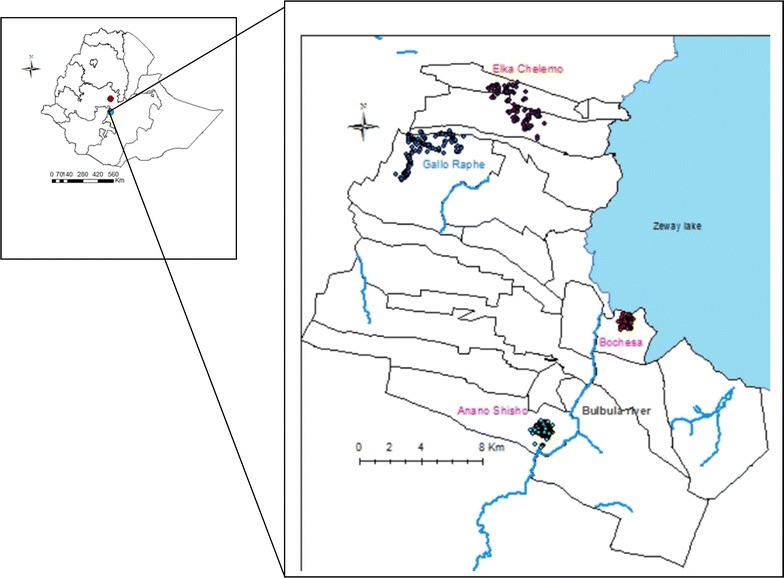
Methods: A cohort of 5309 residents from four kebeles (the lowest government administrative unit) in 996 households was followed from August to December 2013 in south-central Ethiopia. Blood samples were collected by a finger prick for a microscopic examination of malaria infections. A multilevel mixed effect model was applied to measure the predictors of malaria episode. Adult mosquitoes were collected using light traps set indoors close to a sleeping person, pyrethrum spray sheet catches and artificial outdoor pit shelters. Enzyme-linked immunosorbent assays were used to detect the sources of mosquito blood meals, while mosquito longevity was estimated based on parity. The World Health Organization's tube bioassay test was used to assess the insecticide susceptibility status of malaria vectors to pyrethroids and carbamates.
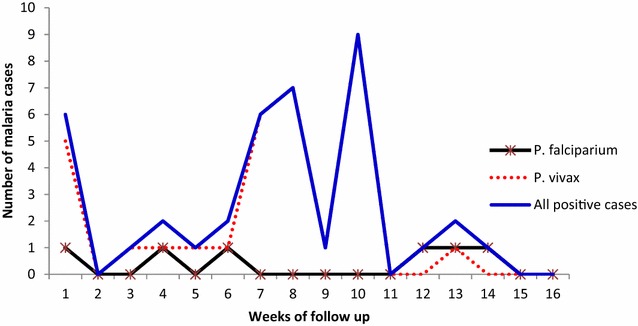
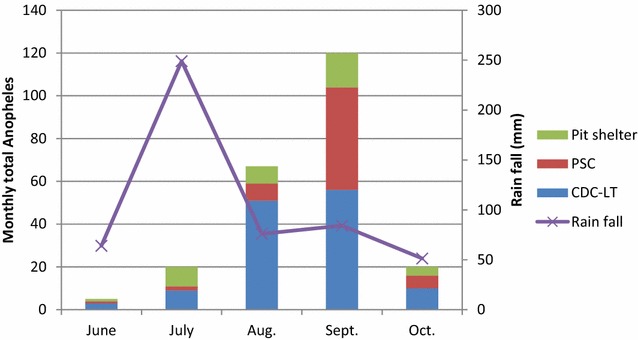
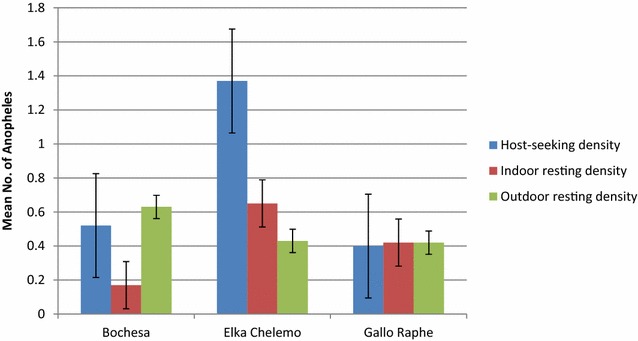
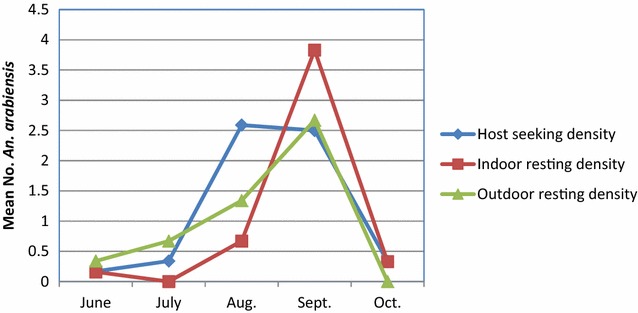
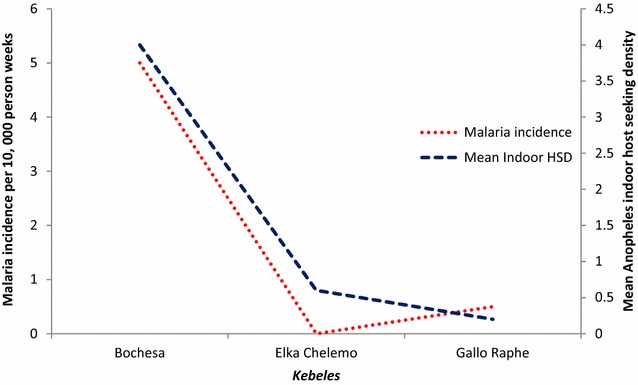
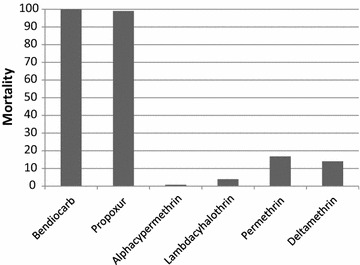
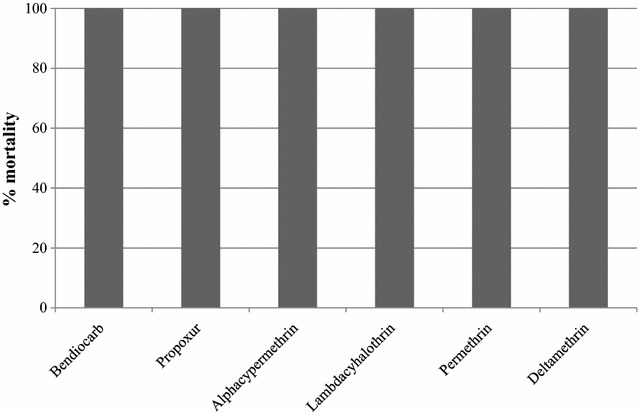
Results: The average incidence of malaria episode was 4.6 per 10,000 person weeks of observation. The age group from 5 to 14 years (IRR = 2.7; 95 % CI 1.1-6.6) and kebeles near a lake or river (IRR = 14.2, 95 % CI 3.1-64) were significantly associated with malaria episode. Only 271 (27.3 %) of the households owned insecticide-treated nets. Of 232 adult Anopheles mosquitoes collected, Anopheles arabiensis (71.1 %) was the predominant species. The average longevity of An. arabiensis was 14 days (range: 7-25 human blood index days). The overall human blood index (0.69) for An. arabiensis was higher than the bovine blood index (0.38). Statistically significant differences in Anopheline mosquitoes abundance were observed between the kebeles (P = 0.001). Anopheles arabiensis was susceptible to propoxur, but resistant to pyrethroids. However, An. pharoensis was susceptible to all pyrethroids and carbamates tested.
Conclusions: This study showed a high variation in malaria incidence and Anopheles between kebeles. The observed susceptibility of the malaria vectors to propoxur warrants using this insecticide for indoor residual spraying, and the results from this study will be used as a baseline for the trial.
Figures
References
-
- WHO. Roll back malaria partnership global malaria action plan. Geneva: World Health Organization; 2008.
-
- WHO. World malaria report. Geneva: World Health Organization; 2014.
-
- FMOH. Ethiopia national malaria indicator survey. Addis Ababa: Federal Ministry of Health; 2011.
Publication types
MeSH terms
LinkOut - more resources
Full Text Sources
Other Literature Sources
Medical
