


Imaging- and physiology-guided percutaneous coronary intervention without contrast administration in advanced renal failure: a feasibility, safety, and outcome study
- PMID: 26957421
- PMCID: PMC6279210
- DOI: 10.1093/eurheartj/ehw078
Imaging- and physiology-guided percutaneous coronary intervention without contrast administration in advanced renal failure: a feasibility, safety, and outcome study
Abstract
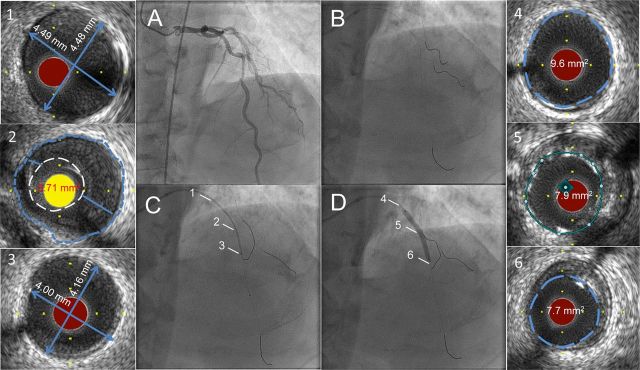
Aims: The feasibility, safety, and clinical utility of percutaneous coronary intervention (PCI) without radio-contrast medium in patients with advanced chronic kidney disease (CKD) are unknown. In this series, we investigated a specific strategy for 'zero contrast' PCI with the aims of preserving renal function and preventing the need for renal replacement therapy (RRT) in patients with advanced CKD.
Methods and results: A total of 31 patients with advanced CKD [creatinine = 4.2 mg/dL, inter-quartile range (IQR) 3.1-4.8, estimated glomerular filtration rate = 16 ± 8 mL/min/1.73 m2] who had clinical indication for PCI based on a prior minimal contrast coronary angiogram were included. Zero contrast PCI was performed at least 1 week after diagnostic angiography using real-time intravascular ultrasound (IVUS) guidance, with pre- and post-PCI measurements of fractional flow reserve and coronary flow reserve to confirm physiological improvement. This approach resulted in successful PCI, no major adverse cardiovascular events and preservation of renal function without the need for RRT within a follow-up time of 79 days (IQR 33-207) in all patients.
Conclusion: In patients with advanced CKD who require revascularization, PCI may safely be performed without contrast using IVUS and physiological guidance with high procedural success and without complications.
Keywords: Chronic kidney disease; Contrast-induced nephropathy; Coronary physiology; Intravascular ultrasonography; Percutaneous coronary intervention.
Published on behalf of the European Society of Cardiology. All rights reserved. © The Author 2016. For permissions please email: journals.permissions@oup.com.
Figures
References
-
- Mehran R, Nikolsky E. Contrast-induced nephropathy: definition, epidemiology, and patients at risk. Kidney Int Suppl 2006;100:S11–S15. - PubMed
-
- Dangas G, Iakovou I, Nikolsky E, Aymong ED, Mintz GS, Kipshidze NN, Lansky AJ, Moussa I, Stone GW, Moses JW, Leon MB, Mehran R. Contrast-induced nephropathy after percutaneous coronary interventions in relation to chronic kidney disease and hemodynamic variables. Am J Cardiol 2005;95:13–19. - PubMed
-
- Giacoppo D, Madhavan MV, Baber U, Warren J, Bansilal S, Witzenbichler B, Dangas GD, Kirtane AJ, Xu K, Kornowski R, Brener SJ, Genereux P, Stone GW, Mehran R. Impact of contrast-induced acute kidney injury after percutaneous coronary intervention on short- and long-term outcomes: pooled analysis from the HORIZONS-AMI and ACUITY trials. Circ Cardiovasc Interv 2015;8:e002475. - PubMed
-
- Brar SS, Aharonian V, Mansukhani P, Moore N, Shen AY, Jorgensen M, Dua A, Short L, Kane K. Haemodynamic-guided fluid administration for the prevention of contrast-induced acute kidney injury: the POSEIDON randomised controlled trial. Lancet 2014;383:1814–1823. - PubMed
-
- Nayak KR, Mehta HS, Price MJ, Russo RJ, Stinis CT, Moses JW, Mehran R, Leon MB, Kandzari DE, Teirstein PS. A novel technique for ultra-low contrast administration during angiography or intervention. Catheter Cardiovasc Interv 2010;75:1076–1083. - PubMed
MeSH terms
Substances
Grants and funding
LinkOut - more resources
Full Text Sources
Other Literature Sources
Miscellaneous
