. 2016 Apr;233(8):1501-11.
doi: 10.1007/s00213-016-4247-4. Epub 2016 Mar 10.

Ultrasonic vocalization in rats self-administering heroin and cocaine in different settings: evidence of substance-specific interactions between drug and setting

Affiliations

Ultrasonic vocalization in rats self-administering heroin and cocaine in different settings: evidence of substance-specific interactions between drug and setting

Riccardo Avvisati et al. Psychopharmacology (Berl). 2016 Apr.

Abstract

Rationale: Clinical and preclinical evidence indicates that the setting of drug use affects drug reward in a substance-specific manner. Heroin and cocaine co-abusers, for example, indicated distinct settings for the two drugs: heroin being used preferentially at home and cocaine preferentially outside the home. Similar results were obtained in rats that were given the opportunity to self-administer intravenously both heroin and cocaine.

Objectives: The goal of the present study was to investigate the possibility that the positive affective state induced by cocaine is enhanced when the drug is taken at home relative to a non-home environment, and vice versa for heroin.

Methods: To test this hypothesis, we trained male rats to self-administer both heroin and cocaine on alternate days and simultaneously recorded the emission of ultrasonic vocalizations (USVs), as it has been reported that rats emit 50-kHz USVs when exposed to rewarding stimuli, suggesting that these USVs reflect positive affective states.

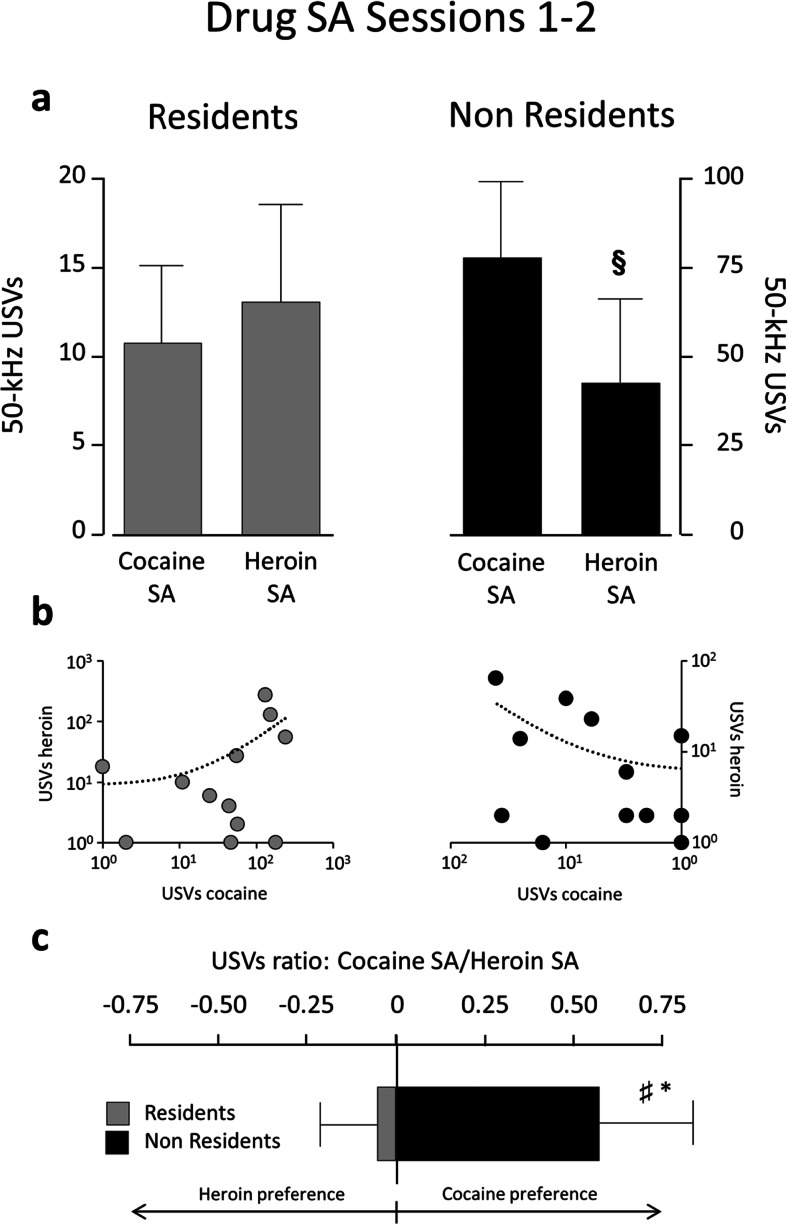
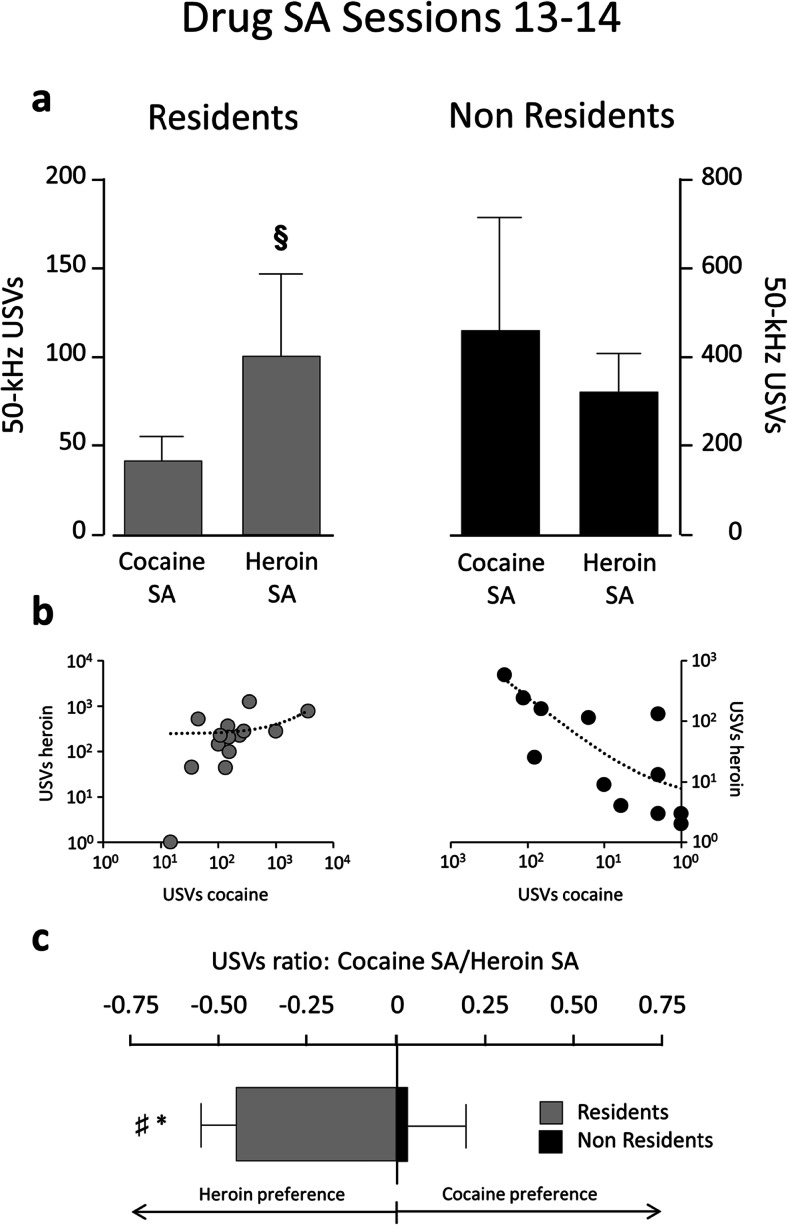
Results: We found that Non-Resident rats emitted more 50-kHz USVs when they self-administered cocaine than when self-administered heroin whereas Resident rats emitted more 50-kHz USVs when self-administering heroin than when self-administering cocaine. Differences in USVs in Non-Resident rats were more pronounced during the first self-administration (SA) session, when the SA chambers were completely novel to them. In contrast, the differences in USVs in Resident rats were more pronounced during the last SA sessions.

Conclusion: These findings indicate that the setting of drug taking exerts a substance-specific influence on the ability of drugs to induce positive affective states.

Keywords: Affect; Cocaine; Context; Drug abuse; Emotion; Environment; Heroin; Reward; Self-administration; Setting; USVs; Ultrasonic vocalizations.


Figures
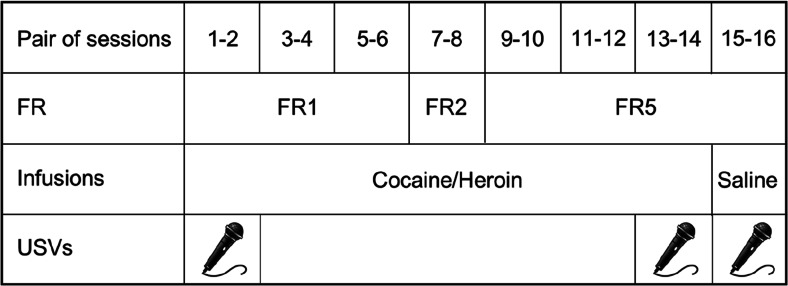
Fig. 1
Fig. 1
Outline of the experiment.  The microphones indicate the sessions during which USVs were recorded. Please note that during saline self-administration, the alternation between cocaine- and heroin-paired cues and lever position was maintained
Fig. 2
Fig. 2
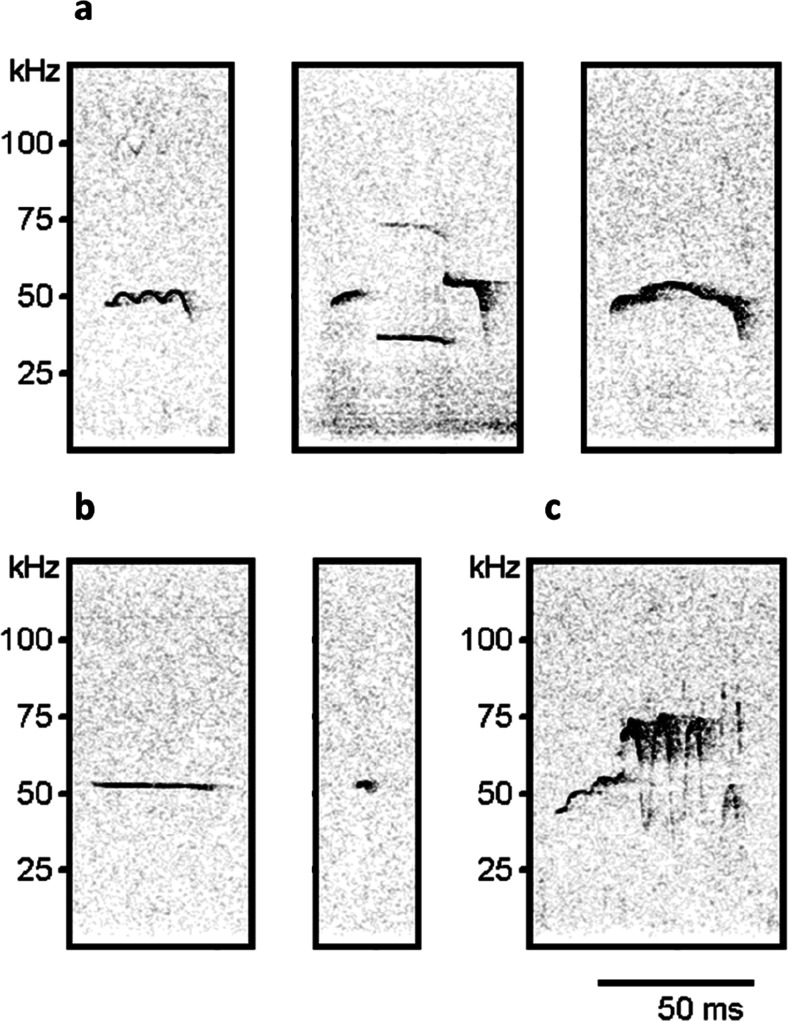
Representative spectrograms for three main categories of 50-kHz USVs. a Frequency-modulated calls are defined as vocalizations continuously or discretely modulated, with a mean slope >0.2 kHz/ms or with one or more pitch-jumps in them, which is an instantaneous change in frequency. b Fixed frequency calls have no modulation, with a mean slope of less than 0.2 kHz/ms. c Trills vocalizations are characterized by a rapid, massive frequency excursion, either alone or in combination with other calls
Fig. 3
Fig. 3
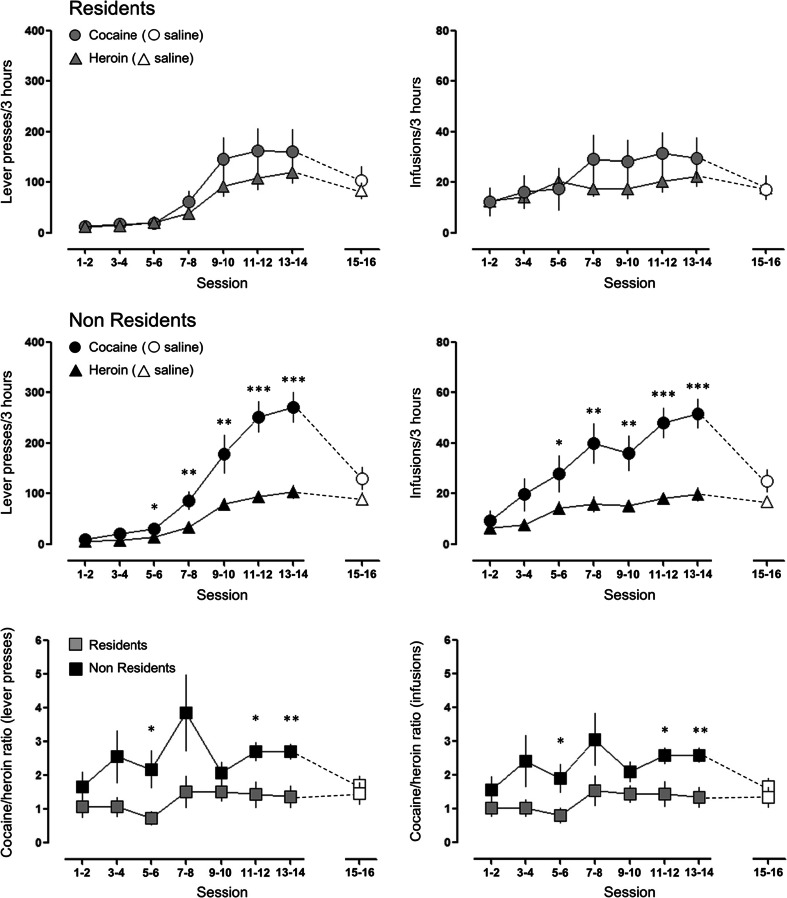
Self-administration of cocaine, heroin, and saline in Resident versus Non-Resident rats. Left panels illustrate the number of lever presses (means ± SEM) and right panels the number of infusion (means ± SEM) for each pair of sessions (see “Materials and methods” section). *, **, and *** indicate significant differences (p ≤ 0.05, p ≤ 0.01, and p ≤ 0.001, respectively) between cocaine and heroin
Fig. 4
Fig. 4
Fifty-kilohertz USVs emitted by Non-Resident and Resident rats during the first 30 min of drug SA for sessions 1–2. a Total number of calls (means ± SEM) for cocaine versus heroin SA. b Scatterplots of calls emitted during cocaine versus heroin SA. Each dot represents a single rat. c Preference score is calculated as the ratio of log-transformed calls emitted during cocaine versus heroin SA. § indicates significant difference (p ≤ 0.05) between cocaine and heroin. * indicates significant difference (p ≤ 0.05) between Residents and Non-Residents. # indicates significant difference (p ≤ 0.05) from 0
Fig. 5
Fig. 5
Fifty-kilohertz USVs emitted by Non-Resident and Resident rats during the first 30 min of drug SA for sessions 13–14. a Total number of calls (means ± SEM) for cocaine versus heroin SA. b Scatterplots of calls emitted during cocaine versus heroin SA. Each dot represents a single rat. c Preference score is calculated as the ratio of log-transformed calls emitted during cocaine versus heroin SA. § indicates significant difference (p < 0.05) between cocaine and heroin. * indicates significant difference (p ≤ 0.05) between Residents and Non-Residents. # indicates significant difference (p ≤ 0.05) from 0
Fig. 6
Fig. 6
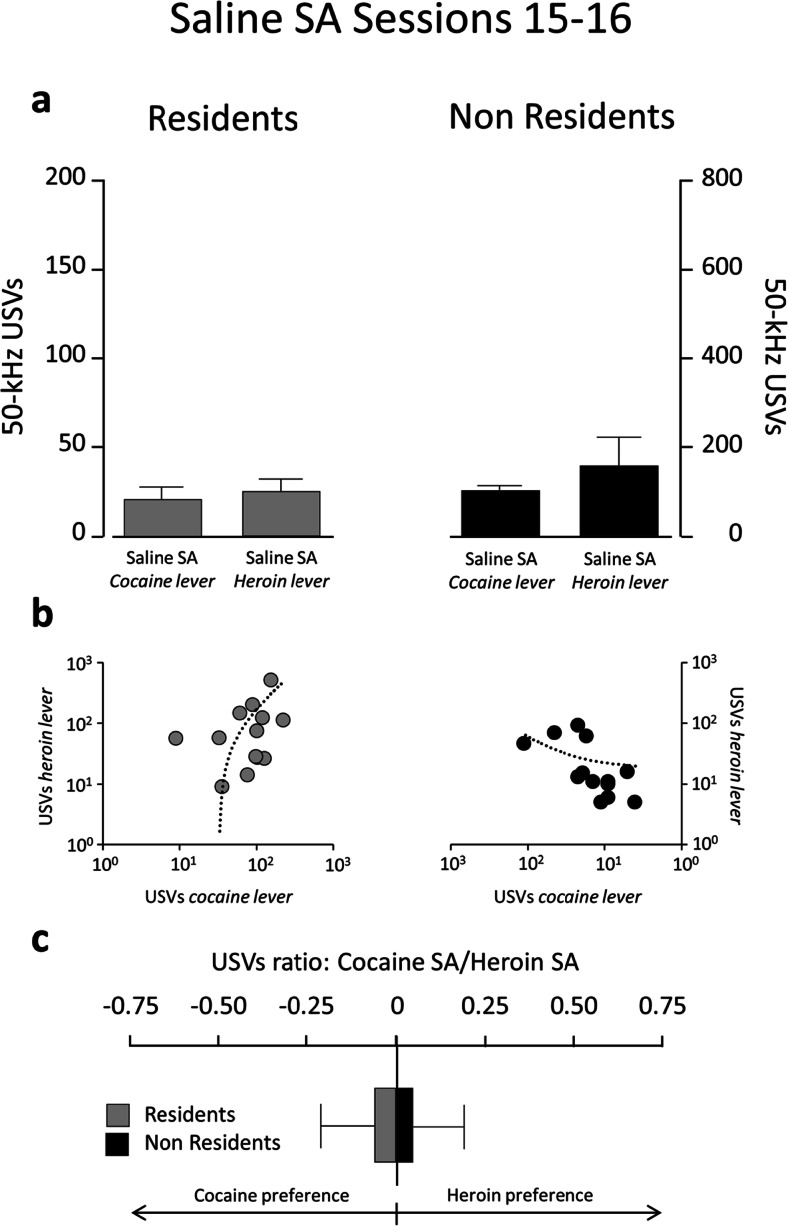
Fifty-kilohertz USVs emitted by Non-Resident and Resident rats during the first 30 min of saline SA for sessions 15–16. a Total number of calls (means ± SEM) when exposed to cocaine-paired versus heroin-paired cues. b Scatterplots of calls emitted when exposed to cocaine-paired versus heroin-paired cues. c Preference score, for cocaine versus heroin, is calculated as the ratio of log-transformed calls emitted when exposed to cocaine-paired versus heroin-paired cues
Fig. 7
Fig. 7
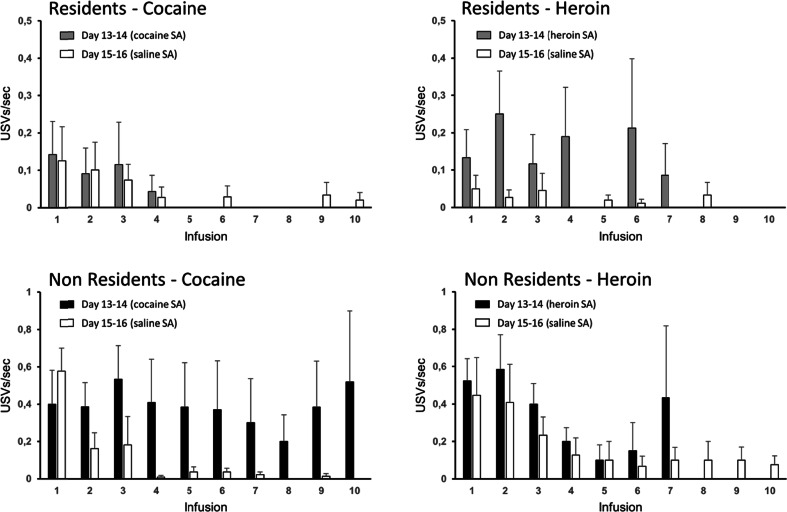
Pre-infusion calls. Rate of 50-kHz USVs (means ± SEM) in the 10 s before each of the ten first infusions on sessions 13–14 (heroin or cocaine infusions) versus sessions 15–16 (saline infusions). Due to great individual variability in number and timing of earned infusions, only descriptive statistics are displayed for this dataset (see “Materials and methods” section)
Fig. 8
Fig. 8
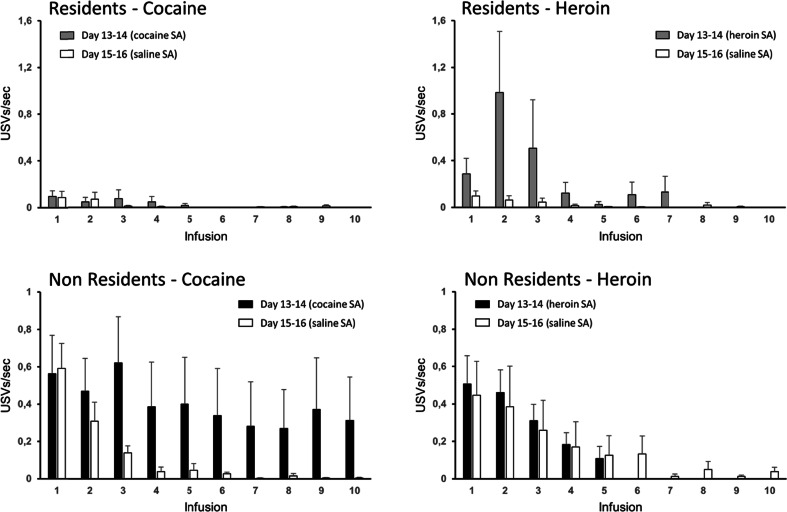
Post-infusion calls. Rate of 50-kHz USVs (means ± SEM) during the 40 s after each of the ten first infusions on sessions 13–14 (heroin or cocaine infusions) versus sessions 15–16 (saline infusions). Due to great individual variability in number and timing of earned infusions, only descriptive statistics are displayed for this dataset (see “Materials and methods” section)

References

    1. Ahrens AM, Ma ST, Maier EY, Duvauchelle CL, Schallert T. Repeated intravenous amphetamine exposure: rapid and persistent sensitization of 50-kHz ultrasonic trill calls in rats. Behav Brain Res. 2009;197:205–209. doi: 10.1016/j.bbr.2008.08.037. - DOI - PMC - PubMed
    1. Antonilli L, Petecchia E, Caprioli D, Badiani A, Nencini P. Effect of repeated administrations of heroin, naltrexone, methadone, and alcohol on morphine glucuronidation in the rat. Psychopharmacology (Berl) 2005;182:58–64. doi: 10.1007/s00213-005-0030-7. - DOI - PubMed
    1. Badiani A. Substance-specific environmental influences on drug use and drug preference in animals and humans. Curr Opin Neurobiol. 2013;23:588–596. doi: 10.1016/j.conb.2013.03.010. - DOI - PubMed
    1. Badiani A, Anagnostaras SG, Robinson TE (1995a) The development of sensitization to the psychomotor stimulant effects of amphetamine is enhanced in a novel environment. Psychopharmacology (Berl) 117(4):443–452 - PubMed
    1. Badiani A, Browman KE, Robinson TE (1995b) Influence of novel versus home environments on sensitization to the psychomotor stimulant effects of cocaine and amphetamine. Brain Res 674(2):291–298 - PubMed

Publication types

LinkOut - more resources