


Protective Effects of the Mediterranean Diet on Type 2 Diabetes and Metabolic Syndrome
- PMID: 26962178
- PMCID: PMC4807638
- DOI: 10.3945/jn.115.218487
Protective Effects of the Mediterranean Diet on Type 2 Diabetes and Metabolic Syndrome
Abstract
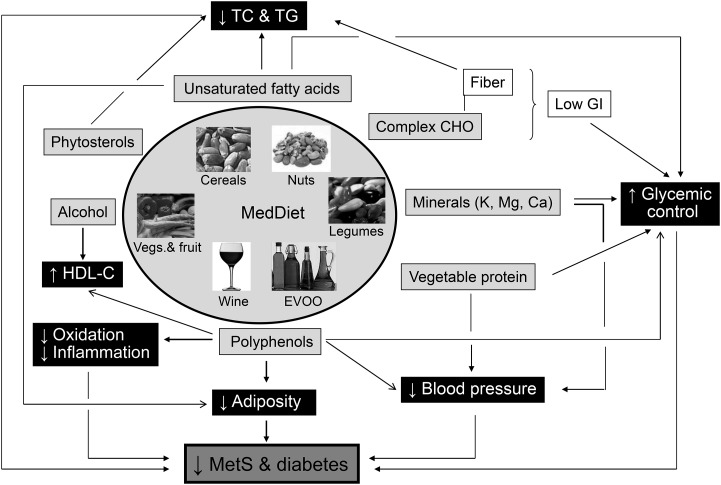
Several studies provide evidence supporting a beneficial effect from the traditional Mediterranean diet (MedDiet) on the risk of type 2 diabetes mellitus (T2DM) and metabolic syndrome (MetS). This review summarizes the current scientific evidence from epidemiologic studies and clinical trials on the relation between the MedDiet and T2DM and MetS and the possible mechanisms underlying the reported associations. A recent meta-analysis of prospective cohort studies showed that greater adherence to the MedDiet was associated with a significant reduction in the risk of diabetes. The MedDiet has also been found to be beneficial in the prevention of gestational diabetes. Four large prospective studies have observed inverse associations between the MedDiet and MetS or its components. Few randomized controlled trials (RCTs) have evaluated the effect of the MedDiet on T2DM and MetS. Results from the landmark PREvención con DIeta MEDiterránea (PREDIMED) nutrition intervention trial showed that participants assigned to the MedDiet had a significant 30% reduction in the risk of T2DM and that it also promoted the reversion of MetS and its components, hyperglycemia and central obesity. In addition, 5 RCTs showed the beneficial effects of the MedDiet compared with other dietary patterns on glycemic control in patients with T2DM. A recent meta-analysis of RCTs revealed that, compared with a variety of control diets, the MedDiet was associated with beneficial effects on all MetS components. Bioactive components of the MedDiet synergize to affect various metabolic pathways, leading to a reduced cardiometabolic disease risk. The abundance of healthy, nutrient-dense foods that make up the plant-based MedDiet predicts its bioactivity and potential to beneficially influence metabolic pathways that lead to MetS and T2DM, as well as other chronic conditions. Abundant epidemiologic and clinical trial evidence supports the role of the MedDiet on the prevention and management of T2DM and MetS.
Keywords: Mediterranean diet; cardiovascular disease; diabetes; metabolic syndrome; metabolic syndrome components; review.
© 2016 American Society for Nutrition.
Conflict of interest statement
Author disclosures: JS-S has received grants from the International Nut and Dried Fruit Foundation and is a nonpaid member of the scientific advisory board of the International Nut and Dried Fruit Foundation. ER has received grants from the California Walnut Commission and is a nonpaid member of its scientific advisory committee. MG-F, C-HL, RE, and CBC, no conflicts of interest.
Figures
References
-
- International Diabetes Federation. IDF diabetes atlas. 6th ed 2014.
-
- Alberti KG, Eckel RH, Grundy SM, Zimmet PZ, Cleeman JI, Donato KA, Fruchart JC, James WP, Loria CM, Smith SC Jr, et al. Harmonizing the metabolic syndrome: A joint interim statement of the International Diabetes Federation Task Force on Epidemiology and Prevention; National Heart, Lung, and Blood Institute; American Heart Association; World Heart Federation; International. Circulation 2009;120:1640–5. - PubMed
-
- Athyros VG, Ganotakis ES, Elisaf M, Mikhailidis DP. The prevalence of the metabolic syndrome using the National Cholesterol Educational Program and International Diabetes Federation definitions. Curr Med Res Opin 2005;21:1157–9. - PubMed
-
- Ford ES, Li C, Zhao G. Prevalence and correlates of metabolic syndrome based on a harmonious definition among adults in the US. J Diabetes 2010;2:180–93. - PubMed
-
- Narayan KM, Gregg EW, Fagot-Campagna A, Engelgau MM, Vinicor F. Diabetes-A common, growing, serious, costly, and potentially preventable public health problem. Diabetes Res Clin Pract 2000;50 Suppl 2:S77–84. - PubMed
LinkOut - more resources
Full Text Sources
Other Literature Sources
