


The dark art of light measurement: accurate radiometry for low-level light therapy
- PMID: 26964800
- PMCID: PMC4851696
- DOI: 10.1007/s10103-016-1914-y
The dark art of light measurement: accurate radiometry for low-level light therapy
Abstract
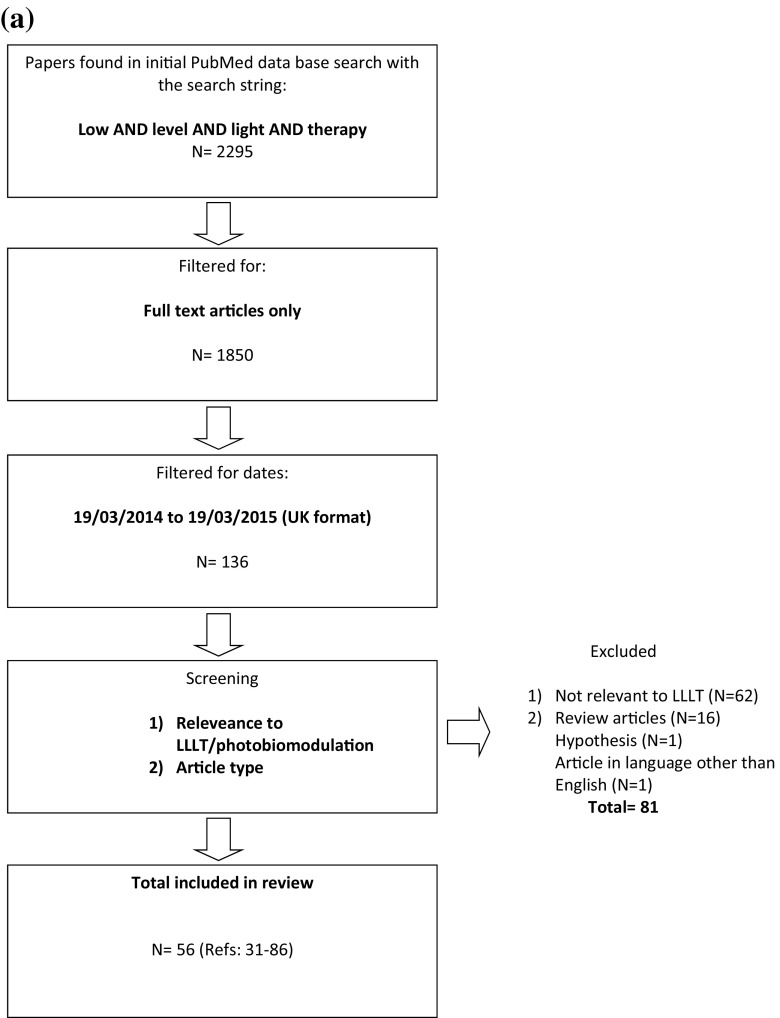
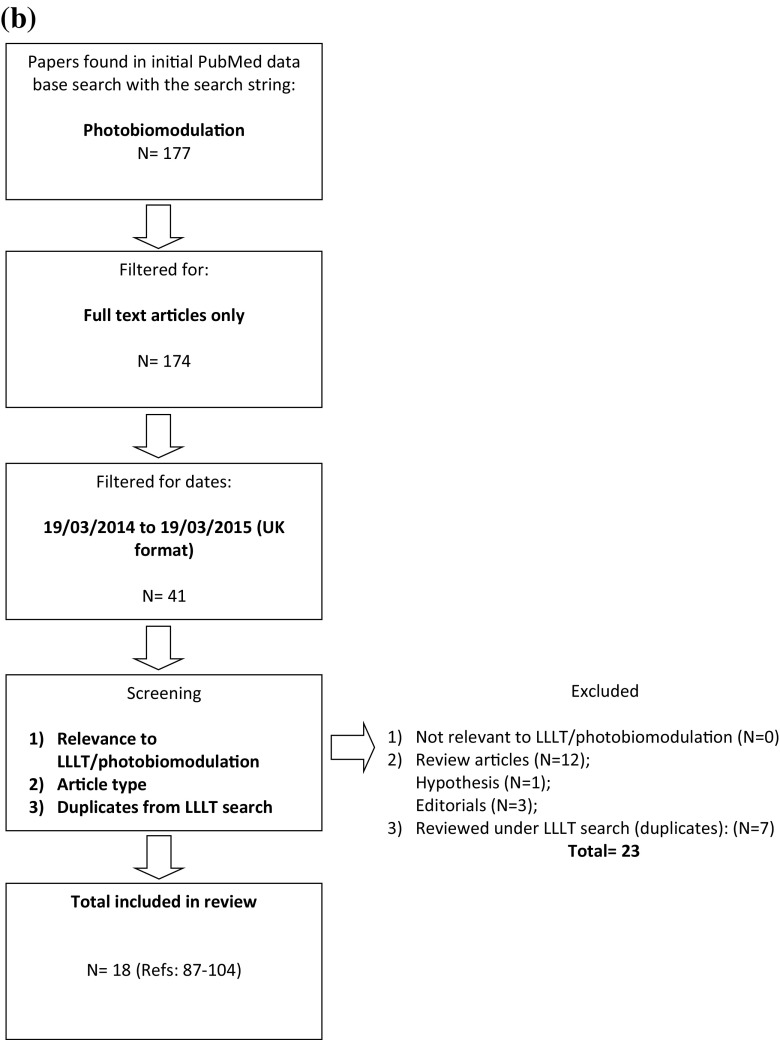
Lasers and light-emitting diodes are used for a range of biomedical applications with many studies reporting their beneficial effects. However, three main concerns exist regarding much of the low-level light therapy (LLLT) or photobiomodulation literature; (1) incomplete, inaccurate and unverified irradiation parameters, (2) miscalculation of 'dose,' and (3) the misuse of appropriate light property terminology. The aim of this systematic review was to assess where, and to what extent, these inadequacies exist and to provide an overview of 'best practice' in light measurement methods and importance of correct light measurement. A review of recent relevant literature was performed in PubMed using the terms LLLT and photobiomodulation (March 2014-March 2015) to investigate the contemporary information available in LLLT and photobiomodulation literature in terms of reporting light properties and irradiation parameters. A total of 74 articles formed the basis of this systematic review. Although most articles reported beneficial effects following LLLT, the majority contained no information in terms of how light was measured (73%) and relied on manufacturer-stated values. For all papers reviewed, missing information for specific light parameters included wavelength (3%), light source type (8%), power (41%), pulse frequency (52%), beam area (40%), irradiance (43%), exposure time (16%), radiant energy (74%) and fluence (16%). Frequent use of incorrect terminology was also observed within the reviewed literature. A poor understanding of photophysics is evident as a significant number of papers neglected to report or misreported important radiometric data. These errors affect repeatability and reliability of studies shared between scientists, manufacturers and clinicians and could degrade efficacy of patient treatments. Researchers need a physicist or appropriately skilled engineer on the team, and manuscript reviewers should reject papers that do not report beam measurement methods and all ten key parameters: wavelength, power, irradiation time, beam area (at the skin or culture surface; this is not necessarily the same size as the aperture), radiant energy, radiant exposure, pulse parameters, number of treatments, interval between treatments and anatomical location. Inclusion of these parameters will improve the information available to compare and contrast study outcomes and improve repeatability, reliability of studies.
Keywords: LLLT; Low-level laser therapy; Low-level light therapy; Photobiomodulation; Radiometry.
Figures
References
-
- Aimbire F, Albertini R, Pacheco MTT, Castro-Faria-Neto HC, Leonardo PSLM, Iversen VV, Martins L, Bjordal JM. Low-level laser therapy induces dose-dependent reduction of TNFα levels in acute inflammation. Photomed Laser Surg. 2006;24:33–37. - PubMed
-
- Stergioulas A. Low-level laser treatment can reduce edema in second degree ankle sprains. J Clin Laser Med Surg. 2004;22:125–128. - PubMed
-
- Brosseau L, Welch V, Wells G, Tugwell P, de Bie R, Gam A, Harman K, Shea B, Morin M. Low level laser therapy for osteoarthritis and rheumatoid arthritis: a metaanalysis. J Rheum. 2000;27:1961–1969. - PubMed
Publication types
MeSH terms
Grants and funding
LinkOut - more resources
Full Text Sources
Other Literature Sources
Medical
