


Three-dimensional printing of continuous-fiber composites by in-nozzle impregnation
- PMID: 26965201
- PMCID: PMC4786850
- DOI: 10.1038/srep23058
Three-dimensional printing of continuous-fiber composites by in-nozzle impregnation
Abstract
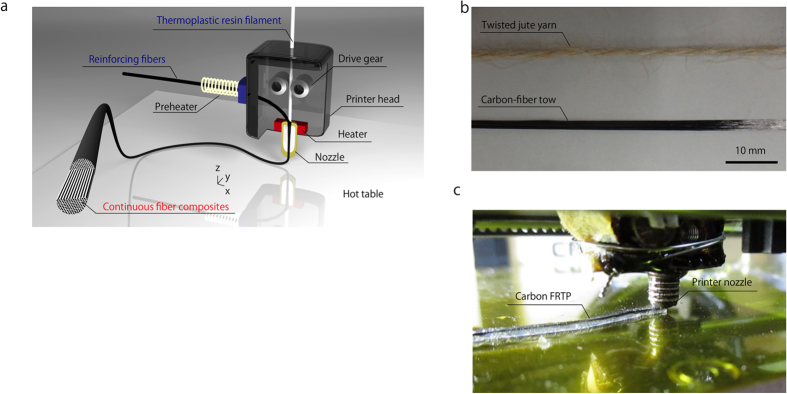
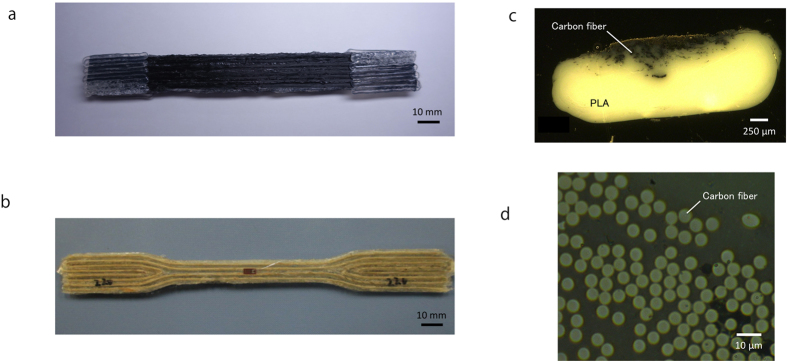
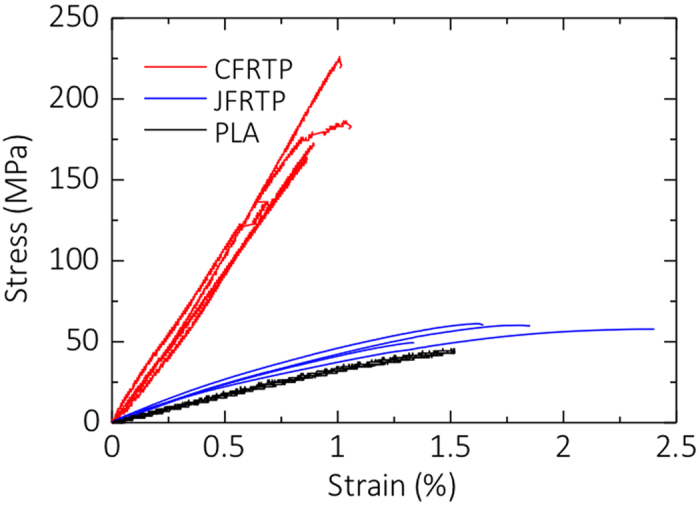
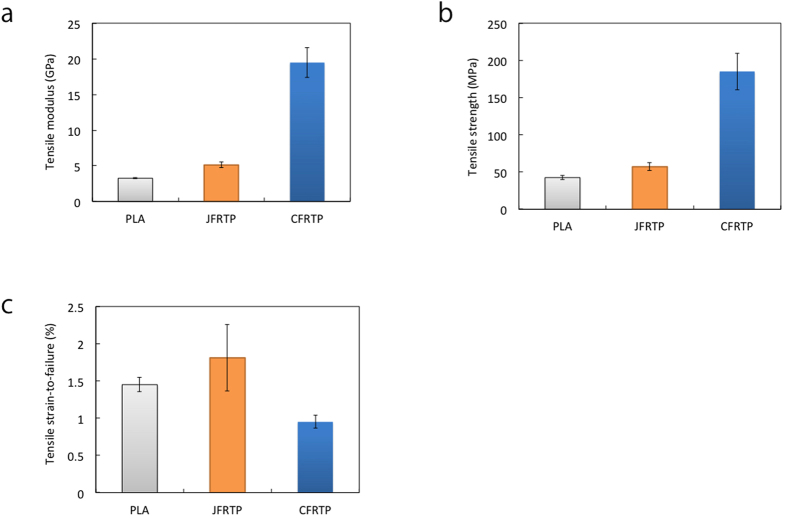
We have developed a method for the three-dimensional (3D) printing of continuous fiber-reinforced thermoplastics based on fused-deposition modeling. The technique enables direct 3D fabrication without the use of molds and may become the standard next-generation composite fabrication methodology. A thermoplastic filament and continuous fibers were separately supplied to the 3D printer and the fibers were impregnated with the filament within the heated nozzle of the printer immediately before printing. Polylactic acid was used as the matrix while carbon fibers, or twisted yarns of natural jute fibers, were used as the reinforcements. The thermoplastics reinforced with unidirectional jute fibers were examples of plant-sourced composites; those reinforced with unidirectional carbon fiber showed mechanical properties superior to those of both the jute-reinforced and unreinforced thermoplastics. Continuous fiber reinforcement improved the tensile strength of the printed composites relative to the values shown by conventional 3D-printed polymer-based composites.
Figures
References
-
- Yan X. & Gu P. A review of rapid prototyping technologies and systems. Computer-Aided Design 28, 307–318 (1996).
-
- Berman B. 3-D printing: The new industrial revolution. Business Horizons 55, 155–162 (2012).
-
- Rengier F. et al. 3D printing based on imaging data: review of medical applications. Int J Comput Assist Radiol Surg 5, 335–341 (2010). - PubMed
-
- Wong K. V. & Hernandez A. A Review of Additive Manufacturing. ISRN Mechanical Engineering 2012, 1–10 (2012).
-
- Huang S. H., Liu P., Mokasdar A. & Hou L. Additive manufacturing and its societal impact: a literature review. The International Journal of Advanced Manufacturing Technology 67, 1191–1203 (2012).
Publication types
LinkOut - more resources
Full Text Sources
Other Literature Sources
