The Uromodulin Gene Locus Shows Evidence of Pathogen Adaptation through Human Evolution
- PMID: 26966016
- PMCID: PMC5042664
- DOI: 10.1681/ASN.2015070830
The Uromodulin Gene Locus Shows Evidence of Pathogen Adaptation through Human Evolution
Abstract
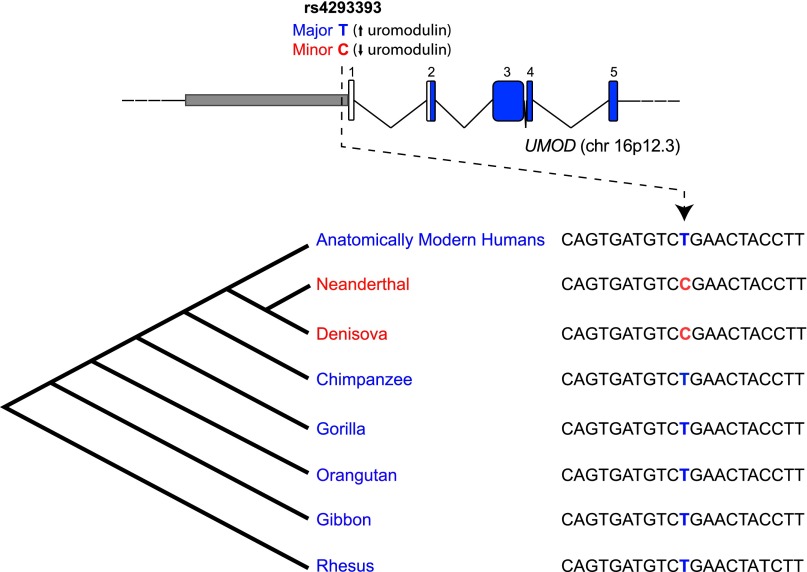
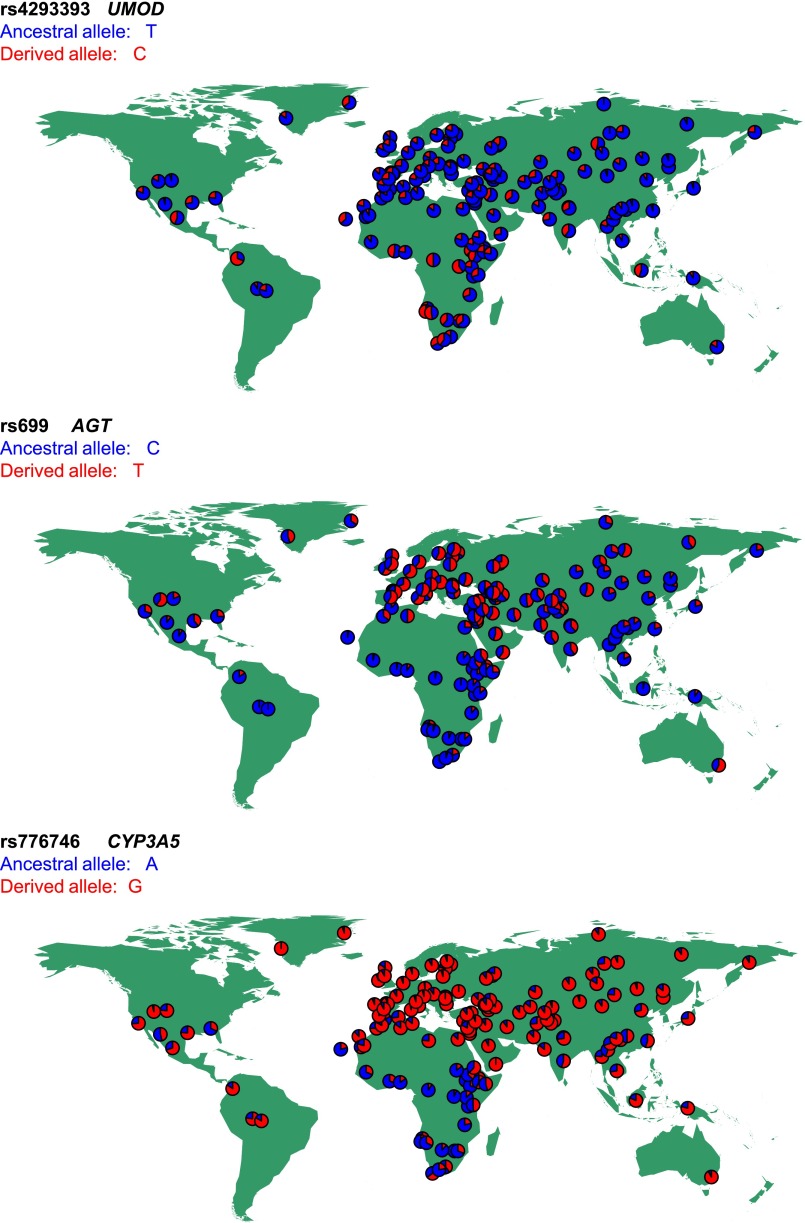
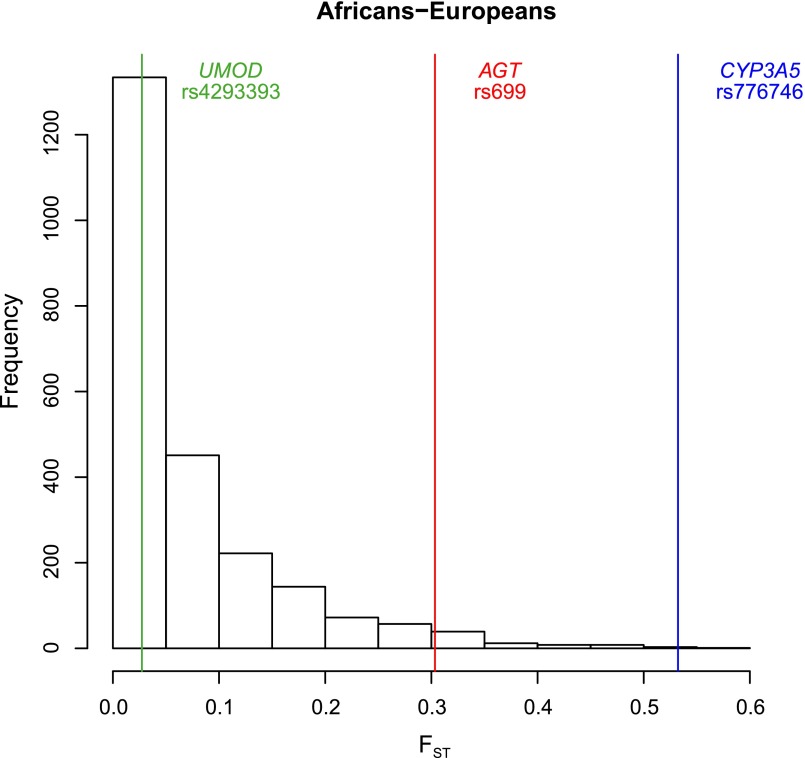
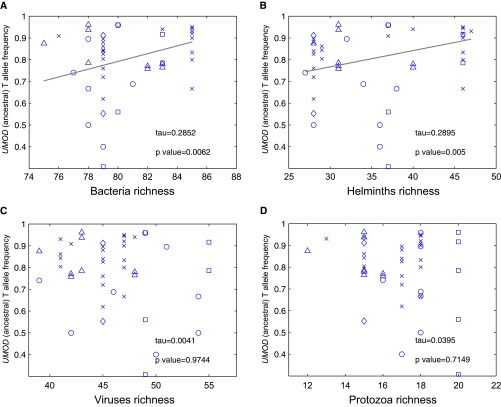
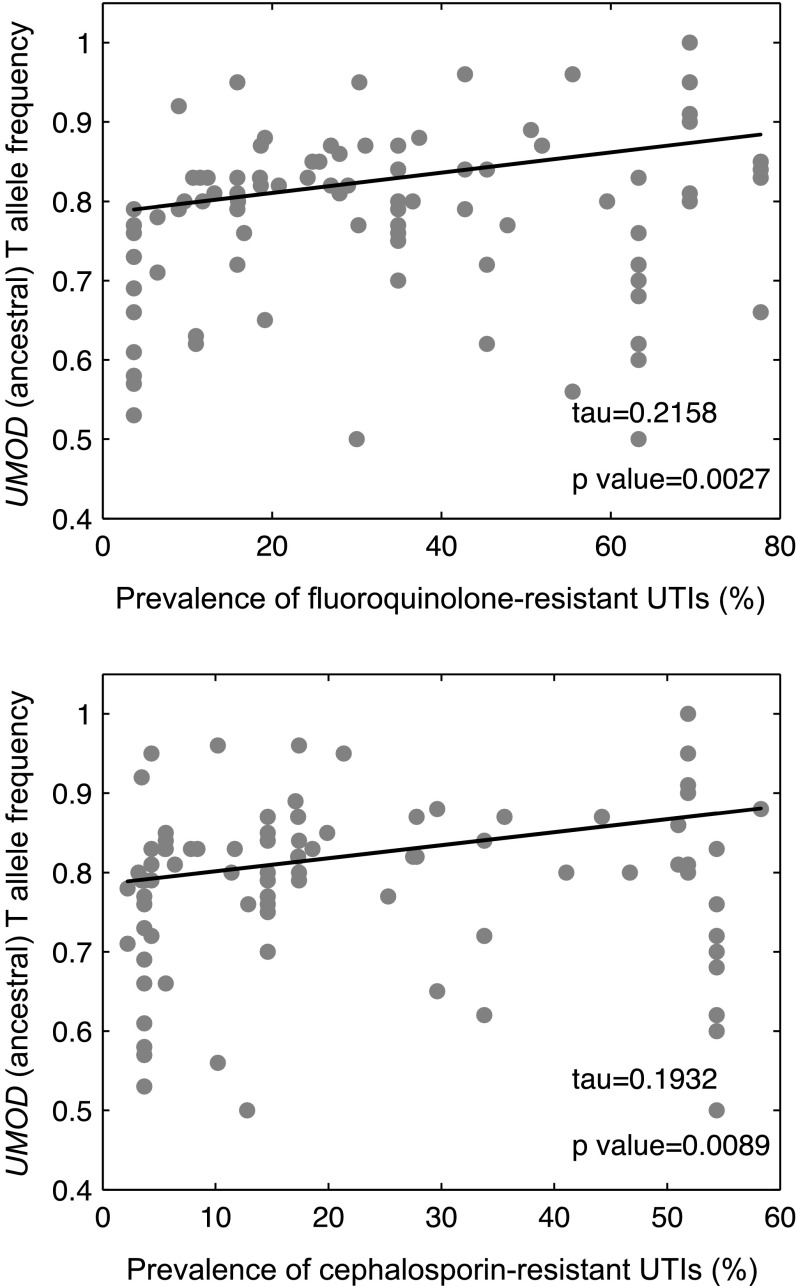
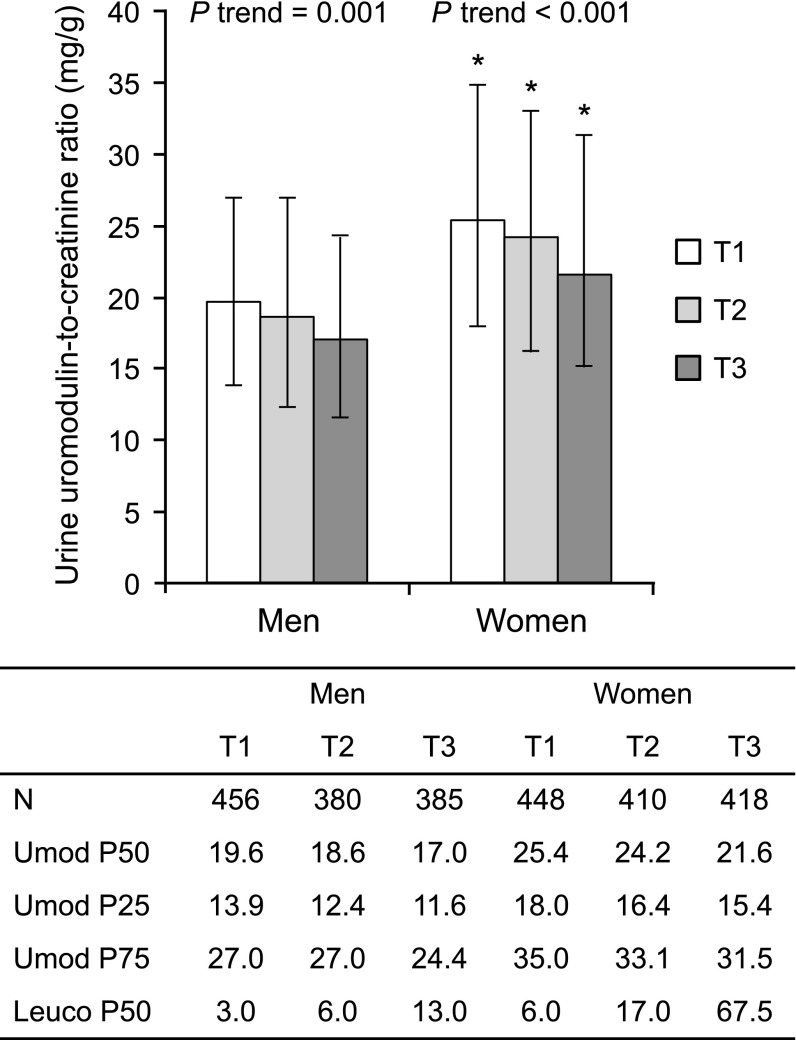
Common variants in the UMOD gene encoding uromodulin, associated with risk of hypertension and CKD in the general population, increase UMOD expression and urinary excretion of uromodulin, causing salt-sensitive hypertension and renal lesions. To determine the effect of selective pressure on variant frequency, we investigated the allelic frequency of the lead UMOD variant rs4293393 in 156 human populations, in eight ancient human genomes, and in primate genomes. The T allele of rs4293393, associated with CKD risk, has high frequency in most modern populations and was the one detected in primate genomes. In contrast, we identified only the derived, C allele in Denisovan and Neanderthal genomes. The distribution of the UMOD ancestral allele did not follow the ancestral susceptibility model observed for variants associated with salt-sensitive hypertension. Instead, the global frequencies of the UMOD alleles significantly correlated with pathogen diversity (bacteria, helminths) and prevalence of antibiotic-resistant urinary tract infections (UTIs). The inverse correlation found between urinary levels of uromodulin and markers of UTIs in the general population substantiates the link between UMOD variants and protection against UTIs. These data strongly suggest that the UMOD ancestral allele, driving higher urinary excretion of uromodulin, has been kept at a high frequency because of its protective effect against UTIs.
Keywords: Urinary tract infection; chronic kidney disease; genetic renal disease; kidney tubule; tubular epithelium.
Copyright © 2016 by the American Society of Nephrology.
Figures
Comment in
-
Genetics: Evolving risks of UMOD variants.Nat Rev Nephrol. 2016 May;12(5):257. doi: 10.1038/nrneph.2016.46. Epub 2016 Mar 30. Nat Rev Nephrol. 2016. PMID: 27026350 No abstract available.
References
-
- Rampoldi L, Scolari F, Amoroso A, Ghiggeri G, Devuyst O: The rediscovery of uromodulin (Tamm-Horsfall protein): from tubulointerstitial nephropathy to chronic kidney disease. Kidney Int 80: 338–347, 2011 - PubMed
-
- Tamm I, Horsfall FL Jr: Characterization and separation of an inhibitor of viral hemagglutination present in urine. Proc Soc Exp Biol Med 74: 106–108, 1950 - PubMed
-
- Mutig K, Kahl T, Saritas T, Godes M, Persson P, Bates J, Raffi H, Rampoldi L, Uchida S, Hille C, Dosche C, Kumar S, Castañeda-Bueno M, Gamba G, Bachmann S: Activation of the bumetanide-sensitive Na+,K+,2Cl- cotransporter (NKCC2) is facilitated by Tamm-Horsfall protein in a chloride-sensitive manner. J Biol Chem 286: 30200–30210, 2011 - PMC - PubMed
-
- Bates JM, Raffi HM, Prasadan K, Mascarenhas R, Laszik Z, Maeda N, Hultgren SJ, Kumar S: Tamm-Horsfall protein knockout mice are more prone to urinary tract infection: rapid communication. Kidney Int 65: 791–797, 2004 - PubMed
MeSH terms
Substances
Grants and funding
LinkOut - more resources
Full Text Sources
Other Literature Sources
Miscellaneous