


MYC regulates the antitumor immune response through CD47 and PD-L1
- PMID: 26966191
- PMCID: PMC4940030
- DOI: 10.1126/science.aac9935
MYC regulates the antitumor immune response through CD47 and PD-L1
Erratum in
-
Erratum for the Report "MYC regulates the antitumor immune response through CD47 and PD-L1" by S. C. Casey, L. Tong, Y. Li, R. Do, S. Walz, K. N. Fitzgerald, A. M. Gouw, V. Baylot, I. Gütgemann, M. Eilers, D. W. Felsher.Science. 2016 Apr 8;352(6282):aaf7984. doi: 10.1126/science.aaf7984. Science. 2016. PMID: 27124464 No abstract available.
Abstract
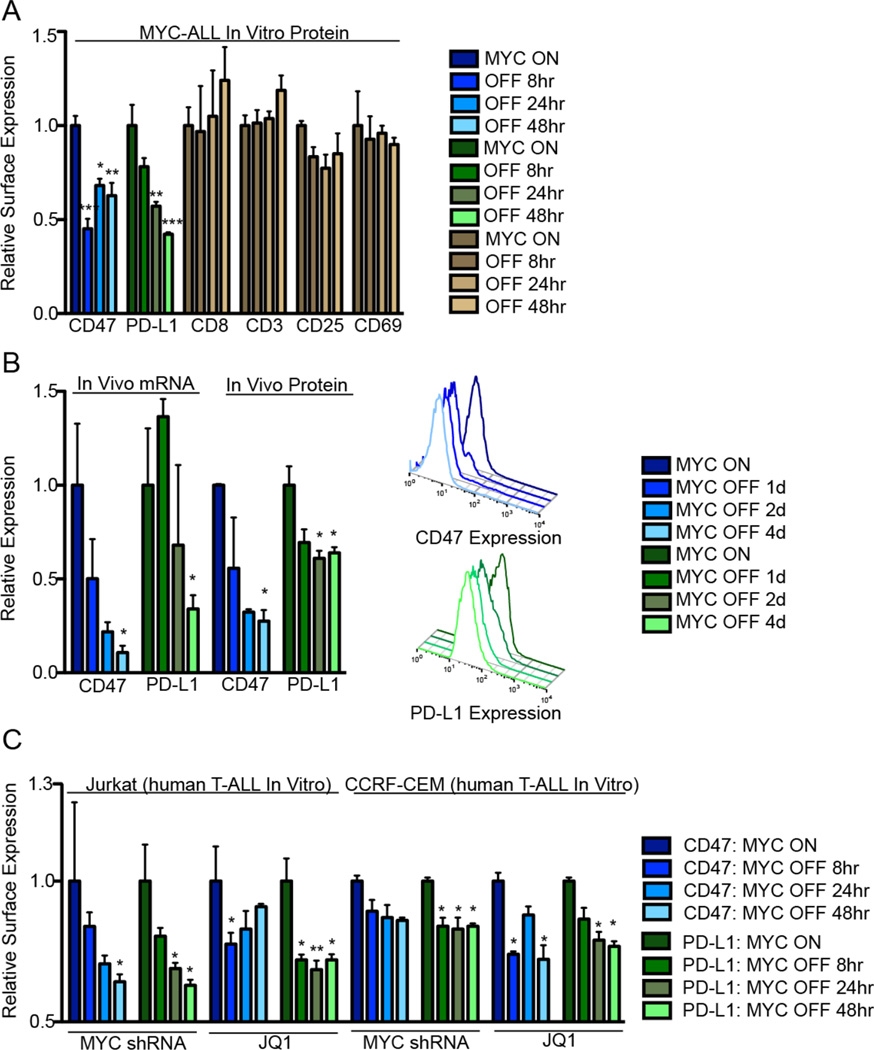
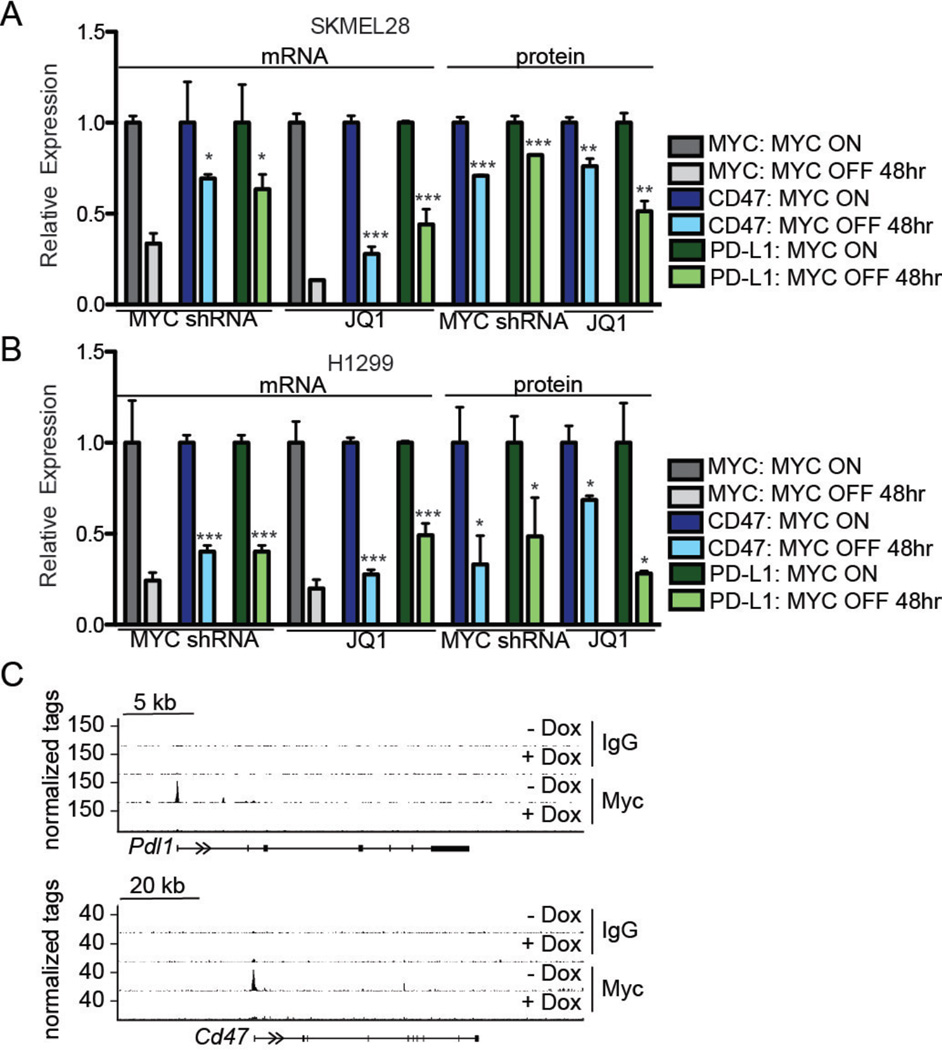
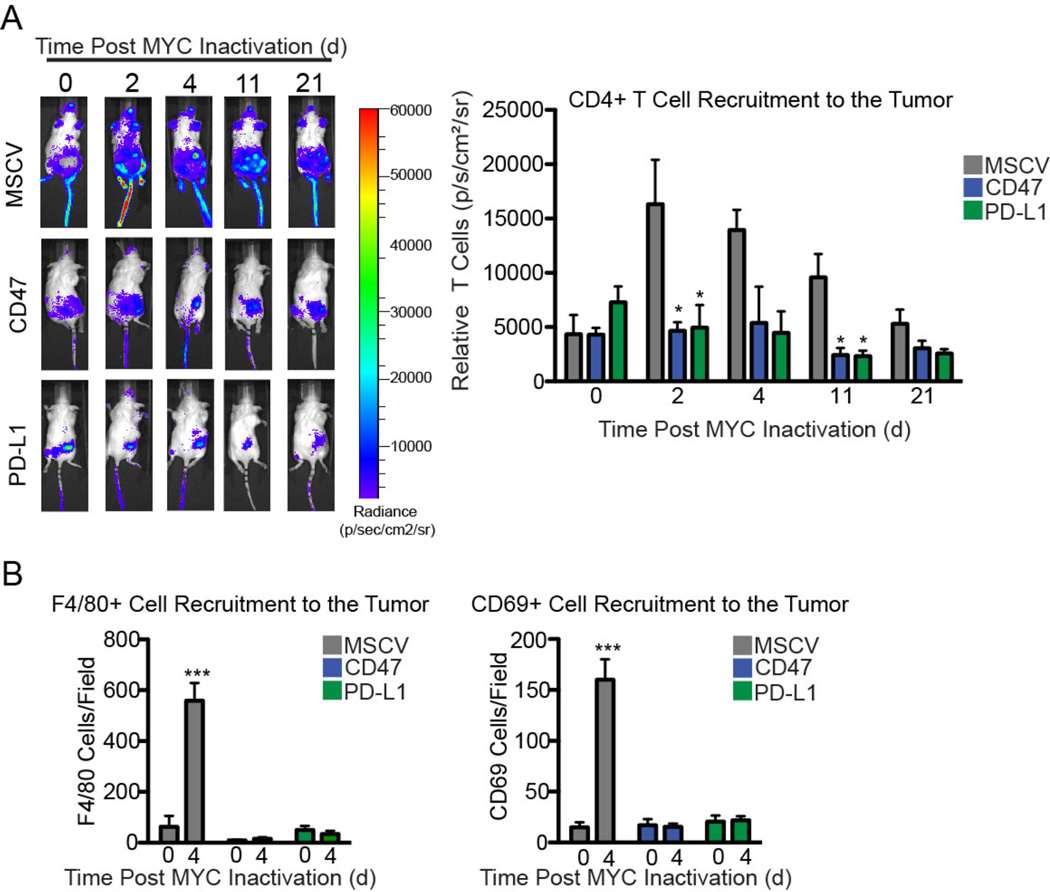
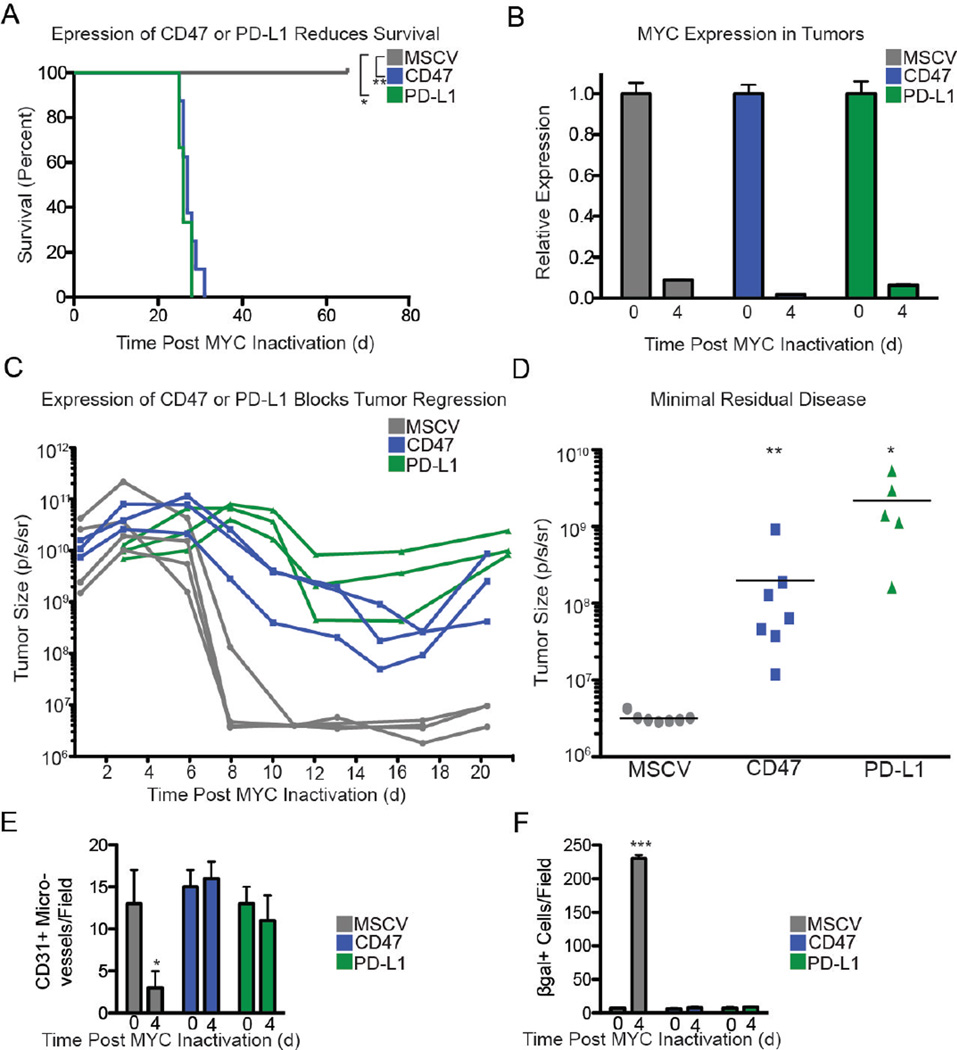
The MYC oncogene codes for a transcription factor that is overexpressed in many human cancers. Here we show that MYC regulates the expression of two immune checkpoint proteins on the tumor cell surface: the innate immune regulator CD47 (cluster of differentiation 47) and the adaptive immune checkpoint PD-L1 (programmed death-ligand 1). Suppression of MYC in mouse tumors and human tumor cells caused a reduction in the levels of CD47 and PD-L1 messenger RNA and protein. MYC was found to bind directly to the promoters of the Cd47 and Pd-l1 genes. MYC inactivation in mouse tumors down-regulated CD47 and PD-L1 expression and enhanced the antitumor immune response. In contrast, when MYC was inactivated in tumors with enforced expression of CD47 or PD-L1, the immune response was suppressed, and tumors continued to grow. Thus, MYC appears to initiate and maintain tumorigenesis, in part, through the modulation of immune regulatory molecules.
Copyright © 2016, American Association for the Advancement of Science.
Figures
Comment in
-
MYC Promotes Tumorigenesis via Activation of CD47 and PD-L1.Cancer Discov. 2016 May;6(5):472. doi: 10.1158/2159-8290.CD-RW2016-051. Epub 2016 Mar 24. Cancer Discov. 2016. PMID: 27012831
-
MYC - a thorn in the side of cancer immunity.Cell Res. 2016 Jun;26(6):639-40. doi: 10.1038/cr.2016.50. Epub 2016 Apr 26. Cell Res. 2016. PMID: 27113275 Free PMC article.
References
-
- Felsher DW, Bishop JM. Reversible tumorigenesis by MYC in hematopoietic lineages. Molecular cell. 1999;4:199–207. - PubMed
-
- Jain M, et al. Sustained loss of a neoplastic phenotype by brief inactivation of MYC. Science. 2002;297:102–104. - PubMed
-
- Shachaf CM, et al. MYC inactivation uncovers pluripotent differentiation and tumour dormancy in hepatocellular cancer. Nature. 2004;431:1112–1117. - PubMed
Publication types
MeSH terms
Substances
Grants and funding
- T32 AI007290/AI/NIAID NIH HHS/United States
- R01 CA170378/CA/NCI NIH HHS/United States
- U01 CA188383/CA/NCI NIH HHS/United States
- U01 CA 188383/CA/NCI NIH HHS/United States
- R01 CA089305/CA/NCI NIH HHS/United States
- CA 089305/CA/NCI NIH HHS/United States
- F32 CA177139/CA/NCI NIH HHS/United States
- T32 CA196585/CA/NCI NIH HHS/United States
- CA 170378/CA/NCI NIH HHS/United States
- 1F32CA177139/CA/NCI NIH HHS/United States
- 5T32AI07290/AI/NIAID NIH HHS/United States
- P30 CA124435/CA/NCI NIH HHS/United States
- CA 184384/CA/NCI NIH HHS/United States
- U01 CA 114747/CA/NCI NIH HHS/United States
- R01 CA184384/CA/NCI NIH HHS/United States
- P50 CA114747/CA/NCI NIH HHS/United States
LinkOut - more resources
Full Text Sources
Other Literature Sources
Medical
Molecular Biology Databases
Research Materials
