. 2016 Mar 11;11(3):e0151356.
doi: 10.1371/journal.pone.0151356. eCollection 2016.

The Lasting Influences of Early Food-Related Variety Experience: A Longitudinal Study of Vegetable Acceptance from 5 Months to 6 Years in Two Populations

Affiliations

The Lasting Influences of Early Food-Related Variety Experience: A Longitudinal Study of Vegetable Acceptance from 5 Months to 6 Years in Two Populations

Andrea Maier-Nöth et al. PLoS One. .

Abstract

Children's vegetable consumption falls below current recommendations, highlighting the need to identify strategies that can successfully promote better acceptance of vegetables. Recently, experimental studies have reported promising interventions that increase acceptance of vegetables. The first, offering infants a high variety of vegetables at weaning, increased acceptance of new foods, including vegetables. The second, offering an initially disliked vegetable at 8 subsequent meals markedly increased acceptance for that vegetable. So far, these effects have been shown to persist for at least several weeks. We now present follow-up data at 15 months, 3 and 6 years obtained through questionnaire (15 mo, 3y) and experimental (6y) approaches. At 15 months, participants who had been breast-fed were reported as eating and liking more vegetables than those who had been formula-fed. The initially disliked vegetable that became accepted after repeated exposure was still liked and eaten by 79% of the children. At 3 years, the initially disliked vegetable was still liked and eaten by 73% of the children. At 6 years, observations in an experimental setting showed that children who had been breast-fed and children who had experienced high vegetable variety at the start of weaning ate more of new vegetables and liked them more. They were also more willing to taste vegetables than formula-fed children or the no or low variety groups. The initially disliked vegetable was still liked by 57% of children. This follow-up study suggests that experience with chemosensory variety in the context of breastfeeding or at the onset of complementary feeding can influence chemosensory preferences for vegetables into childhood.


Conflict of interest statement

Competing Interests: The authors have the following interests to declare: Authors AM and PL were employed by Nestlé Research Center when the studies were designed and executed. Nestlé provided support in the form of salaries for authors AM and PL, and Nestlé Nutrition provided funds to Inra to conduct the study. There are no patents, products in development or marketed products to declare. This does not alter the authors' adherence to all the PLOS ONE policies on sharing data and materials.

Figures

Fig 1
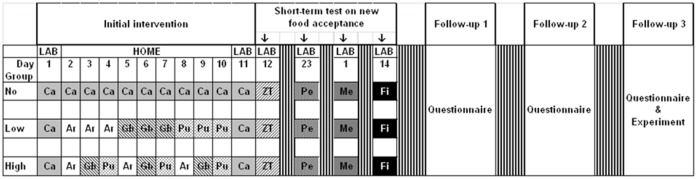
Fig 1. Experimental design.
This includes the initial study with early exposure with flavor variety at the very beginning of complementary feeding and the short-term tests on new food acceptance. In the follow-up studies, we tested the persistence of these effects, measuring acceptance of vegetables when the children were about 15 months, 3 and 6 years of age. The measurements conducted at each follow-up are reported in the present paper. During the initial intervention (day 2 to 10) there were 3 groups of variety exposure at home: the ‘No’ variety group received carrot (Ca) every day, the 2 other groups were offered artichoke (Ar), Green beans (Gb) and pumpkin (Pu) for but the ‘Low’ variety group was given each purée for 3 consecutive days and there were daily changes for the ‘High’ variety group. In the initial study (7) acceptance of new foods (puréed zucchini-tomato mix (ZT) was evaluated at day 12, puréed peas (Pe) at day 23, meat purée (Me) when decided by the mother (so after a variable delay, mean ± SE: 21.7 ± 1.8 days) and fish purée (Fi) 13 days after this. In each of the 3 variety groups, there were ‘formula-fed’ and ‘breast-fed’ infants (i.e. who had been breast-fed for less than 15 days and more than 30 days, respectively).
Fig 2
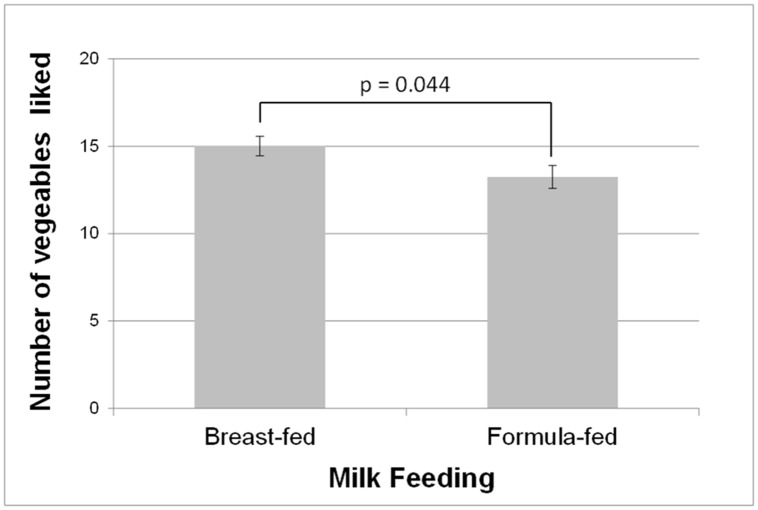
Fig 2. Higher number of vegetables liked by 15-month old children if they had been breast-fed.
Mean ± SE of the maternal reports of number of vegetables eaten and liked at follow-up 1.
Fig 3
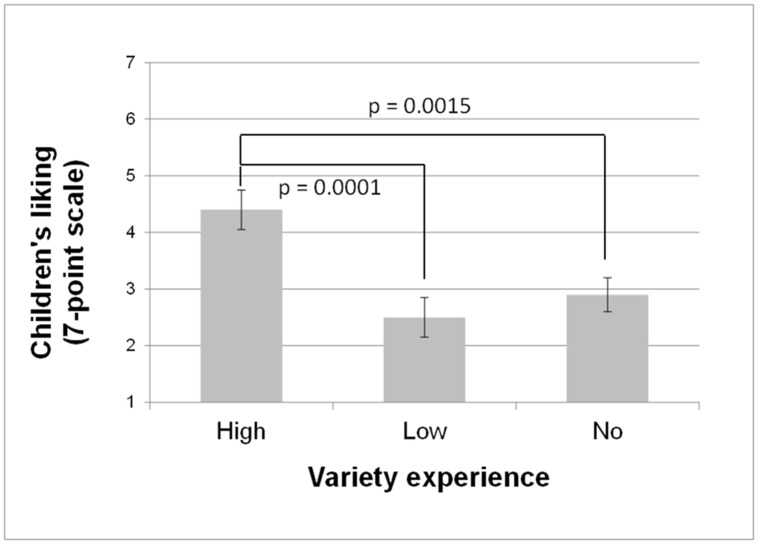
Fig 3. Early experience with high variety of vegetables is associated with higher liking of new vegetables.
Liking (mean ± SE) at follow-up 3, i.e. when children were on average 6 years old, for the three experimental groups (no, low and high variety).
Fig 4
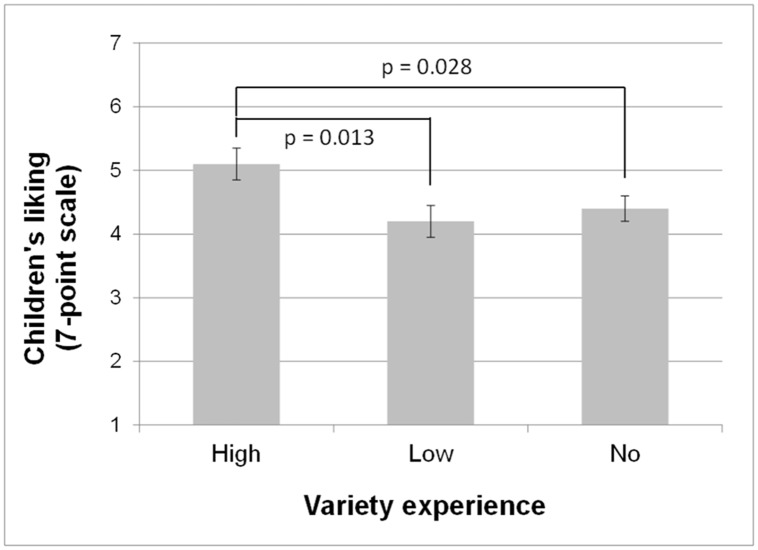
Fig 4. Early experience with high variety of vegetables is associated with higher liking of familiar vegetables.
Liking (mean ± SE) at follow-up 3, i.e. when children were on average 6 years old, for the three experimental groups (no, low and high variety).
Fig 5
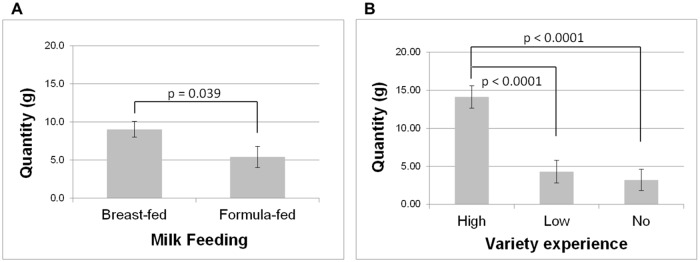
Fig 5. Early food-related variety experience is associated with higher intake of new vegetables.
Intake (mean ± SE, in grams) at follow-up 3, i.e. when children were on average 6 years old. A: for breast-fed and formula-fed infants; B: for the three experimental groups (no, low and high variety).
Fig 6
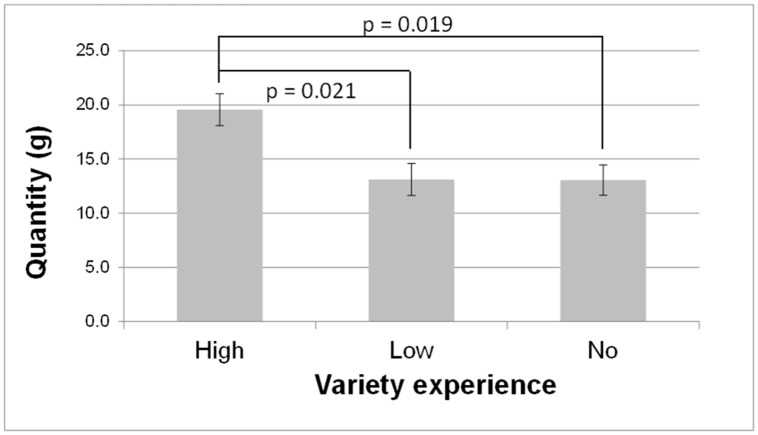
Fig 6. Early experience with high variety of vegetables is associated with higher intake of familiar vegetables.
Intake (mean ± SE, in grams) at follow-up 3, i.e. when children were on average 6 years old, for the three experimental groups (no, low and high variety).
Fig 7
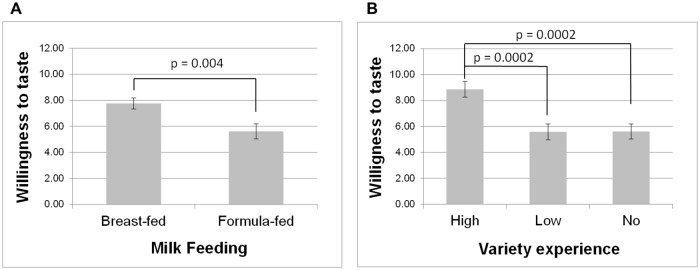
Fig 7. Early food-related variety experience is associated with higher willingness to taste vegetables.
Mean (± SE) at follow-up 3, i.e. when children were on average 6 years old. A: for breast-fed and formula-fed infants; B: for the three experimental groups (no, low and high variety).

References

    1. Birch LL. Development of food preferences. Annu Rev Nutr. 1999;19(1):41–62. - PubMed
    1. Delaunay- El Allam M, Soussignan R, Patris B, Marlier L, Schaal B. Long-lasting memory for an odor acquired at the mother's breast. Dev Sci. 2010;13(6):849–63. 10.1111/j.1467-7687.2009.00941.x ISI:000283598800006. - DOI - PubMed
    1. Hepper PG, Wells DL, Dornan JC, Lynch C. Long-term flavor recognition in humans with prenatal garlic experience. Dev Psychobiol. 2013;55(5):568–74. Epub 2012/07/04. 10.1002/dev.21059 . - DOI - PubMed
    1. Schaal B. From amnion to colostrum to milk. Odour bridging in early developmental transitions In: Hopkins B, Johnson S, editors. Prenatal development of postnatal functions Advances in infancy research. 2. New York: Praeger; 2005. p. 51–102.
    1. Schaal B. The development of flavour perception from infancy to adulthood In: Voilley A, Etiévant P, editors. Flavour in food. Cambridge: Woodhead; 2006. p. 403–36.

Publication types