


Avoidant coping and self-efficacy mediate relationships between perceived social constraints and symptoms among long-term breast cancer survivors
- PMID: 26969374
- PMCID: PMC5018239
- DOI: 10.1002/pon.4119
Avoidant coping and self-efficacy mediate relationships between perceived social constraints and symptoms among long-term breast cancer survivors
Abstract
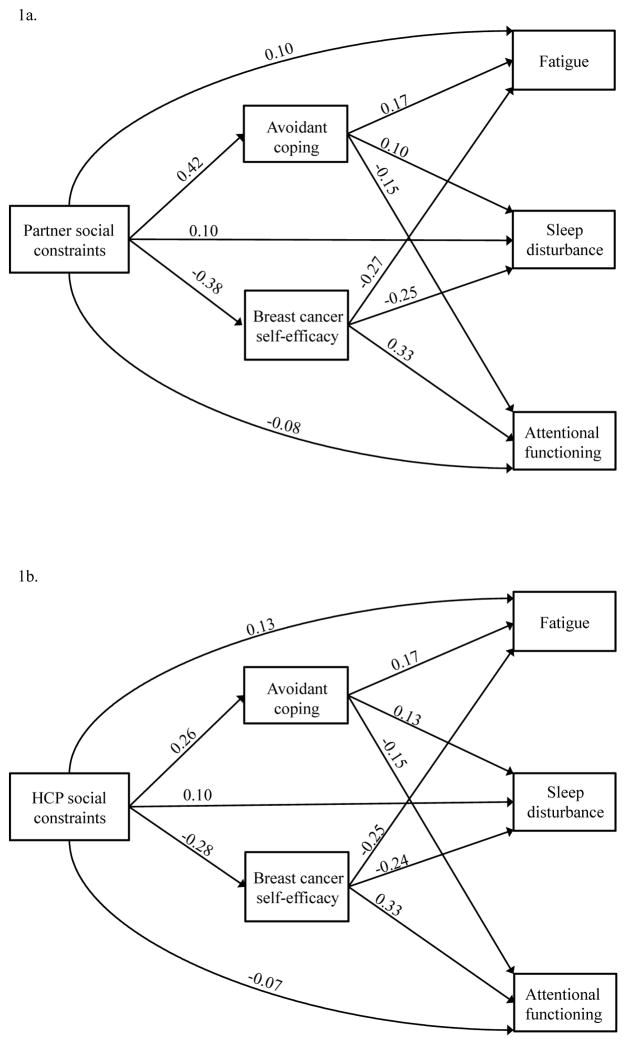
Objective: Many breast cancer survivors feel constrained in discussing their cancer experience with others. Limited evidence suggests that social constraints (e.g., avoidance and criticism) from loved ones may negatively impact breast cancer survivors' global health, but research has yet to examine relationships between social constraints and common physical symptoms. Informed by social cognitive processing theory, this study examined whether perceived social constraints from partners and healthcare providers (HCPs) were associated with fatigue, sleep disturbance, and attentional functioning among long-term breast cancer survivors (N = 1052). In addition, avoidant coping and self-efficacy for symptom management were examined as potential mediators of these relationships.
Methods: Long-term breast cancer survivors (mean years since diagnosis = 6) completed questionnaires assessing social constraints from partners and HCPs, avoidant coping, self-efficacy for symptom management, and symptoms (i.e., fatigue, sleep disturbance, and attentional functioning). Structural equation modeling was used to evaluate the hypothesized relationships among variables in two models: one focused on social constraints from partners and one focused on social constraints from HCPs.
Results: Both models demonstrated good fit. Consistent with theory and prior research, greater social constraints from both partners and HCPs were associated with greater symptom burden (i.e., greater fatigue and sleep disturbance, poorer attentional functioning). In addition, all relationships were mediated by avoidant coping and self-efficacy for symptom management.
Conclusions: Findings are consistent with social cognitive processing theory and suggest that symptom management interventions may be enhanced by addressing the impact of social constraints from survivors' partners and HCPs on their coping and self-efficacy. Copyright © 2016 John Wiley & Sons, Ltd.
Keywords: breast cancer; coping; oncology; self-efficacy; social constraints; symptoms.
Copyright © 2016 John Wiley & Sons, Ltd.
Conflict of interest statement
Authors’ Disclosures of Potential Conflicts of Interest
The authors indicated no potential conflicts of interest.
Figures
References
-
- Lepore S, Revenson T. Social constraints on disclosure and adjustment to cancer. Soc Personal Psychol Compass. 2007;1:313–333. doi: 10.1111/j.1751-9004.2007.00013.x. - DOI
-
- Lepore S. A social–cognitive processing model of emotional adjustment to cancer. In: Baum A, Andersen BL, editors. Psychosocial Interventions for Cancer. Washington, DC: American Psychological Association; 2001. pp. 99–118.
MeSH terms
Grants and funding
LinkOut - more resources
Full Text Sources
Other Literature Sources
Medical
