


GSK3ß-dependent dysregulation of neurodevelopment in SPG11-patient induced pluripotent stem cell model
- PMID: 26971897
- PMCID: PMC5084783
- DOI: 10.1002/ana.24633
GSK3ß-dependent dysregulation of neurodevelopment in SPG11-patient induced pluripotent stem cell model
Abstract
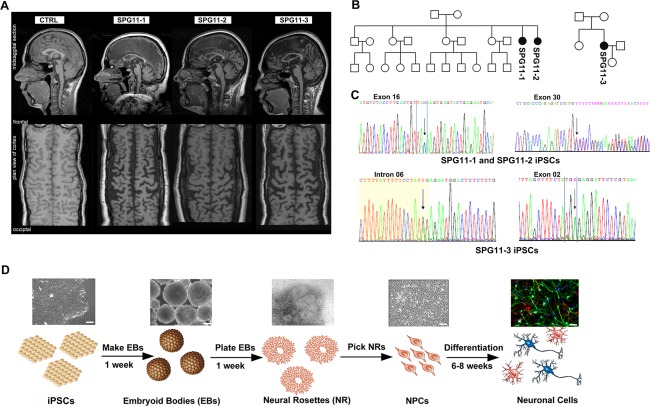
Objective: Mutations in the spastic paraplegia gene 11 (SPG11), encoding spatacsin, cause the most frequent form of autosomal-recessive complex hereditary spastic paraplegia (HSP) and juvenile-onset amyotrophic lateral sclerosis (ALS5). When SPG11 is mutated, patients frequently present with spastic paraparesis, a thin corpus callosum, and cognitive impairment. We previously delineated a neurodegenerative phenotype in neurons of these patients. In the current study, we recapitulated early developmental phenotypes of SPG11 and outlined their cellular and molecular mechanisms in patient-specific induced pluripotent stem cell (iPSC)-derived cortical neural progenitor cells (NPCs).
Methods: We generated and characterized iPSC-derived NPCs and neurons from 3 SPG11 patients and 2 age-matched controls.
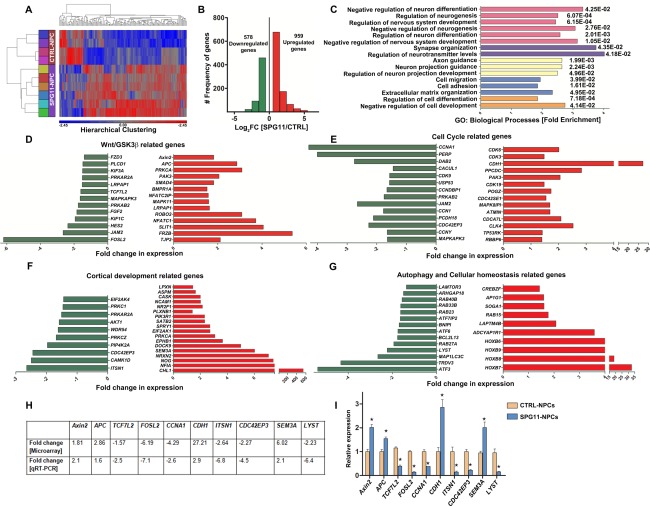
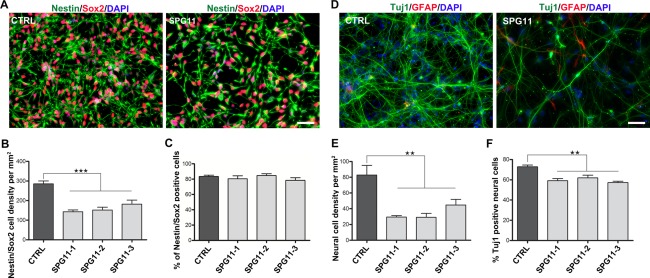
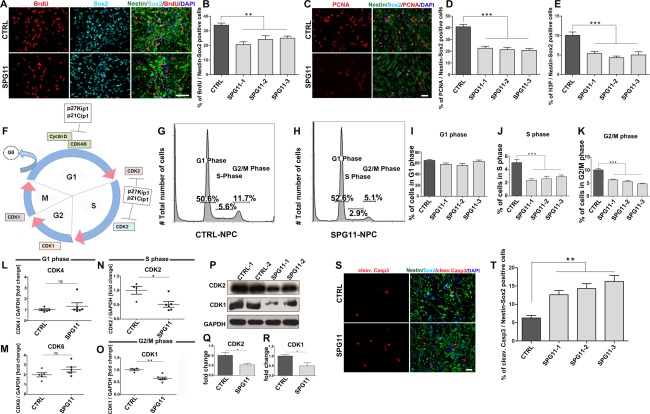
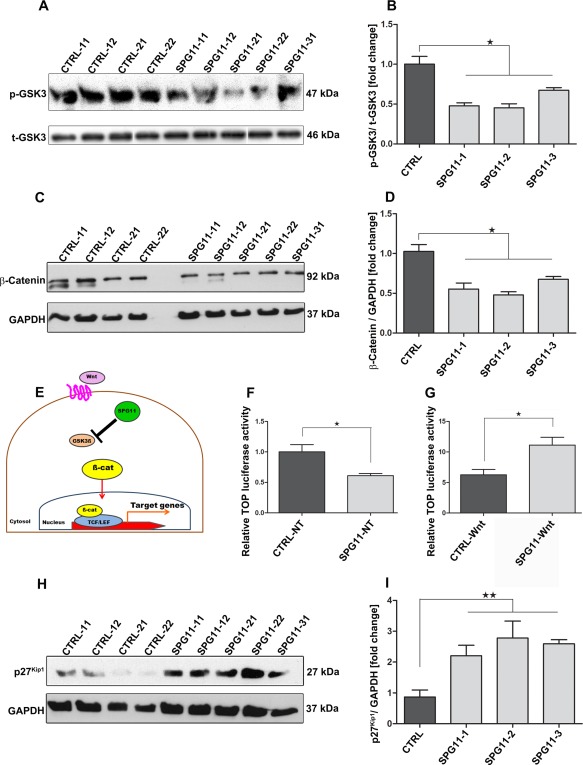
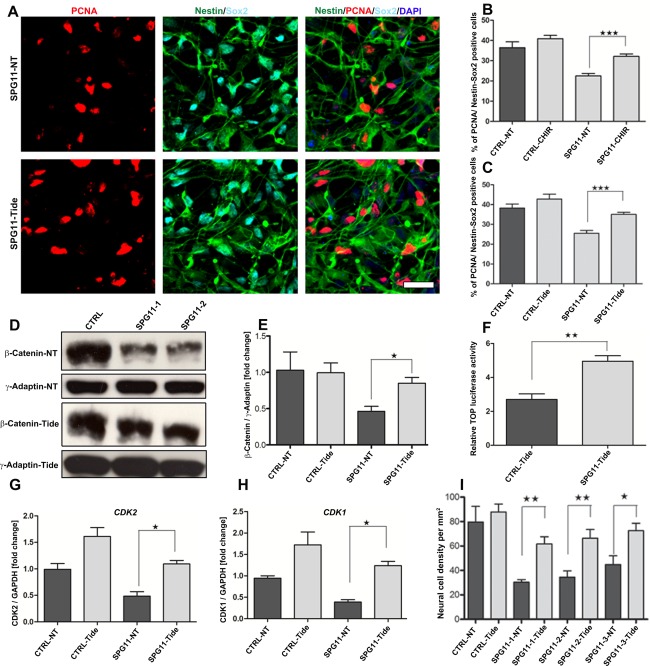
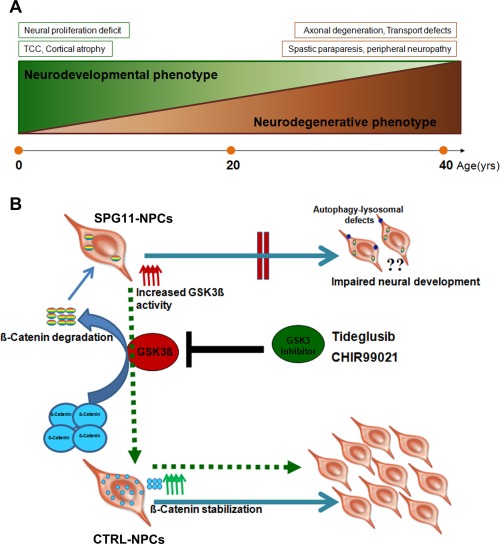
Results: Gene expression profiling of SPG11-NPCs revealed widespread transcriptional alterations in neurodevelopmental pathways. These include changes in cell-cycle, neurogenesis, cortical development pathways, in addition to autophagic deficits. More important, the GSK3ß-signaling pathway was found to be dysregulated in SPG11-NPCs. Impaired proliferation of SPG11-NPCs resulted in a significant diminution in the number of neural cells. The decrease in mitotically active SPG11-NPCs was rescued by GSK3 modulation.
Interpretation: This iPSC-derived NPC model provides the first evidence for an early neurodevelopmental phenotype in SPG11, with GSK3ß as a potential novel target to reverse the disease phenotype. Ann Neurol 2016;79:826-840.
© 2016 The Authors. Annals of Neurology published by Wiley Periodicals, Inc. on behalf of American Neurological Association.
Figures
References
-
- Harding AE. Classification of the hereditary ataxias and paraplegias. Lancet 1983;1:1151–1155. - PubMed
-
- McDermott CJ, Shaw PJ. Hereditary spastic paraplegia. Int Rev Neurobiol 2002;53:191–204. - PubMed
-
- Klebe S, Stevanin G, Depienne C. Clinical and genetic heterogeneity in hereditary spastic paraplegias: from SPG1 to SPG72 and still counting. Rev Neurol (Paris) 2015;171:505–530. - PubMed
-
- Winner B, Uyanik G, Gross C, et al. Clinical progression and genetic analysis in hereditary spastic paraplegia with thin corpus callosum in spastic gait gene 11 (SPG11). Arch Neurol 2004;61:117–121. - PubMed
Grants and funding
- 01GQ113/Tom-Wahlig Foundation Advanced Fellowship, the German Federal Ministry of Education and Research (BMBF
- N3/Interdisciplinary Centre for Clinical Research (University Hospital of Erlangen
- F3/Interdisciplinary Centre for Clinical Research (University Hospital of Erlangen
- Emerging Fields Initiative CYDER
- Bavarian Ministry of Education and Culture, Science and the Arts in the framework of the Bavarian Molecular Biosystems Research Network
LinkOut - more resources
Full Text Sources
Other Literature Sources
Research Materials
