


Epigenetic modulators, modifiers and mediators in cancer aetiology and progression
- PMID: 26972587
- PMCID: PMC4888057
- DOI: 10.1038/nrg.2016.13
Epigenetic modulators, modifiers and mediators in cancer aetiology and progression
Abstract
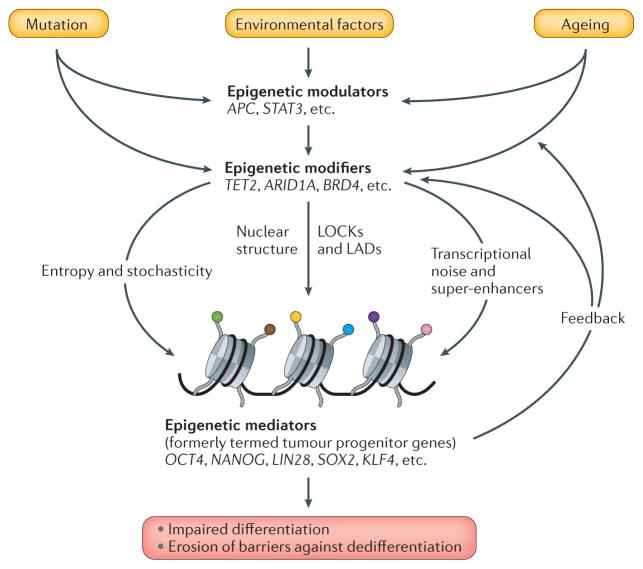
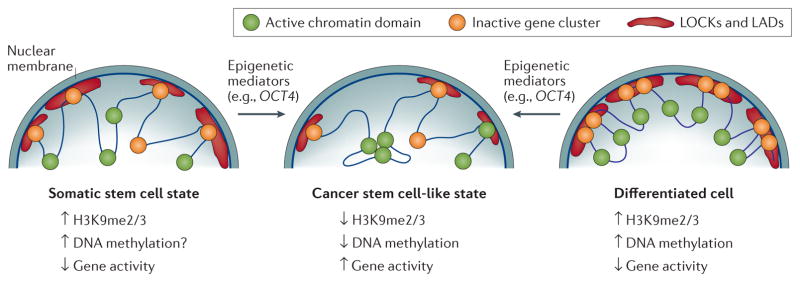
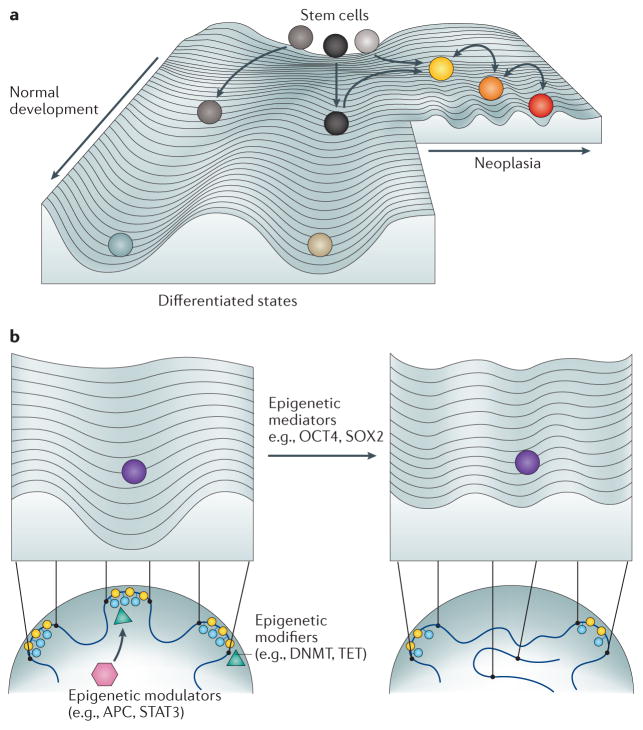
This year is the tenth anniversary of the publication in this journal of a model suggesting the existence of 'tumour progenitor genes'. These genes are epigenetically disrupted at the earliest stages of malignancies, even before mutations, and thus cause altered differentiation throughout tumour evolution. The past decade of discovery in cancer epigenetics has revealed a number of similarities between cancer genes and stem cell reprogramming genes, widespread mutations in epigenetic regulators, and the part played by chromatin structure in cellular plasticity in both development and cancer. In the light of these discoveries, we suggest here a framework for cancer epigenetics involving three types of genes: 'epigenetic mediators', corresponding to the tumour progenitor genes suggested earlier; 'epigenetic modifiers' of the mediators, which are frequently mutated in cancer; and 'epigenetic modulators' upstream of the modifiers, which are responsive to changes in the cellular environment and often linked to the nuclear architecture. We suggest that this classification is helpful in framing new diagnostic and therapeutic approaches to cancer.
Conflict of interest statement
The authors declare competing interests : see Web version for details.
Figures
References
-
- Feinberg AP, Ohlsson R, Henikoff S. The epigenetic progenitor origin of human cancer. Nat Rev Genet. 2006;7:21–33. This is the model suggesting that some genes are epigenetically disrupted at the earliest stages of malignancies, even before mutations, causing altered differentiation throughout tumour evolution; the current Review revisits this model. - PubMed
-
- Versteege I, et al. Truncating mutations of hSNF5/INI1 in aggressive paediatric cancer. Nature. 1998;394:203–206. - PubMed
-
- Mack SC, et al. Epigenomic alterations define lethal CIMP-positive ependymomas of infancy. Nature. 2014;506:445–450. This paper reported an absence of recurrent mutations in a subtype of paediatric posterior fossa ependymoma, suggesting the existence of alternative, non-mutational mechanisms for cancer initiation. - PMC - PubMed
Publication types
MeSH terms
Grants and funding
LinkOut - more resources
Full Text Sources
Other Literature Sources
Medical
Miscellaneous
