


Reduced Resting Metabolic Rate in Adults with Hemiparetic Chronic Stroke
- PMID: 26973796
- PMCID: PMC4786940
- DOI: 10.4172/2155-9562.1000341
Reduced Resting Metabolic Rate in Adults with Hemiparetic Chronic Stroke
Abstract
Objective: Resting metabolic rate (RMR) is the component of energy expenditure that explains the largest proportion of total daily energy requirements. Since RMR is determined largely by fat-free mass and a low RMR predicts weight gain in healthy adults, identifying the role of muscle atrophy following stroke on RMR may help identify ways to mitigate the development of obesity post-stroke.
Methods: Thirty-nine stroke survivors with chronic hemiparesis (mean ± SEM: age: 61 ± 1 years, latency from stroke: 107 ± 40 months, BMI: 31 ± 3 kg/m2) underwent DXA scans for measurement of body composition, including total, paretic, and non-paretic leg lean mass and fasted, 30-min indirect calorimetry for measurement of RMR.
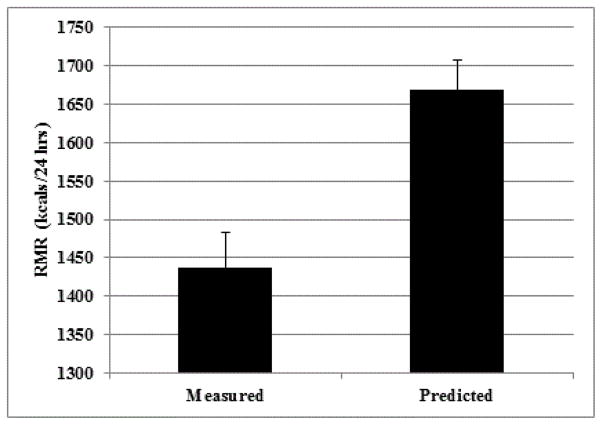
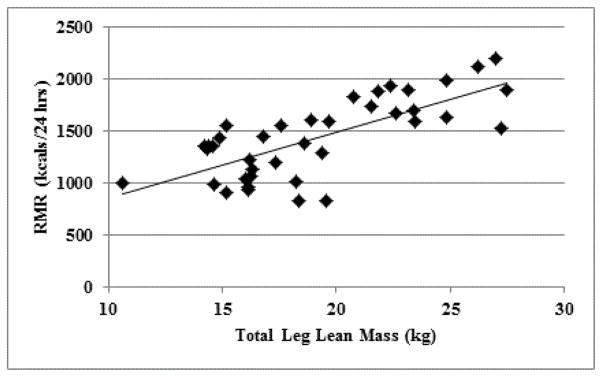
Result: Predicted RMR was calculated by the Mifflin-St Jeor equation, which considers weight, height, and age for both men and women. RMR was 14% lower than predicted (1438 ± 45 vs. 1669 ± 38 kcals/24 hrs; P<0.01). Total (r=0.73, P<0.01), paretic (r=0.72, P<0.01) and non-paretic (r=0.67, P<0.01) leg lean mass predicted RMR.
Conclusion: These data indicate that muscle atrophy post stroke may lead to a reduced RMR. This substantiates the need to attenuate the loss of lean mass after a stroke to prevent declines in RMR and possible weight gain common post-stroke.
Keywords: Chronic stroke; Resting metabolic rate; Weight management.
Figures
References
-
- American Heart Association I. Older Americans & Cardiovascular Diseases. Statistical Fact Sheet. 2013 Update.
-
- Ryan AS, Dobrovolny CL, Smith GV, Silver KH, Macko RF. Hemiparetic muscle atrophy and increased intramuscular fat in stroke patients. Arch Phys Med Rehabil. 2002;83:1703–1707. - PubMed
-
- Tsur A, Segal Z. Falls in stroke patients: risk factors and risk management. Isr Med Assoc J. 2010;12:216–219. - PubMed
-
- Kim O, Kim JH. Falls and Use of Assistive Devices in Stroke Patients with Hemiparesis: Association with Balance Ability and Fall Efficacy. Rehabil Nurs. 2015;40:267–274. - PubMed
Grants and funding
LinkOut - more resources
Full Text Sources
Other Literature Sources