


Serotonin modulates insect hemocyte phagocytosis via two different serotonin receptors
- PMID: 26974346
- PMCID: PMC4829436
- DOI: 10.7554/eLife.12241
Serotonin modulates insect hemocyte phagocytosis via two different serotonin receptors
Abstract
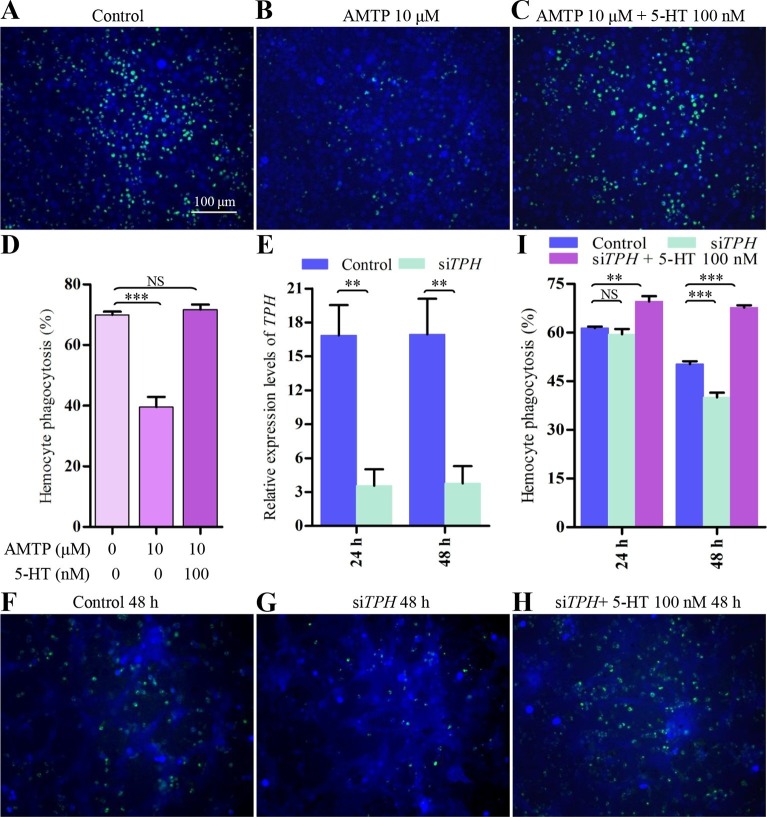
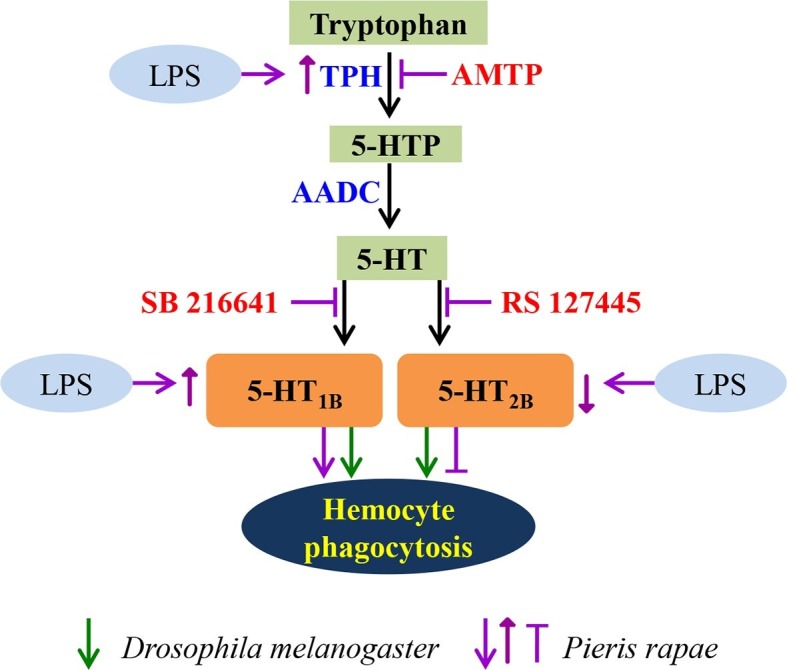
Serotonin (5-HT) modulates both neural and immune responses in vertebrates, but its role in insect immunity remains uncertain. We report that hemocytes in the caterpillar, Pieris rapae are able to synthesize 5-HT following activation by lipopolysaccharide. The inhibition of a serotonin-generating enzyme with either pharmacological blockade or RNAi knock-down impaired hemocyte phagocytosis. Biochemical and functional experiments showed that naive hemocytes primarily express 5-HT1B and 5-HT2B receptors. The blockade of 5-HT1B significantly reduced phagocytic ability; however, the blockade of 5-HT2B increased hemocyte phagocytosis. The 5-HT1B-null Drosophila melanogaster mutants showed higher mortality than controls when infected with bacteria, due to their decreased phagocytotic ability. Flies expressing 5-HT1B or 5-HT2B RNAi in hemocytes also showed similar sensitivity to infection. Combined, these data demonstrate that 5-HT mediates hemocyte phagocytosis through 5-HT1B and 5-HT2B receptors and serotonergic signaling performs critical modulatory functions in immune systems of animals separated by 500 million years of evolution.
Keywords: D. melanogaster; bacteria infection; hemocyte; immunology; infectious disease; innate immunity; microbiology; phagocytosis; serotonin receptor.
Conflict of interest statement
The authors declare that no competing interests exist.
Figures



References
-
- Adamo SA. Norepinephrine and octopamine: linking stress and immune function across phyla. Invert Surv J. 2008;5:12–19.
Publication types
MeSH terms
Substances
LinkOut - more resources
Full Text Sources
Other Literature Sources
Molecular Biology Databases
