


Distinct Clinical Characteristics of Pediatric Guillain-Barré Syndrome: A Comparative Study between Children and Adults in Northeast China
- PMID: 26974666
- PMCID: PMC4790924
- DOI: 10.1371/journal.pone.0151611
Distinct Clinical Characteristics of Pediatric Guillain-Barré Syndrome: A Comparative Study between Children and Adults in Northeast China
Abstract
Objective: Clinical characteristics of pediatric Guillain-Barré syndrome (GBS) have been extensively studied whereas scarcely been compared with those of adult GBS. Herein we compared the clinical features of GBS between pediatric and adult patients.
Methods: We retrospectively collected the clinical data of 750 patients with GBS (541 adults and 209 children), and compared the clinical characteristics between children and adults.
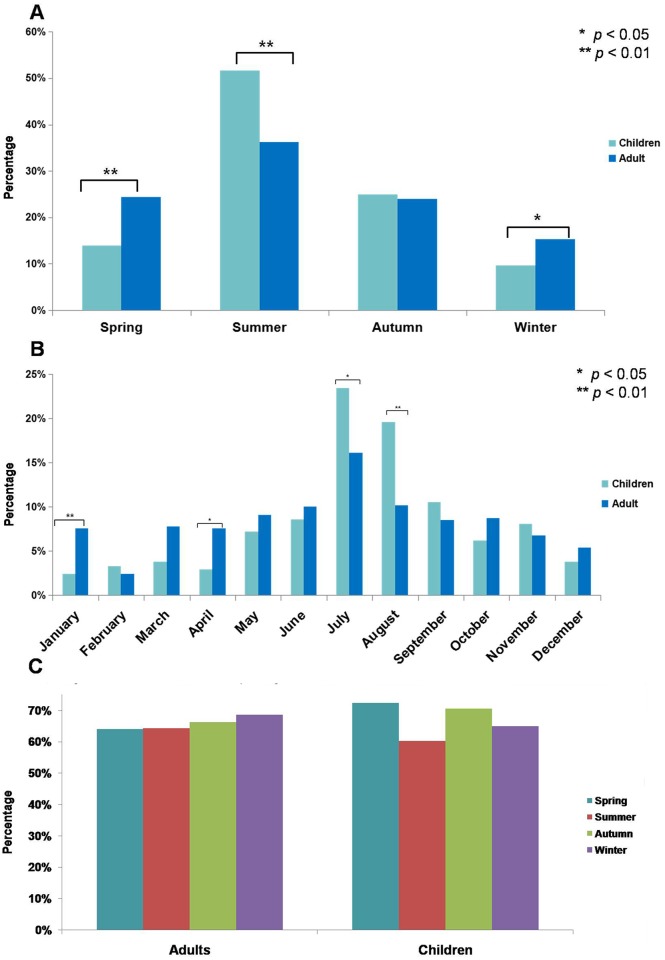
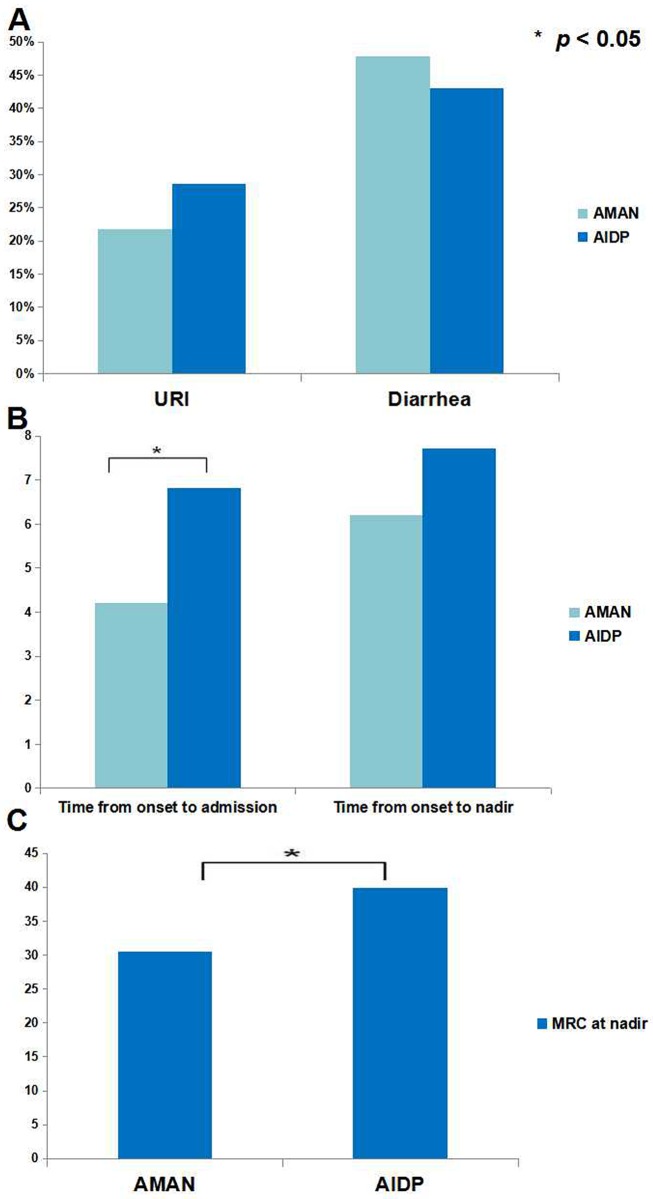
Results: Pain was a more frequent complaint in children (17.2% vs 9.6%, p < 0.01), who were also found with shorter interval from disease onset to nadir (6.3d vs 7.3d, p < 0.01) and higher incidence of bulbar dysfunction (22.0% vs 14.8%, p < 0.05). The disease severity in children was comparable with adults. In addition, a higher incidence of pediatric GBS was found in summer, especially in July and August (both p < 0.01). However, the incidence of antecedent infections of different seasons in adult and pediatric patients was comparable (p > 0.05). The clinical features of acute motor axonal neuropathy (AMAN) and acute inflammatory demyelinating polyneuropathy (AIDP) in children were overall comparable with adult ones (p > 0.05). Similar to adults, bulbar dysfunction (odds ratio [OR]: 4.621, 95% confidence interval [CI]: 1.240-17.218, p < 0.05) and lower nadir Medical Research Council (MRC) sum score (OR: 0.897, 95% CI: 0.855-0.941, p < 0.01) were also risk factors for mechanical ventilation in children. However, distinct from adult ones, autonomic dysfunction was significantly higher in mechanically ventilated childhood GBS (39.1% vs 8.8%, p < 0.01), which also served as a predictor for mechanical ventilation in pediatric GBS (OR: 70.415, 95% CI: 9.265-535.158, p < 0.01). As to the efficacy of intravenous immunoglobulin, insignificant difference was identified between children and adults.
Conclusion: The clinical features of pediatric GBS differ from those of adults. Autonomic dysfunction is an independent risk factor for mechanical ventilation in pediatric patients.
Conflict of interest statement
Figures
References
-
- Ryan MM. Guillain-Barré syndrome in childhood. J Paediatr Child Health. 2005; 41: 237–41. - PubMed
-
- Nachamkin I, Arzarte Barbosa P, Ung H, Lobato C, Gonzalez Rivera A, Rodriguez P, et al. Patterns of Guillain-Barre syndrome in children: results from a Mexican population. Neurology. 2007; 69: 1665–71. - PubMed
Publication types
MeSH terms
Substances
LinkOut - more resources
Full Text Sources
Other Literature Sources
Medical
Research Materials
