


Growth inhibition and apoptosis in cancer cells induced by polyphenolic compounds of Acacia hydaspica: Involvement of multiple signal transduction pathways
- PMID: 26975752
- PMCID: PMC4791679
- DOI: 10.1038/srep23077
Growth inhibition and apoptosis in cancer cells induced by polyphenolic compounds of Acacia hydaspica: Involvement of multiple signal transduction pathways
Abstract
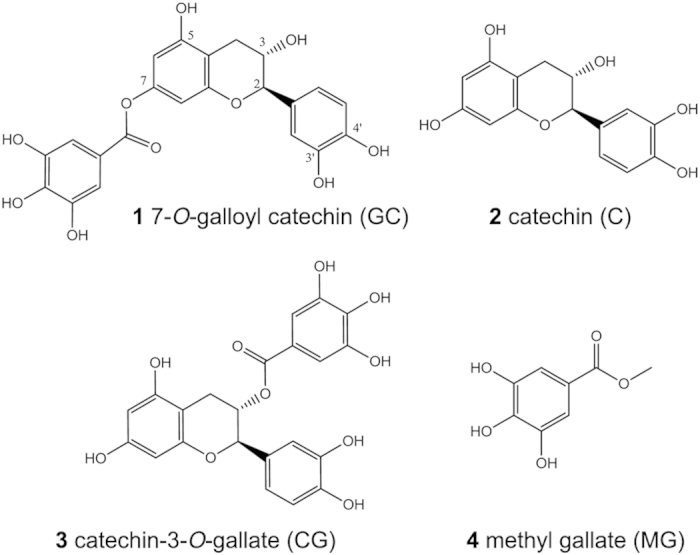
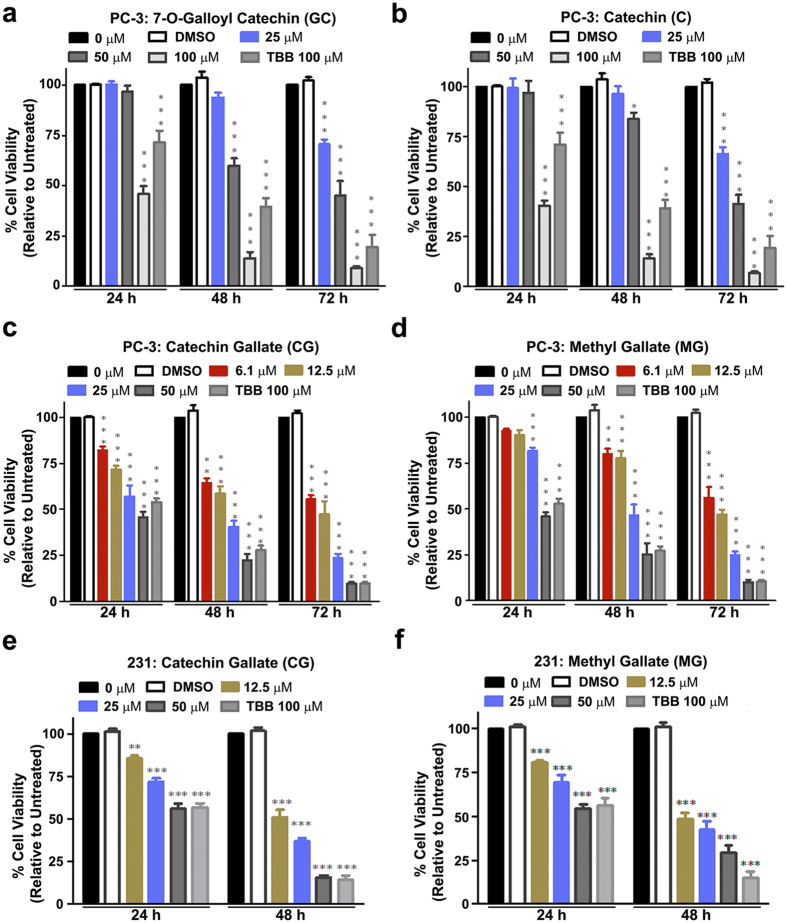
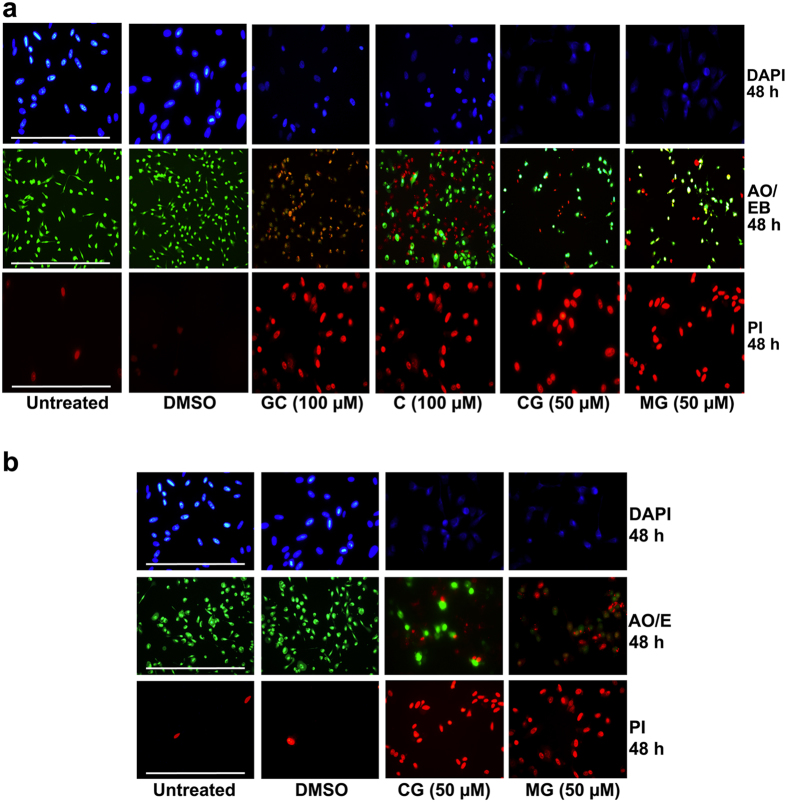
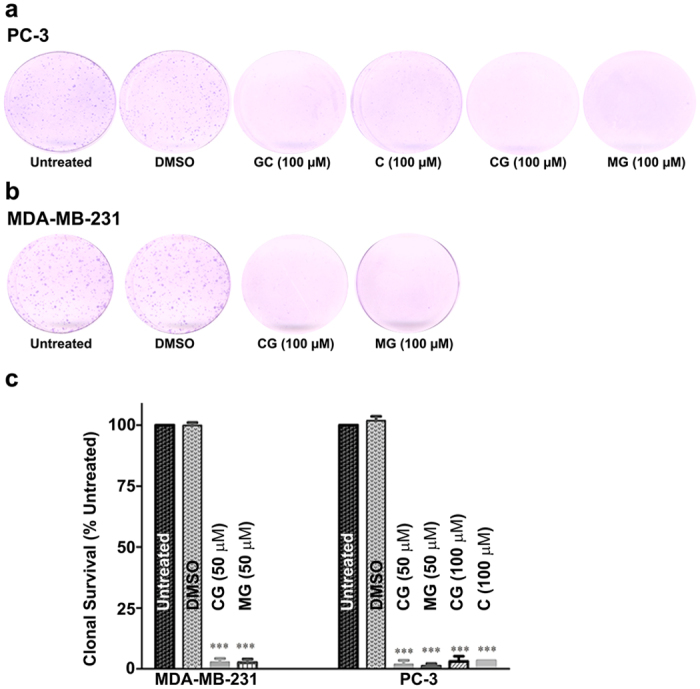
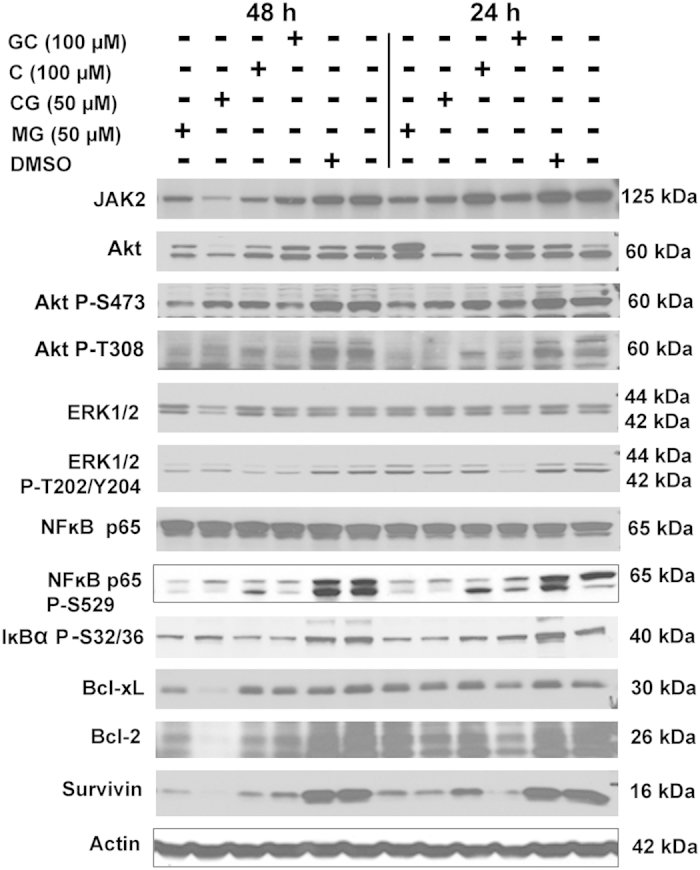
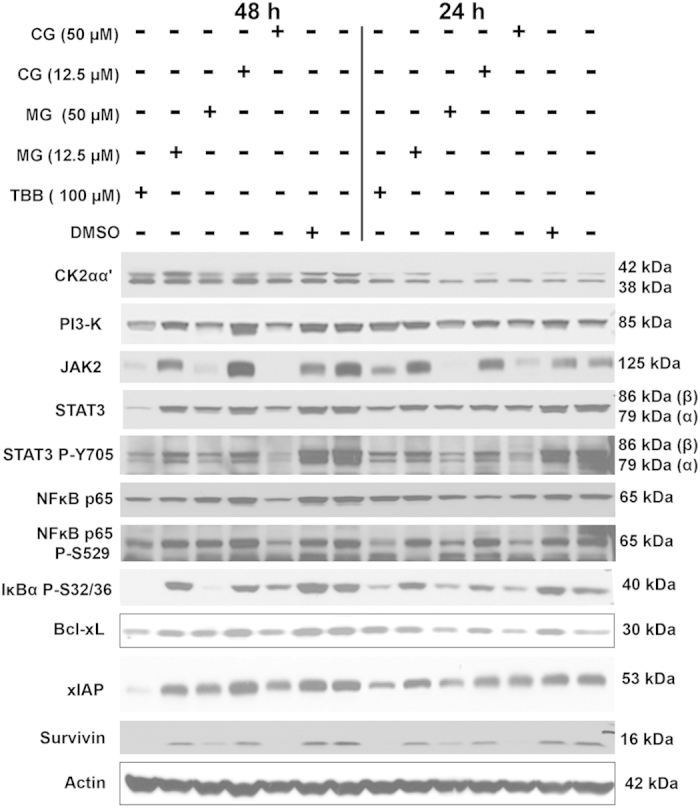
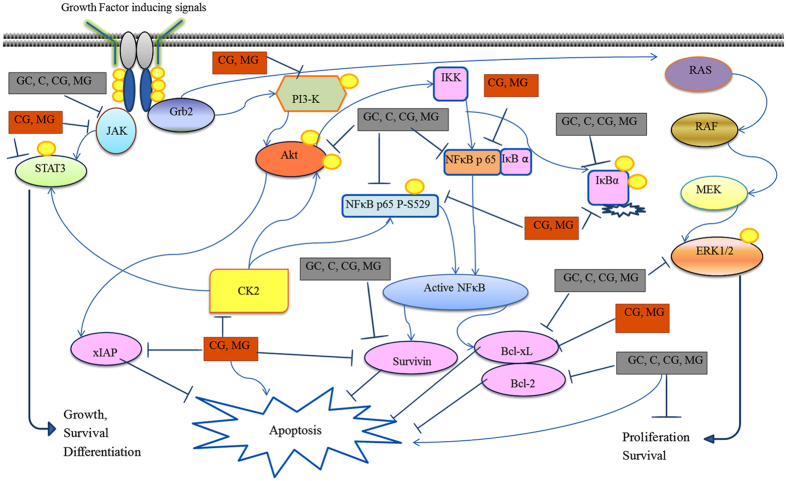
Acacia hydaspica R. Parker is known for its medicinal uses in multiple ailments. In this study, we performed bioassay-guided fractionation of cytotoxic compounds from A. hydaspica and investigated their effects on growth and signaling activity in prostate and breast cancer cell lines. Four active polyphenolic compounds were identified as 7-O-galloyl catechin (GC), catechin (C), methyl gallate (MG), and catechin-3-O-gallate (CG). The four compounds inhibited prostate cancer PC-3 cell growth in a dose-dependent manner, whereas CG and MG inhibited breast cancer MDA-MB-231 cell growth. All tested compounds inhibited cell survival and colony growth in both cell lines, and there was evidence of chromatin condensation, cell shrinkage and apoptotic bodies. Further, acridine orange, ethidium bromide, propidium iodide and DAPI staining demonstrated that cell death occurred partly via apoptosis in both PC-3 and MDA-MB-231 cells. In PC-3 cells treatment repressed the expression of anti-apoptotic molecules Bcl-2, Bcl-xL and survivin, coupled with down-regulation of signaling pathways AKT, NFκB, ERK1/2 and JAK/STAT. In MDA-MB-231 cells, treatment induced reduction of CK2α, Bcl-xL, survivin and xIAP protein expression along with suppression of NFκB, JAK/STAT and PI3K pathways. Our findings suggest that certain polyphenolic compounds derived from A. hydaspica may be promising chemopreventive/therapeutic candidates against cancer.
Figures
References
-
- Siegel R. L., Miller K. D. & Jemal A. Cancer statistics, 2015. CA. Cancer J. Clin. 65, 5–29 (2015). - PubMed
-
- Alimirah F., Chen J., Basrawala Z., Xin H. & Choubey D. DU-145 and PC-3 human prostate cancer cell lines express androgen receptor: implications for the androgen receptor functions and regulation. FEBS Lett. 580, 2294–2300 (2006). - PubMed
Publication types
MeSH terms
Substances
Grants and funding
LinkOut - more resources
Full Text Sources
Other Literature Sources
Research Materials
Miscellaneous
