


A brief yoga intervention implemented during chemotherapy: A randomized controlled pilot study
- PMID: 26977123
- PMCID: PMC4788038
- DOI: 10.1016/j.ctim.2016.02.003
A brief yoga intervention implemented during chemotherapy: A randomized controlled pilot study
Abstract
Objectives: Fatigue and other treatment-related symptoms (e.g., sleep disturbance) are critical targets for improving quality of life in patients undergoing chemotherapy. Yoga may reduce the burden of such symptoms. This study investigated the feasibility of conducting a randomized controlled study of a brief yoga intervention during chemotherapy for colorectal cancer.
Design: We randomized adults with colorectal cancer to a brief Yoga Skills Training (YST) or an attention control (AC; empathic attention and recorded education).
Setting: The interventions and assessments were implemented individually in the clinic while patients were in the chair receiving chemotherapy.
Interventions: Both interventions consisted of three sessions and recommended home practice.
Main outcome measures: The primary outcome was feasibility (accrual, retention, adherence, data collection). Self-reported outcomes (i.e., fatigue, sleep disturbance, quality of life) and inflammatory biomarkers were also described to inform future studies.
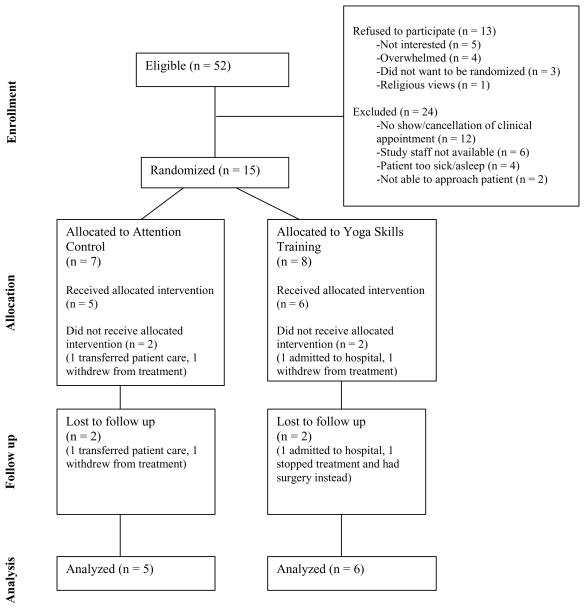
Results: Of 52 patients initially identified, 28 were approached, and 15 enrolled (age Mean = 57.5 years; 80% White; 60% Male). Reasons for declining participation were: not interested (n = 6), did not perceive a need (n = 2), and other (n = 5). Two participants were lost to follow-up in each group due to treatment changes. Thus, 75% of participants were retained in the YST and 71% in the AC arm. Participants retained in the study adhered to 97% of the in-person intervention sessions and completed all questionnaires.
Conclusions: This study demonstrated the feasibility of conducting a larger randomized controlled trial to assess YST among patients receiving chemotherapy for colorectal cancer. Data collected and challenges encountered will inform future research.
Conflict of interest statement
None declared.
References
-
- Wang XS, Williams LA, Krishnan S, Liao Z, Liu P, Mao L, Shi Q, Mobley GM, Woodruff JF, Cleeland CS. Serum sTNF-R1, IL-6, and the development of fatigue in patients with gastrointestinal cancer undergoing chemoradiation therapy. Brain Behav Immun. 2012;26:699–705. doi: 10.1016/j.bbi.2011.12.007. - DOI - PMC - PubMed
Publication types
MeSH terms
Substances
Grants and funding
LinkOut - more resources
Full Text Sources
Other Literature Sources
Medical
